Tuesday, May 12, 2026
Ghana Fact
  • Who We Are
    • About Us
    • How we work
    • Submit a claim to check
    • Partners
    • Our Team
    • Funding
    • Principles
    • Corrections
    • Privacy Policy
    • Press Releases
  • Contact
  • Home
    • Latest
    • Trending
  • Governance
  • DisinfoLab
    • Narrative Reports
    • Scams & Spam
  • Politics
    • Election 2020
    • Election 2024
  • Economy
  • Health
    • COVID-19
  • Environment
  • AI & Deepfakes
No Result
View All Result
Ghana Fact
  • Home
    • Latest
    • Trending
  • Governance
  • DisinfoLab
    • Narrative Reports
    • Scams & Spam
  • Politics
    • Election 2020
    • Election 2024
  • Economy
  • Health
    • COVID-19
  • Environment
  • AI & Deepfakes
No Result
View All Result
Ghana Fact
No Result
View All Result
Home Governance

No! Ghana has not removed English as a teaching language in basic schools

In the midst of conversations about the use of local language as the primary medium of instruction in basic schools, a Nigerian blog has claimed the Ghana government has removed English as a teaching language, we found the claim to be misleading.

Gifty DansobyGifty Danso
November 7, 2025
in Governance
Reading Time: 4 mins read
A A
No! Ghana has not removed English as a teaching language in basic schools
Share on FacebookShare on TwitterShare on ThreadsWhatsApp

Claim: Ghana removes English as the teaching language in basic schools

Source: Nairametrics 

Verdict: Misleading

Researched by Gifty Danso 

A Nigerian news website, Nairametrics, has reported that the Government of Ghana has removed English as a teaching language in basic schools across the country. 

The platform shared a flyer with the image of President John Dramani Mahama and a caption that read: “Ghana removes English as Teaching Language.” Their post of the flyer on X, however, had a caption that read: “Government of Ghana has announced that local languages will now replace English as the primary medium of instruction in basic schools across the country.”

No! Ghana has not removed English as a teaching language in basic schools
Fig. 1 – The viral Nairametrics flyer

The viral post has since gained 186.8K views, 137 comments, 622 reposts, 1.9K likes and 84 bookmarks. 

RelatedNews

Controversy around Google’s AI tools for local languages initiative: Here’s all you need to know

Controversy around Google’s AI tools for local languages initiative: Here’s all you need to know

Report: GES’s ‘fake’ label solution to online misinformation on school placement, BECE, track system

Report: GES’s ‘fake’ label solution to online misinformation on school placement, BECE, track system

FACT-CHECK: President Mahama exaggerates Ghana’s current import cover figure

FACT-CHECK: False 2024 flyer recirculated as John Mahama’s recent comment on Free SHS

Fighting FAKE flyers – GRA, GIS, GES and UG use social media to fight misinformation

Fighting FAKE flyers – GRA, GIS, GES and UG use social media to fight misinformation

The post further claimed that under the policy, “children from kindergarten to primary six will be taught mainly in their native languages, with English introduced gradually as a second language.”

No! Ghana has not removed English as a teaching language in basic schools
Fig. 2 – A follow-up post on X to the initial post

GhanaFact also found that the claim has begun circulating on TikTok. 

  • Has the government removed English as the language of instruction in basic schools?
  • Will the policy affect children from kindergarten to primary six?

This fact-check will verify these claims. 

Fact-check

The first anomaly in the claim is that the post referred to Dr Yaw Osei Adutwum as the current Education Minister, which is False. The current Minister of Education is Haruna Iddirsu. 

With regards to the announcement of using indigenous languages to teach, on October 30, 2025, the Ministry of Education, in a statement signed by Deputy Education Minister, Clement Apaak, clarified that the government has not “cancelled” or dropped the use of English as the language of instruction in basic schools. 

The statement noted that the policy “on the use of children’s home languages with additional languages; English, carefully introduced alongside, is not new. The policy has been in existence since independence, but implementation of it has not been effective and has stalled.”

Additionally, in a series of posts on Facebook by the Ministry of Education on November 4, 2025, the Deputy Minister said: “Let me be clear: English is not being removed from our curriculum. We value English and other international languages. We are only strengthening the foundation so that children can learn English – and every subject – more effectively.”

No! Ghana has not removed English as a teaching language in basic schools
Fig. 3 – Quote cards of Dr. Clement Apaak as shared by the Education Ministry Facebook page

Genesis of the controversy

The Education Ministry’s clarification was after the Minister of Education, Haruna Iddrisu, directed the Ghana Education Service (GES) to implement the mandatory use of local language as the medium of instruction in basic schools. 

“Mr. President, in line with that and with your authority, I am directing the Director General of the Ghana Education Service (GES) and the GES that from today, teacher use of mother tongue instruction is now compulsory in all Ghanaian schools,” the Minister said during the launch of the Free Tertiary Education for Persons with Disability on October 24, 2025 (here, and here). 

The Minister’s statement was clarified by the ministry’s statement indicating that the policy only affects children from kindergarten to primary 3.  

“The policy, when enacted through consultation, is to ensure that Ghanaian children by the time they complete Basic Year 3, are well grounded in their playground or home language as a foundation for learning other languages as they progress through their education,” the statement said. 

Verdict

The policy around use of local language in basic schools does not abolish English as a language of instruction in schools. The policy also only targets children from kindergarten to primary 3, and not primary 6 as the claim had suggested. 

Therefore, the claim is misleading!

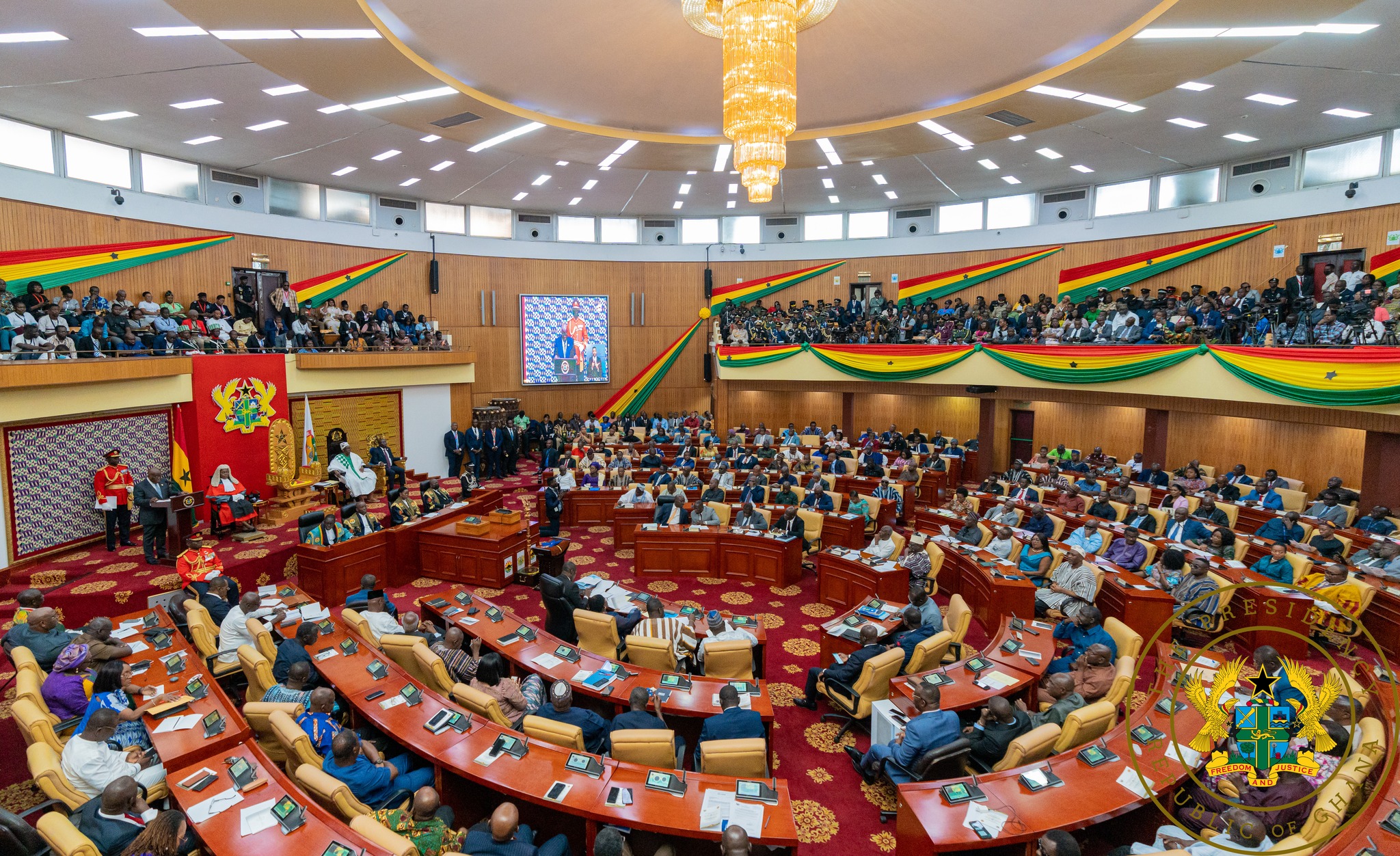
Credit for featured image: Ministry of Education GH (Facebook)
Tags: Ministry of Educationbasic schoolsclement apaakEnglishghana education serviceharuna iddrisunairametrics
ShareTweetShareSend

Related Posts

Ghana Fact-Checking Coalition: Government spokesperson acknowledges work of fact-checkers during 2024 elections

Ghana Fact-Checking Coalition: Government spokesperson acknowledges work of fact-checkers during 2024 elections

PROMISE METER: Keeping track of President Mahama’s 2025 SONA promises 

PROMISE METER: Keeping track of President Mahama’s 2025 SONA promises 

FACT-CHECK: Ashanti Region has highest number of female MMDCEs, Dr. Amoakohene’s claim True

FACT-CHECK: Ashanti Region has highest number of female MMDCEs, Dr. Amoakohene’s claim True

Understanding Ghana’s current electricity supply challenges: What we know so far

Understanding Ghana’s current electricity supply challenges: What we know so far

Fact-checking Akufo-Addo’s final State of the Nation’s Address

True! LGBTQ+ bill was not before Akufo-Addo when he left office

Misleading! X user reshares 2024 video as proof of ‘dumsor’ in current Parliament  

Misleading! X user reshares 2024 video as proof of ‘dumsor’ in current Parliament  

Load More

Most Recent

Climate Change: Government highlights push for coordinated action and investments

Climate Change: Government highlights push for coordinated action and investments

Ghana Fact-Checking Coalition: Government spokesperson acknowledges work of fact-checkers during 2024 elections

Ghana Fact-Checking Coalition: Government spokesperson acknowledges work of fact-checkers during 2024 elections

PROMISE METER: Keeping track of President Mahama’s 2025 SONA promises 

PROMISE METER: Keeping track of President Mahama’s 2025 SONA promises 

FACT-CHECK: Ashanti Region has highest number of female MMDCEs, Dr. Amoakohene’s claim True

FACT-CHECK: Ashanti Region has highest number of female MMDCEs, Dr. Amoakohene’s claim True

Load More

Most Popular

South Korea and Japan are not offering $75000 for Black Men to impregnate their women

South Korea and Japan are not offering $75000 for Black Men to impregnate their women

FACT-CHECK: ‘Poisonous’ Dew bottled water – Anatomy of a 14-year-old hoax that refuses to die 

FACT-CHECK: ‘Poisonous’ Dew bottled water – Anatomy of a 14-year-old hoax that refuses to die 

Climate Change: Government highlights push for coordinated action and investments

Climate Change: Government highlights push for coordinated action and investments

Ghana Fact-Checking Coalition: Government spokesperson acknowledges work of fact-checkers during 2024 elections

Ghana Fact-Checking Coalition: Government spokesperson acknowledges work of fact-checkers during 2024 elections

Load More
Ghana Facts - factscheck

GhanaFact is a project by FactSpace West Africa aimed at curbing the spread of disinformation on traditional and social media.

Follow Us

Browse Articles

  • AI & Deepfakes
  • DisinfoLab
    • Narrative Reports
    • Scams & Spam
  • Economy
  • Election 2020
  • Election 2024
  • Environment
  • General News
  • Governance
  • Health
    • COVID-19
  • Other Checks
  • Politics
  • Press Releases
  • Promise Meter

Contact

Address: P. O. Box AB 521, Abeka-Lapaz, Accra

WhatsApp: +233 244 49 9971

Email: info@ghanafact.com

Memberships

Memberships
  • Submit a claim to verify
  • Contact
  • Corrections
  • Team
  • About
  • Funding
  • How we work
  • Partners
  • Principles
  • Sitemap
  • Privacy Policy

© 2025 Ghana Fact - All rights reserved - Web development by EnspireFX Websites.

No Result
View All Result
  • Home
    • Latest
    • Trending
  • Governance
  • DisinfoLab
    • Narrative Reports
    • Scams & Spam
  • Politics
    • Election 2020
    • Election 2024
  • Economy
  • Health
    • COVID-19
  • Environment
  • AI & Deepfakes

© 2025 Ghana Fact - All rights reserved - Web development by EnspireFX Websites.