

Conversations about integrating Artificial Intelligence (AI) in several sectors of Ghana’s national life have been on the rise in recent years. In 2025, GhanaFact documented instances when top public officials, including the President, highlighted the importance of AI.
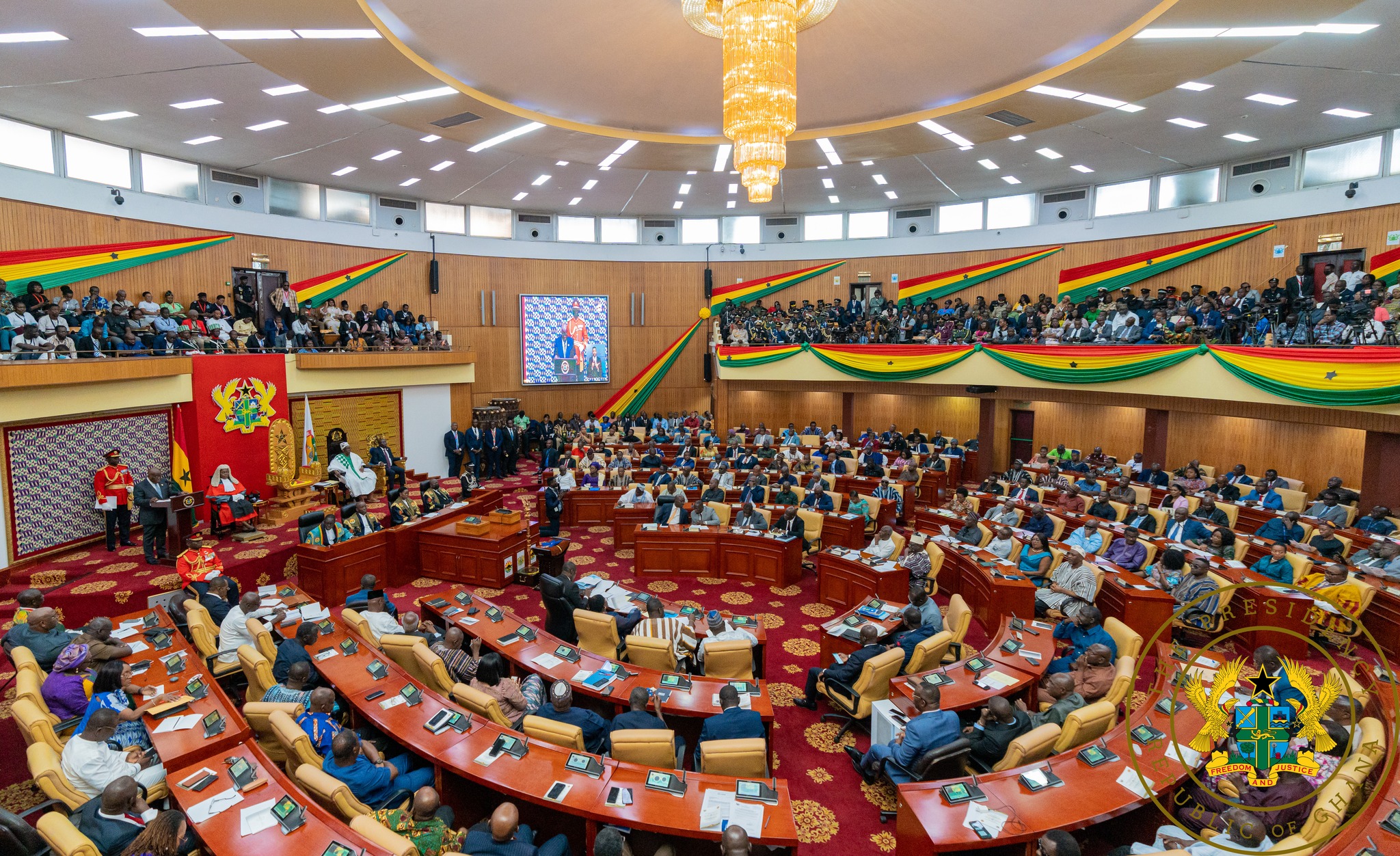
President Mahama, in November 2025, applauded a state-of-the-art AI system at the Tema Port, while Chief Justice Paul Baffoe-Bonnie, during his vetting before Parliament, highlighted how AI can be used to improve the efficiency of the Supreme Court.
In 2023, Ghana launched the National Artificial Intelligence Strategy (2023–2033), focusing on areas including AI education and Workforce development. Under the AI Education and Workforce Development, the strategy will “Expand AI literacy, tertiary education programmes, vocational training and public‑sector capacity building to create a pipeline of AI talent and equip public servants with skills for AI adoption.”
Despite all the positive uses of AI the government is aiming at, Ghana’s second-highest risk in 2026 is “Adverse outcomes of Artificial intelligence technologies,” according to the 2026 World Economic Forum (WEF) report.

AI and education
In the last two weeks, GhanaFact monitored social media conversations about Ghana’s plans to integrate AI into its education system by leveraging AI to “to support teachers to teach more effectively and enable learners to learn better.”
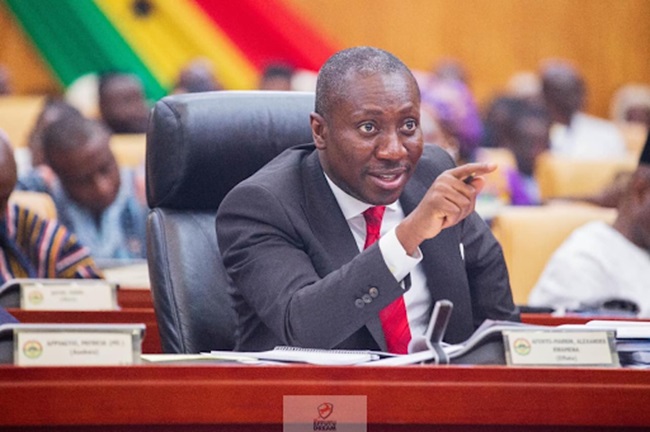
On January 19, 2026, the Minister of Education, Haruna Iddrisu, in a Facebook post, mentioned his participation in a London summit which focused on the role of Generative Artificial Intelligence (AI) in education.
RelatedNews



“I participated in a panel discussion on the application of Generative AI in the learning environment, highlighting how AI tools can be intentionally designed to promote and protect human agency. In my contribution, I underscored that at the centre of Generative AI in education are the two most important actors: the learner and the teacher. Accordingly, AI should be designed to support teachers to teach more effectively and enable learners to learn better.”
In a subsequent post on January 23, 2026, the Minister announced plans by Google to champion an initiative of developing advanced speech recognition and AI tools for Ghanaian languages, including Twi, Ewe, and Dagbani, while considering the inclusion of Hausa, a language widely spoken across West Africa.

A viral flyer from GHOne TV amplified the part of the Minister’s post that mentioned only three languages. Subsequently, a statement from the President of the Greater Accra Regional House of Chiefs, Prof. Odaifio Welentsi III and a press conference in which some members of the Ga community expressed their displeasure with the exclusion of Ga from the list of languages, were widely shared on social media, driving conversations on why the Ga language was not considered in the development of the AI tools.

But was the Ga language excluded?
Who is involved in the initiative?
According to the Minister’s post, the Google-led initiative will involve: The University of Ghana and The Global Disability Innovation Hub (GDI Hub)
The GDI Hub is a research and practice centre based at UCL (University College London), recognized as the World Health Organization’s first Collaborating Centre on Assistive Technology.
Which languages are involved?
Akuapem Twi, Asante Twi, Dagbani, Dagaare, Dangme, Ewe, Ga, Gonja, Kasem, Nzema, Gurene, and Fante.
Minister meets Ga Mantse over supposed exclusion of Ga
In the midst of the controversy, the Minister of Education, Haruna Iddrisu, on January 26, 2026, paid a courtesy visit to the Ga Mantse, His Royal Majesty King Tackie Teiko Tsuru II, with assurances of integrating the Ga language (as part of a group of 12 languages) into the AI language tool development alongside other Ghanaian languages.
“Every society is its culture, and language is at the forefront of the definition of that culture. And therefore, it will be unthinkable for government to roll out any indigenous language policy and exclude the Ga language,” he said after the visit.
On January 27, 2026, the minister reiterated his comments via a post, which partly said, “It would be unthinkable for me, as Minister for Education, to preside over an education system that does not reflect the culture, identity and heritage of our people. Language lies at the heart of every culture, and under my supervision, the promotion and use of Ghana’s indigenous languages in education will never be neglected. Our children deserve to learn in ways that affirm who they are and where they come from.
Minister meets local AI developers
“In the same spirit, I also met with the Khaya AI team, led by Dr Paul Azunre, in my office to explore strategic collaboration with Google towards integrating all twelve (12) approved Ghanaian languages into the Gemini AI education tool. This initiative represents a major step in ensuring that technology-driven learning is inclusive, accessible, and culturally relevant for every Ghanaian learner,” the minister stressed in his January 27 post.
Conclusion
The Minister of Education, Haruna Iddrisu, has clarified that 12 Ghanaian languages will be integrated into the Advanced speech recognition and AI tools for Ghanaian languages. This settles social media claims that only three languages had been earmarked for integration and that the Ga language had been sidelined. The initial claims were therefore misleading, especially at a time when the ministry had not released a complete list of languages.
By: Gifty Tracy Aminu