

Claim: Ashanti Region has more female MMDCEs than any region
Source: Dr. Frank Amoakohene (Ashanti Regional Minister)
Verdict: True
Researched by Gifty Danso
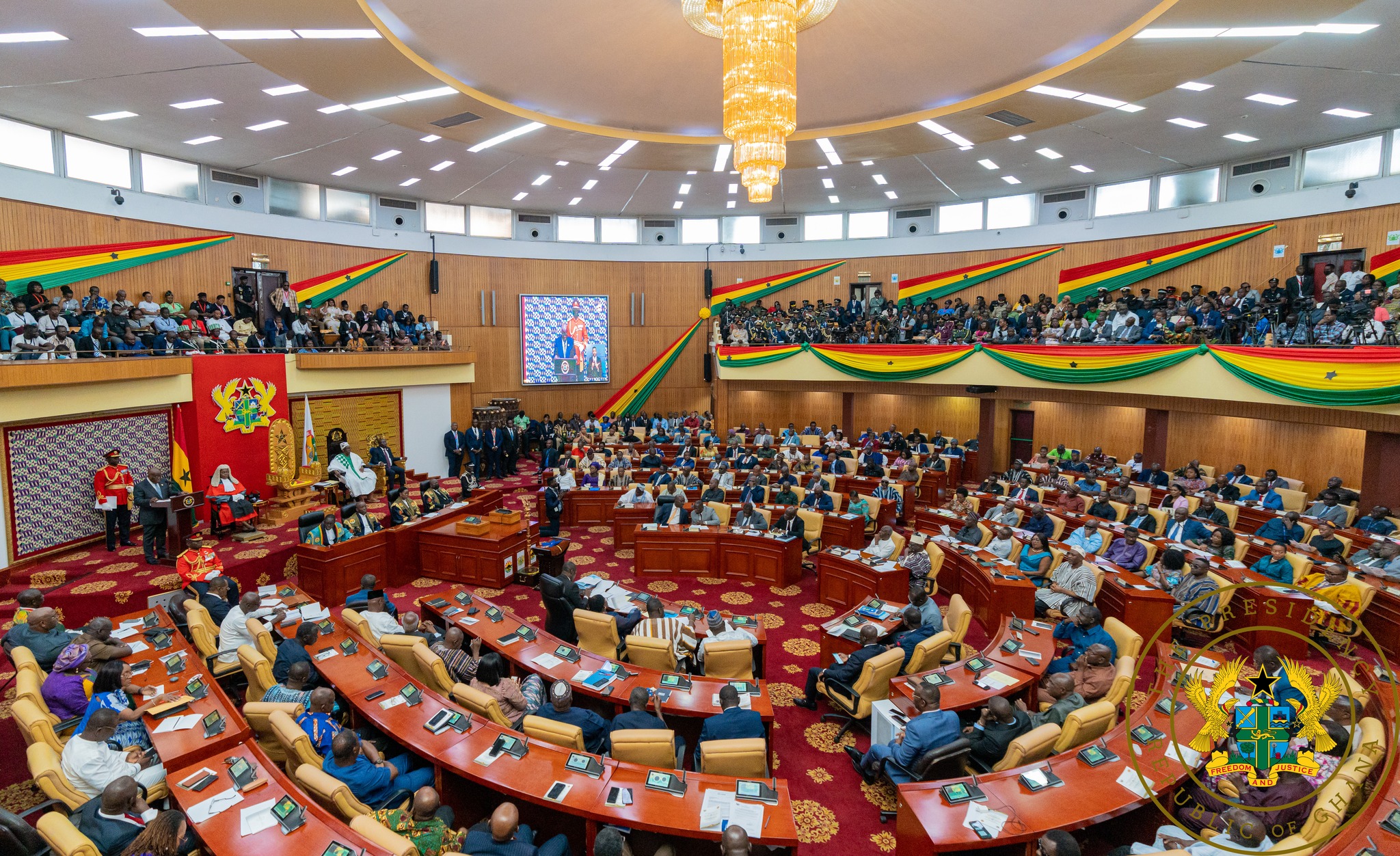
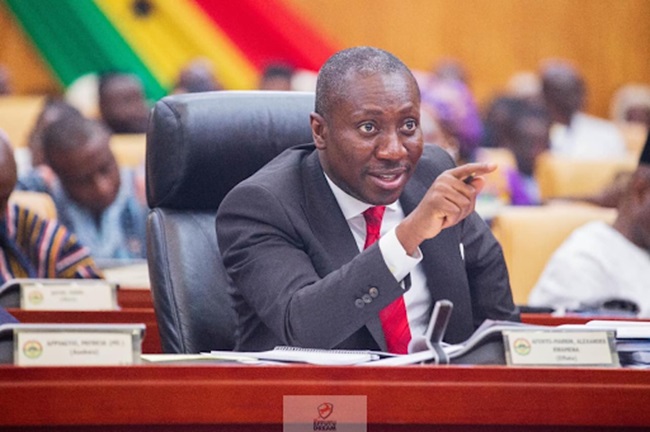
The Ashanti Regional Minister, Dr. Frank Amoakohene claims his region has the highest number of female Metropolitan, Municipal and District Chief Executives (MMDCEs). Speaking at an Orientation and Leadership Development Programme organised for female MMDCEs on March 30, 2026, he said:
“I take pride in the fact that we host (the) majority of our female MMDCEs and I want to commend their very hard work especially ahead of 2024 elections, many of them were parliamentary candidates. Others served at very instrumental roles towards our collective victory in 2024.
“We are also anticipating that in the future, we will not definitely lose our first position title, we will actually add more numbers from the Ashanti Region to continue to make a bold statement that yes we do have not only the men but also capable women… ” he said (find here).
RelatedNews




This fact-check will verify whether the Ashanti Region hosts the majority of female MMDCEs.
Fact-check
In 2024, Ghana passed the Affirmative Action (Gender Equality) Act to ensure the achievement of “gender equality” in different spheres of the society. The law mandates the government to by 2026 achieve 30% gender equality but analysis of especially political appointments shows Ghana is lagging behind.
Ghana has 261 metropolitan, municipal, and district assemblies. Per Article 243 (1) of the 1992 Constitution, District Chief Executives are appointed by the President “with prior approval of not less than two-thirds majority of members of the Assembly present and voting at a meeting.”
Since President John Mahama took over power, he has made appointments for all the 261 districts across the 16 regions of the country.
In fact-checking this claim, GhanaFact relied on information from the website of the Office of the Head of Local Government Service. We analyzed data on how many females had been appointed as MMDCEs in the various regions.
Find the listed below.
| Region | Number of female MMDCEs | Number of Male MMDCEs | Total number of MMDCEs |
| Ahafo | 0 | 6 | 6 |
| Ashanti | 7 | 36 | 43 |
| Bono | 3 | 9 | 12 |
| Bono East | 0 | 11 | 11 |
| Central | 2 | 20 | 22 |
| Eastern | 6 | 27 | 33 |
| Greater Accra | 2 | 27 | 29 |
| North East | 0 | 6 | 6 |
| Northern | 2 | 14 | 16 |
| Oti | 0 | 9 | 9 |
| Savanna | 0 | 7 | 7 |
| Upper East | 2 | 13 | 15 |
| Upper West | 1 | 10 | 11 |
| Volta | 3 | 15 | 18 |
| Western | 2 | 12 | 14 |
| Western North | 0 | 9 | 9 |
| Total | 30 | 231 | 261 |
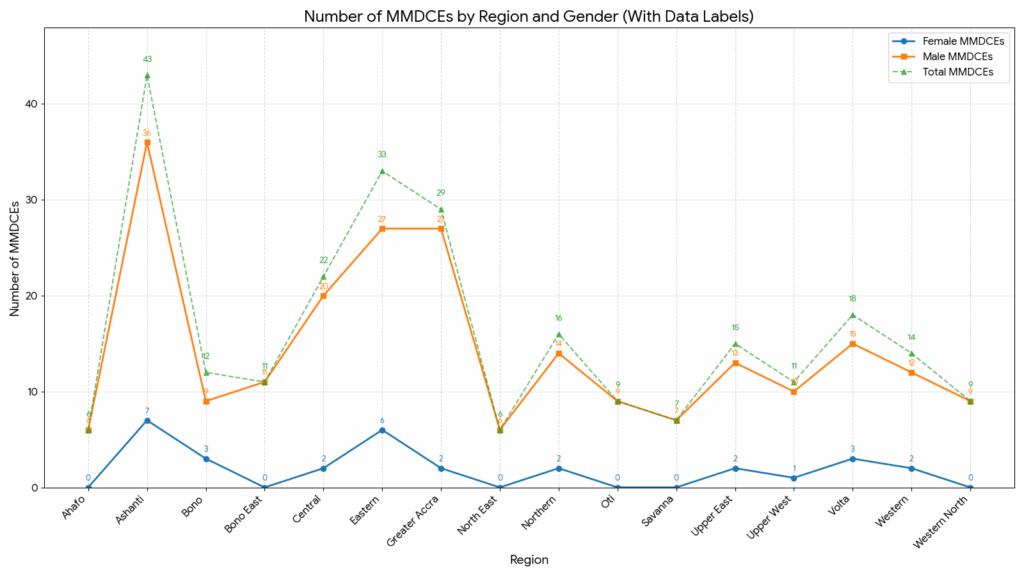
From the table above, the Ashanti Region has the highest number (7) of female local government appointees. This is followed by the Eastern Region, which holds the second highest number (6) of female MMDCEs.
Verdict
Therefore the claim is true.
| List of female DCE / MCEs in the Ashanti Region | |
| Name | District or Municipality |
| Sarah Amoakoaa | Asante Akim North District |
| Maame Sarfoah Appiah | Asante Akim South Municipal |
| Pearl Patricia Ankrah | Afigya Kwabre South District |
| Faustilove Appiah Kannin | Obuasi West Municipal |
| Grace Agyemang Asamoah | Atwima Kwanwoma District |
| Jerryne Asante | Ejisu Municipal |
| Eunice Ohenewaa Ansu | Juaben Municipal |