

Claim: Ghana’s monetary policy rate is higher than that of four West African neighbours
Source: Solomon Owusu (Spokesperson, United Party)
Verdict: Mixture
Researched by Gifty Danso
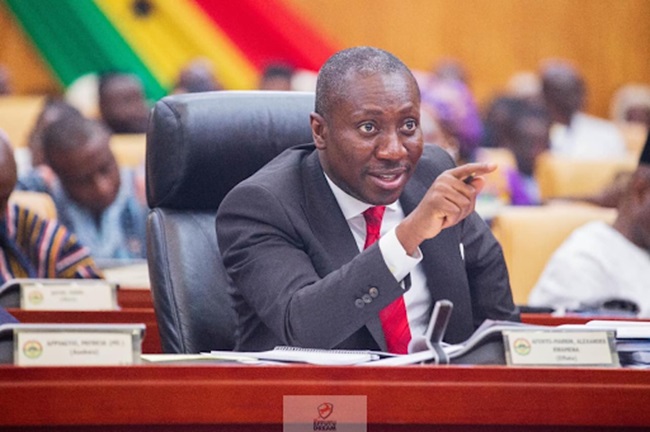
The Director of Communications for the Unity Party, Solomon Owusu, during a discussion on Joy Prime Morning on January 5, 2025, claimed that four of Ghana’s West African neighbours have lower policy rates.
According to him, due to Ghana’s comparatively higher policy rate, Ghanaian business owners cannot “compete” with their West African neighbours for loans.
“We are competing with our neighbours, Togo is doing a policy rate of around 5%, +2 or -2. As your risk profile, you’re doing about 7% to businesses. Burkina Faso, that is being governed by a military person, is also doing around the same figure of 5%. Ivory Coast is doing 5%.
RelatedNews


“Nigeria that we expect our economy to be better than than them, in terms of management, they are doing less than 13% as their policy rate. So we cannot still be hovering around the 20% mark, when indeed we have to be getting it to the single digit,” he said. (Between 34:08 – 35:25 of the programme, archived here).
What is the policy rate?
The policy rate is the mechanism used by central banks to control money supply, interest rates, and credit availability. It is also the rate at which the central bank lends to commercial banks for short-term borrowing.
At the commercial bank level, interest rates is the amount charged on money lent to individuals and entities. Ghana’s current policy rate was set at 18% by the Bank of Ghana’s monetary policy committee in November 2025.
This fact-check will verify the claim that all three direct neighbours of Ghana and Nigeria have lower policy rates.
Fact-check
The Francophone countries mentioned in the claim share a common central bank, known as the Banque Centrale des Etats de l’Afrique de l’Ouest (BCEAO), translated to mean the Central Bank of West African States.
In addition to Togo, Burkina Faso, and the Ivory Coast, five other French-speaking West African countries (Benin, Guinée-Bissau, Mali, Niger, and Sénégal) that are part of the West African Economic and Monetary Union (WAEMU) share the same Central Bank, one currency (CFA), and one monetary policy. (here).
At WAEMU’s last monetary policy committee meeting held on December 3, 2025, the BCEAO maintained the policy rate at 3.25%. This rate, it noted, had been in effect since June 16, 2025.
“The Monetary Policy Committee (MPC) of the Central Bank of West African States (BCEAO) decided, at its meeting held on December 3, 2025, to maintain the main policy rate at which the Central Bank lends its resources to banks at 3.25%, as well as the interest rate on the marginal lending facility at 5.25%, in effect since June 16, 2025,” the bank said.
This means that the policy rate for Togo, Burkina Faso and the Ivory Coast is 3.25%, and not 5% as claimed.
The Central Bank of Nigeria, at its last Monetary Policy Committee meeting in November 2025, maintained the policy rate at 27%. The 13% claimed by Solomon Owusu was set between March 2019 and March 2020 (find here).

In conclusion, while three of the francophone countries (Togo, Burkina Faso and Ivory Coast) have lower policy rates comparable to Ghana, the United Party’s Communications Director’s stated figure of 5% is an exaggeration of the facts. He also inaccurately stated Nigeria’s policy rate.
Verdict
Therefore, the claim is rated a mixture. This is because Nigeria’s policy rate was falsely stated, while that of the three francophone countries were overstated.