
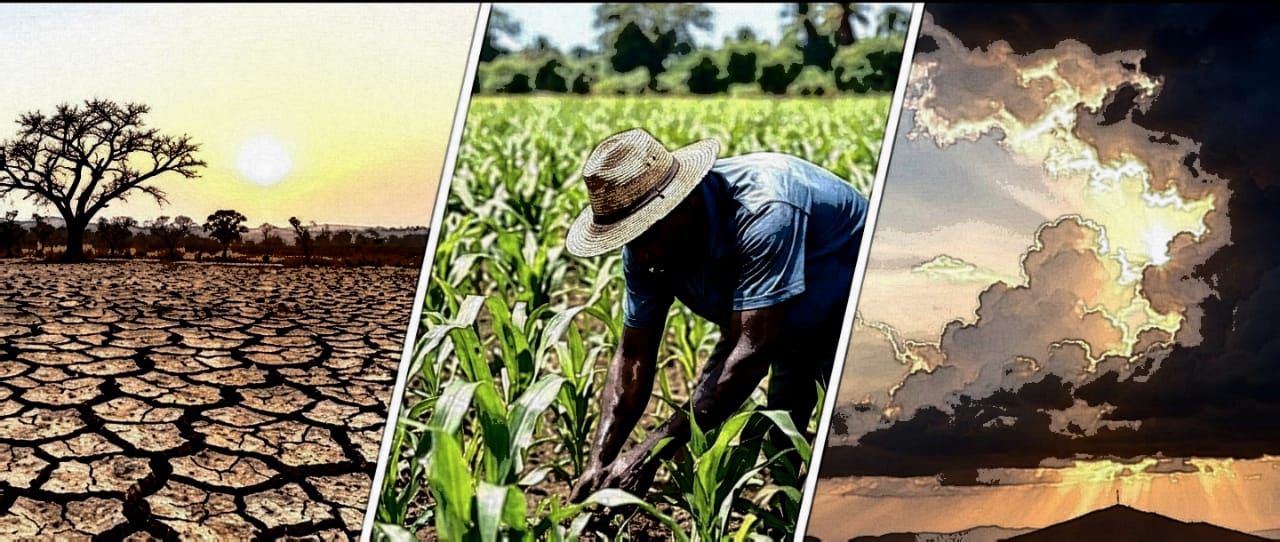

The extreme heat wave across parts of Ghana over the last couple of weeks, attributed to the climate phenomenon El Niño, has sparked conversations online and offline about climate change and its impact on lives and economies.
Social media posts here, here, and here have, for instance, suggested the worst may come in 2027, raising concern as people try to understand the crisis.
But what is El Niño? Is it a new weather event? What areas in Ghana are most at risk? This explainer dissects the issues.
What is El Niño?
The Ghana Meteorological Agency (GMet) defines El Niño as a “naturally recurring pattern of warming and cooling of seasurface temperatures in the central and eastern equatorial Pacific Ocean, coupled with corresponding shifts in tropical atmospheric circulation.”
El Niño usually occurs every two to seven years and can affect temperatures and rainfall worldwide, often contributing to higher temperatures, droughts and floods.
Which areas in Ghana would be most affected by El Niño?
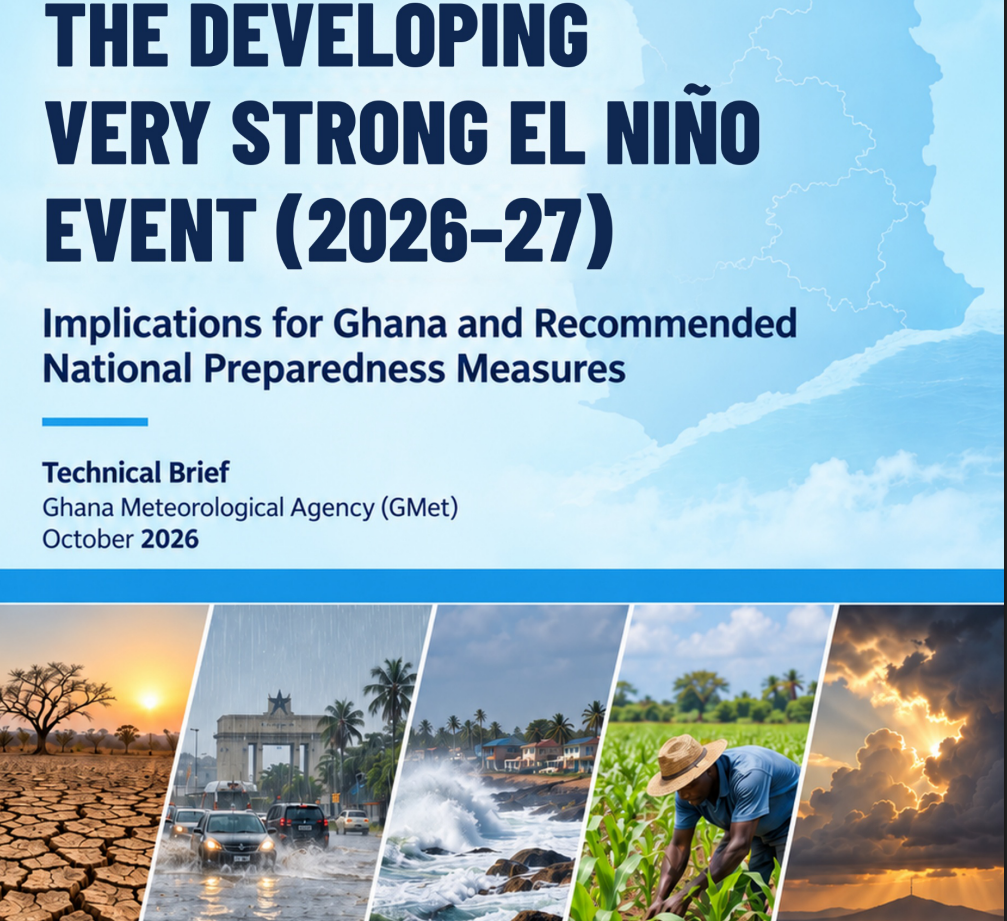
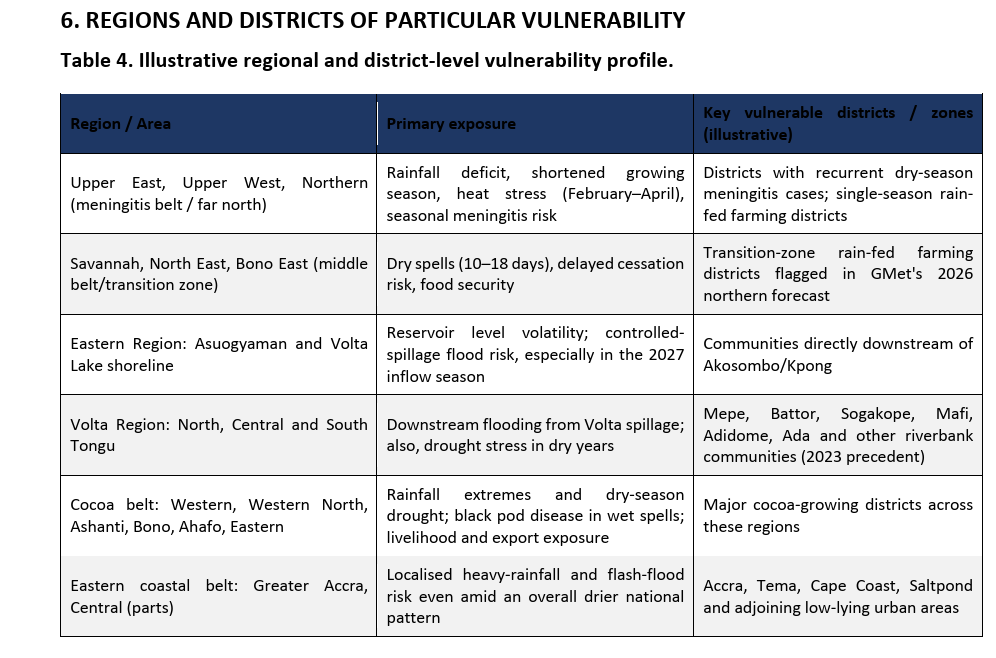
In a technical brief on October 27, 2026 GMet noted that Northern and Southern Ghana would experience varying effects from now into April 2027, with risks for agriculture and food security, rainfall patterns, and health (meningitis cases).




“From November 2026 to April 2027, the main risks are a hotter and drier dry season in many areas, bushfires, water stress and dust, with heat stress likely to peak between February and April 2027, especially in the north,” the technical brief said.
How can individuals reduce the effects of El Niño?
Hotter temperatures, extreme weather, water shortages, and changing rainfall patterns can contribute to the spread of disease, food insecurity, and other health challenges, the World Health Organisation (WHO) notes.
In order to reduce any health-related risks from the heatwaves and other El Niño effects, the WHO recommends a number of preventive tips. These include:
- Stay hydrated (drink water regularly, 1 cup of water per hour and at least 2–3 litres per day)
- Avoid extreme heat (stay in the shade, and avoid going outside and doing strenuous activity during the hottest time of day).
- Use light and loose-fitting clothing and bed linens
- Clean hands regularly
- Never leave children or animals in parked vehicles for any amount of time, as temperatures can quickly become dangerously high.
- Eliminate standing water around homes and in clogged gutters as they are breeding sites for Aedes mosquitoes that transmit dengue.
- Check on vulnerable member of your family
Is El Niño new to Ghana?
According to the Ghana Meteorological Agency (GMet), the country has previously experienced El Niño at least four times: in 1982/83, 1997/98, 2015/16 and the moderate 2023/24 event. The most recent event of El Niño effects was recorded during the torrential June 29 floods.
“Ghana’s experience of past El Niño episodes shows the country’s vulnerability to rainfall variability and associated impacts on agriculture, water resources, hydroelectric power generation and public health.
“The nature and severity of these impacts have varied considerably between events and across the country, and some of the most damaging Ghanaian climate shocks have occurred outside El Niño years,” GMet said in its technical brief.
What is particular about this year’s El Niño & the potential 7000 heat deaths
For years, scientists have warned that the Earth is warming faster than normal, and could cross the critical 1.5°C global warming threshold, largely due to human-induced climate change and its associated effects.
In respect of this year’s El Niño, scientists and global meteorologists have classified the 2026–2027 event as a rare “super El Niño” or “supersized” event, projecting it to peak around late 2026 (as is being experienced now) and persist through February 2027.
El Niño is classified as “super” when ocean surface temperatures reach or exceed 2 Celsius (C) (3.6 Fahrenheit (F)) for a few months. “The current El Niño reached 2.7C in October, and some forecasts say it could rise to 4C when it peaks somewhere between November and December,” a report by Al Jazeera noted.
“Fueled by exceptionally warm ocean conditions across the tropical Pacific, El Niño is expected to strengthen further during the coming months to a very strong intensity before peaking towards the end of this year, with climate impacts continuing well into 2027,” the World Meteorological Organisation said in its September 2026 update.
Added to these catastrophic predictions is a recent study from the University of Chicago’s Climate Impact Lab, which highlights that Super El Niño will cause the most additional heat deaths over the next six months (October to March).
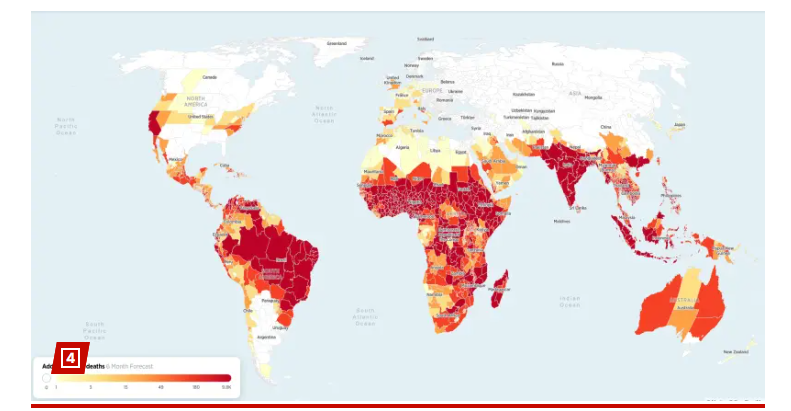
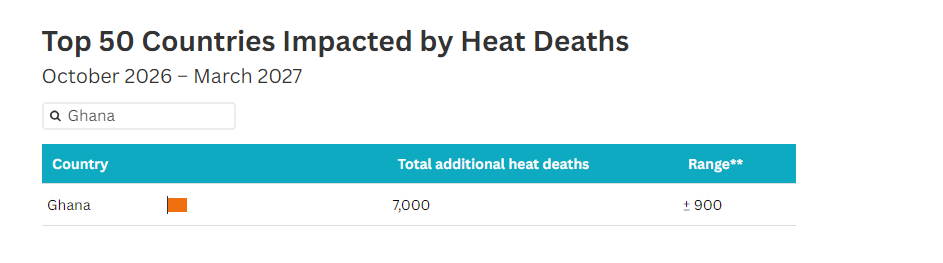
The Climate Lab estimates Ghana may experience about 7000 deaths, while countries such as Nigeria are forecasted to experience the highest toll within Africa, with about 56,000 deaths.
“Regions that are projected to see the largest increase in heat-related deaths over the next six months are spread across the Global South. The most impacted countries across the Sahel are forecasted to see an additional 66,800 heat deaths from September-February compared to a normal year, with nearly half of those lives being lost in Nigeria (31,400). Elsewhere in the region, Sudan will face 17,500 additional heat deaths, Niger will face 10,000, and Chad 8,000,” the report noted.
The scientists note that they made this projection using global heat data and regional factors.
Government-level mitigation measures
The GMet brief recommends broad level interventions across the various government institutions. These include early warning monitoring and diagnostic discussions with agencies such as the Volta River Authority (VRA), Bui Authority, and the National Disaster Management Organisation (NADMO) on flood-control spillage measures.
Government agencies such as the Ghana Health Service have been urged to reinforce dry-season meningitis surveillance in the northern regions and within regional meningitis-belt monitoring networks.
In an attempt to mitigate some of the effects of rising temperatures, the Accra Metropolitan Assembly (AMA) last month announced it would be installing heat-tracking systems in Accra’s Central Business District to track dangerous heat. This was after it had launched a citywide Heat Awareness Campaign and an Extreme Heat Perceptions Survey in July.
Conclusion
Between now and early 2027, scientists and global meteorologists warn that the natural climate event, El Niño, could lead to rising temperatures and affect rainfall patterns worldwide. In Ghana, the event has already raised concerns for agriculture, food security, and flood threats. However, surviving El Niño would largely depend on how well the country is prepared for its effects.