
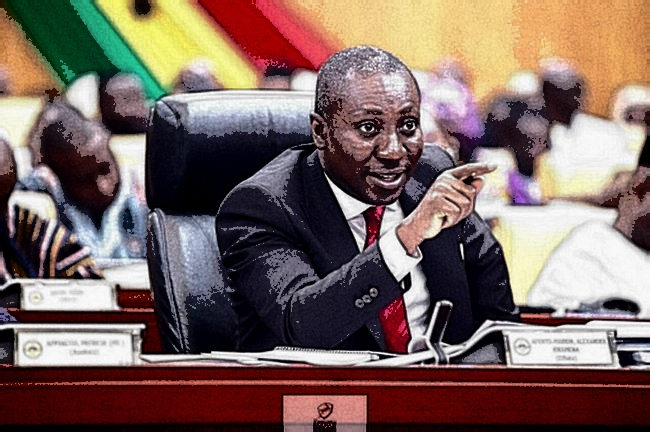

Claim: Since 1993, every single social intervention programme that runs in government was introduced by the NPP
Source: Alexander Afenyo-Markin (Minority Leader)
Verdict: False
Researched by Samuel Adjetey Adjei
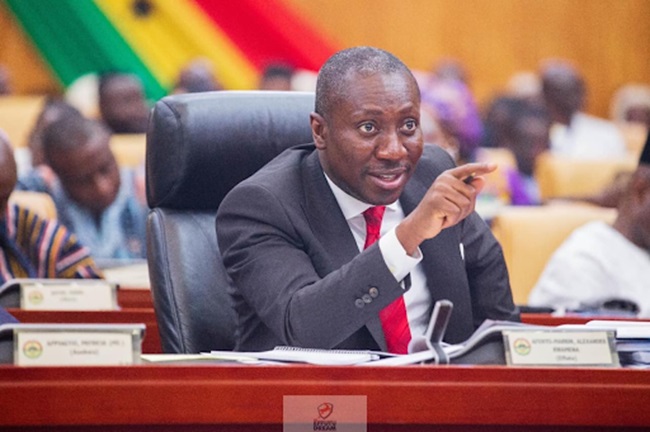
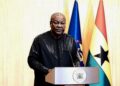
Minority Leader and Member of Parliament for Effutu, Alexander Afenyo-Markin, in an interview with German broadcaster, DW, on October 30, 2026, claimed all social intervention programmes in Ghana since 1993 were introduced by the New Patriotic Party (NPP).
When asked whether governance had been a challenge during the NPP’s time in government, particularly in light of the party’s defeat in the 2024 general elections, Afenyo-Markin acknowledged that Ghanaians were unhappy with the party’s performance but maintained that the NPP’s record in implementing social intervention policies remained evident.
“I accept that every decision has consequences. Quite obviously, we are not in government because the people were not happy with us. But speaking to the fact, our track record is there for all to see. It is clear that our party introduced a Free SHS. It is a fact that our party introduced a free compulsory basic education,” he said.
RelatedNews
“It is a fact that our party introduced a National Health Insurance Programme. I can say on authority that since 1993, every single social intervention programme that runs in government was introduced by the NPP, my party,” he added.
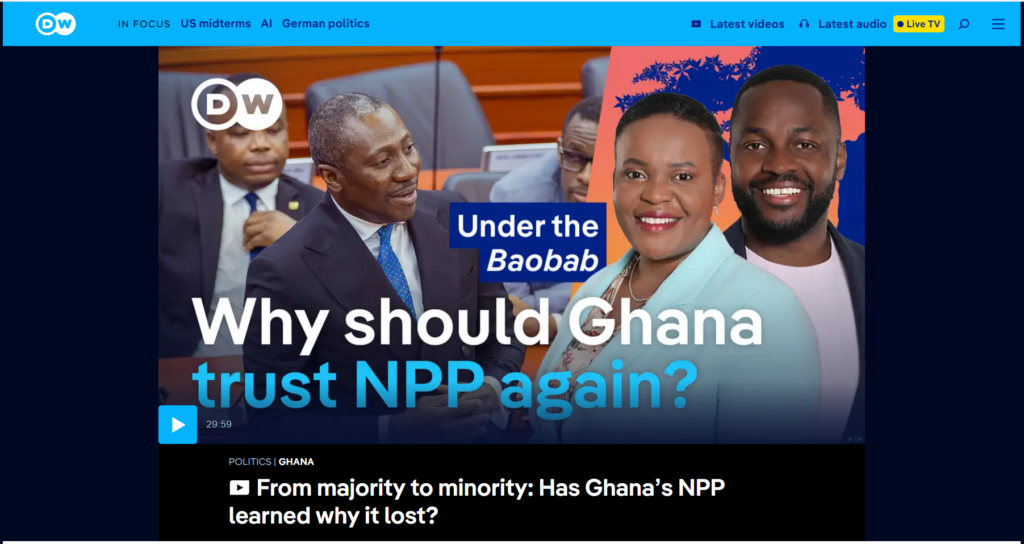
This report will verify the claims.
Claim 1: Since 1993, every single social intervention programme that runs in government was introduced by the NPP
Fact-check
A social intervention programme is an organised effort by governments, international partners, non-profit groups, or community organisations to step into social affairs. Its goal is to solve specific social problems, relieve hardships, and improve the quality of life or human capital for individuals, groups, or entire communities.
GhanaFact’s checks found that successive governments under both the National Democratic Congress (NDC) and the New Patriotic Party (NPP) have introduced social intervention programmes to address various challenges in education, healthcare, poverty reduction and employment.
| Year | President | Social intervention programme |
| 1996 (NDC) | Jerry John Rawlings | Free Compulsory Universal Basic Education (FCUBE) programme |
| 1999 (NDC) | Jerry John Rawlings | Community-based Health Planning and Services (CHPS) |
| 2003 (NPP) | John Agyekum Kufuor | National Health Insurance Scheme (NHIS) |
| 2005 (NPP) | John Agyekum Kufuor | Ghana School Feeding Programme |
| 2008 (NPP) | John Agyekum Kufuor | Livelihood Empowerment Against Poverty (LEAP) |
| 2009 (NDC) | John Evans Atta Mills | Free School Uniform and Free Exercise Books programmes |
| 2011 (NDC) | John Evans Atta Mills | Labour-Intensive Public Works programme |
| 2015 (NDC) | John Dramani Mahama | Youth Employment Agency (YEA) gave legal mandate to NYEP (started under Kufuor) |
| 2017 (NPP) | Nana Addo Dankwa Akufo-Addo | Free SHS |
| 2018 (NPP) | Nana Addo Dankwa Akufo-Addo | Ghana Productive Safety Net Project |
| 2025 (NDC) | John Dramani Mahama | No-Fee Stress Initiative (No Academic Fees for First-Year Tertiary Students) |
| 2025 (NDC) | John Dramani Mahama | Free Tertiary Education for Persons with Disabilities (PWDs) |
| 2025 (NDC) | John Dramani Mahama | Ghana Medical Trust Fund (MahamaCares) |
While the table above is by no means exhaustive, it adequately shows that social intervention programmes were introduced under administrations led by both political parties, rather than exclusively by the NPP.
Verdict
Therefore, the claim is rated false!
Claim 2: “It is clear that our party (the NPP) introduced Free SHS”
Fact-check:
GhanaFact’s investigation shows that discussions and commitments to free secondary education in Ghana date back to 2008, when the New Patriotic Party (NPP), ahead of the 2008 general elections, promised to introduce the policy.
In 2014, the National Democratic Congress (NDC), under President John Dramani Mahama, also announced plans to introduce free secondary education. During his 2014 State of the Nation Address, President Mahama mentioned that the Ministry of Education had prepared a roadmap for the introduction of progressive free secondary education.
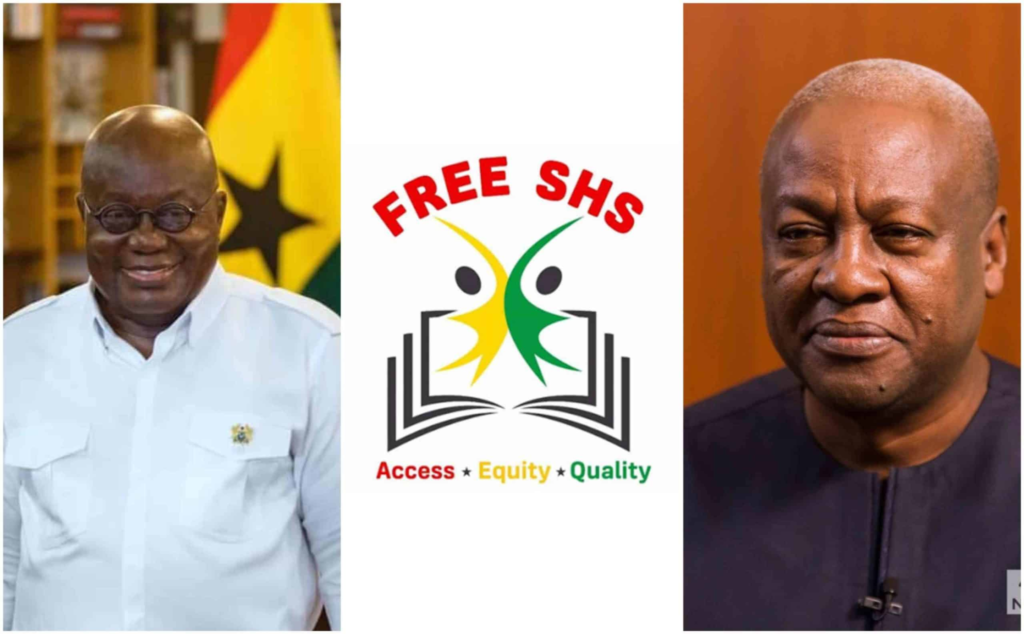
The government subsequently made budgetary provisions in the 2016 Budget Statement to absorb selected fees for 320,488 day students in public senior high schools during the first term of the 2015/2016 academic year. These included examination, entertainment, library, SRC, sports, culture, ICT and other co-curricular fees.
However, nine months after assuming office in 2017, the NPP government launched its Free Senior High School programme, with broader coverage. The policy covered tuition, admission, textbooks, library, science centre, ICT and examination fees, as well as utility charges, boarding and meals.
Implementation started in September 2017, with all Ghanaian students placed in public second-cycle institutions through the Computerised School Selection and Placement System (CSSPS) eligible to benefit.
GhanaFact has previously examined the history and implementation of the Free SHS policy.
Read our previous explainer on Free SHS here.
Verdict
Given the context of Afenyo-Markin’s statement, the claim that the NPP introduced the Free SHS programme is true.
Claim 3: “It is a fact that our party introduced a free compulsory basic education”
Fact-check
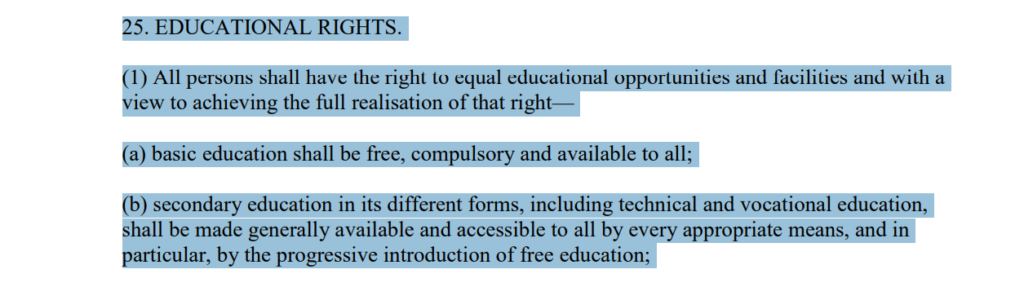
Compulsory and universal basic education is enshrined in the 1992 Constitution, and it guarantees every person the right to basic education. Article 25(1)(a) of the Constitution, under Educational Rights, states that: “Basic education shall be free, compulsory and available to all.”
It was the National Democratic Congress (NDC) government led by former President Jerry John Rawlings, which introduced (formally rolled out) the Free Compulsory Universal Basic Education (FCUBE) programme in 1996.
The initiative was a 10-year programme, designed to run from 1996 to 2005, to improve access to basic education and ensure that every Ghanaian child of school-going age could receive free and compulsory education.
The programme therefore predates the New Patriotic Party’s (NPP) assumption of office in January 2001, under former President John Agyekum Kufuor. Although successive governments continued basic education interventions, the FCUBE programme was introduced under the Rawlings administration.
Consequently, the historical record does not support the assertion that the NPP introduced free compulsory basic education.
Verdict
Therefore, the claim is rated false!
Claim 4: “It is a fact that our party introduced a National Health Insurance Programme”
Fact-check:
GhanaFact’s research shows that the National Health Insurance Scheme (NHIS) was formally established in 2003 under the administration of President John Agyekum Kufuor of the New Patriotic Party (NPP), through the passage of the National Health Insurance Act, 2003 (Act 650). The scheme launched in March 2004, with nationwide implementation, through district mutual health insurance schemes. However, efforts to introduce health insurance as an alternative to the cash-and-carry system predate the Kufuor administration.
The NDC government under Jerry John Rawlings also pursued the idea, with a pilot national health insurance project initiated in four districts in the Eastern Region in 1997. Earlier community-based schemes, including the Nkoranza scheme established in 1992, also contributed to the development of health insurance in Ghana.
Therefore, while the groundwork and pilot initiatives for health insurance predated the NPP administration, the Kufuor government enacted the legislation and established the national framework for its implementation in 2003.
Verdict
The claim that the NPP introduced the National Health Insurance Scheme as a national programme is true.