

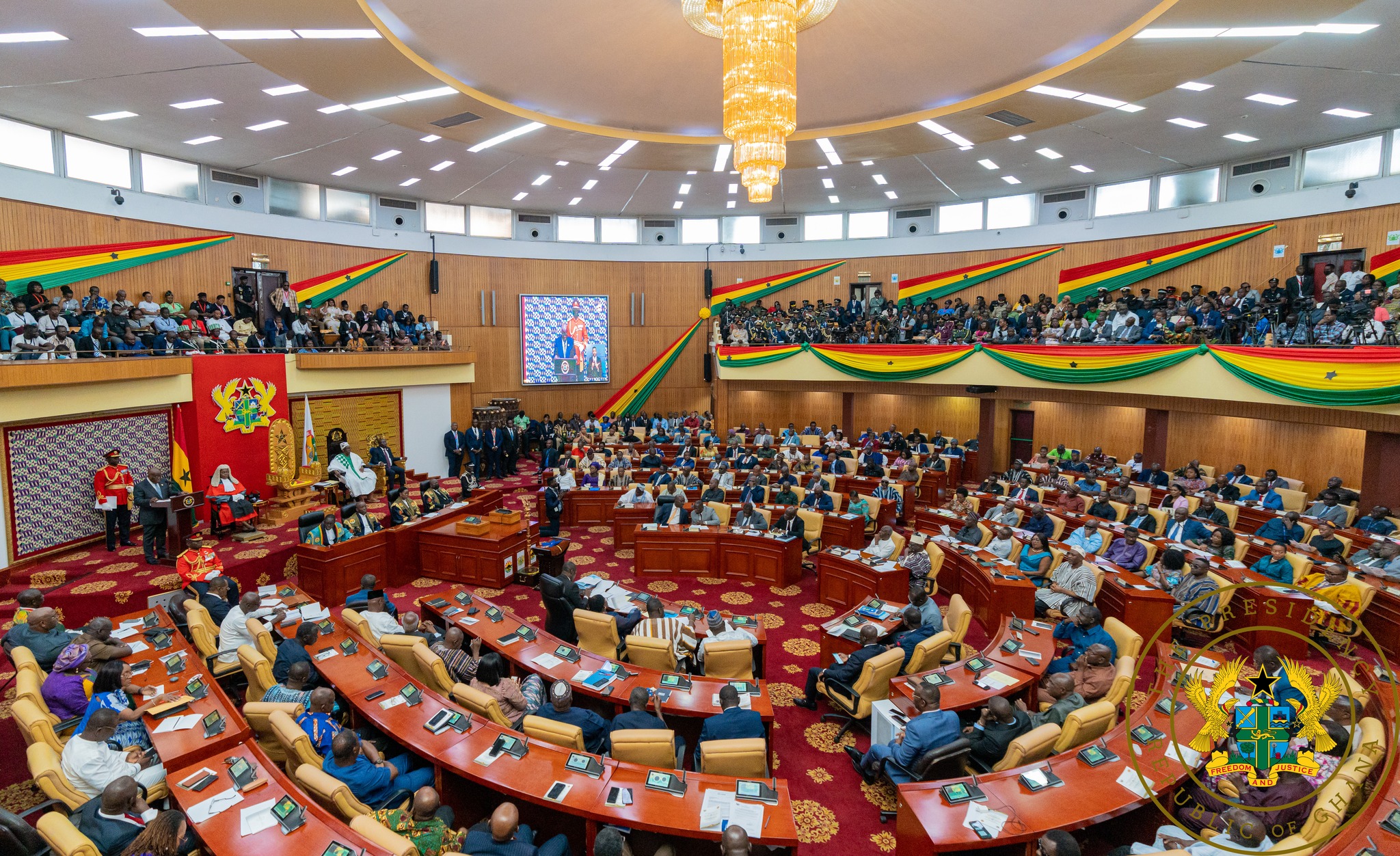
Mid-year budget presentations are typically occasions when the Finance Minister briefs Parliament and the public on the performance of the national budget during the first six months of the financial year and, where necessary, adjusts policy targets or funding allocations for the remainder of the year.
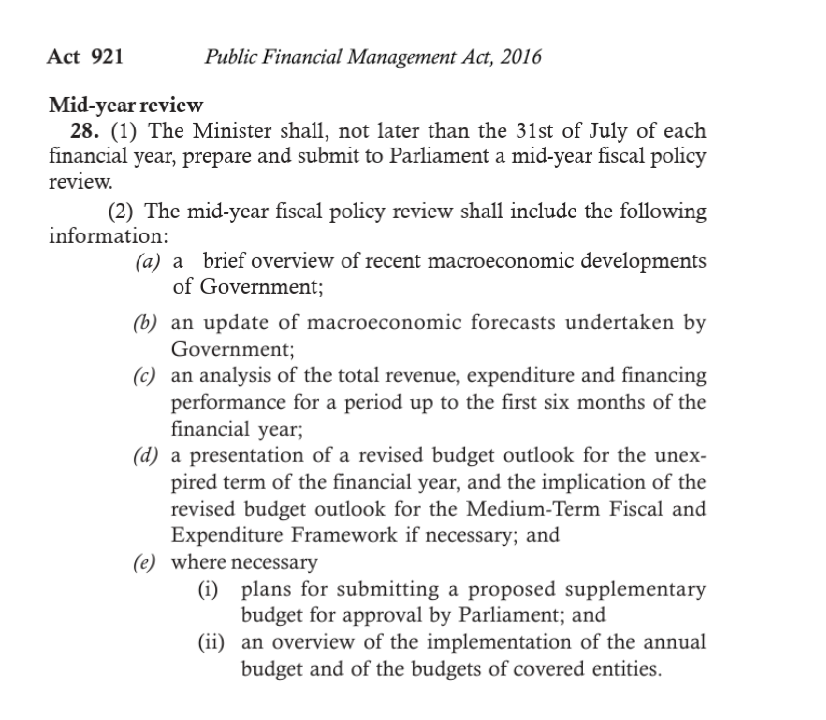
Traditionally, these presentations take place in July. It was not until a decade ago, when the Public Financial Management Act, 2016 (Act 921), came into force, that the Mid-Year Fiscal Policy Review became a statutory obligation of the Finance Minister.
Following the most recent mid-year budget presentation, we fact-checked two false claims (here and here) around the mid-year budget review, prompting the need for this explainer. In this piece, GhanaFact traces the history of the Mid-Year Fiscal Policy Review and examines the law that makes its presentation a mandatory requirement.
The 1992 Constitution
Under the 1992 Constitution, the Finance Minister is primarily required to present the annual budget to Parliament before or around the start of the financial year. Article 179(1) of the Constitution makes this a constitutional requirement.
Article 179 (8), however, allows the Finance Minister to seek parliamentary approval for additional funding through supplementary estimates if the approved budget proves inadequate during the financial year.
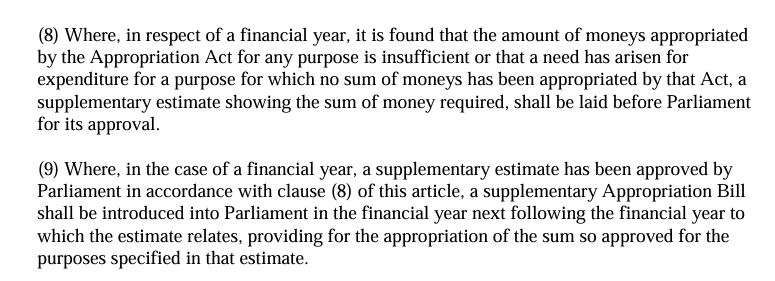
Under previous administrations, governments presented mid-year budget updates by seeking parliamentary approval for supplementary estimates.
RelatedNews


For instance, during former President John Agyekum Kufuor’s eight-year tenure from 2001 to 2008, his Finance Minister, the late Kwadwo Baah-Wiredu, requested supplementary estimates in 2006 and 2007, relying on Article 179 (8) of the Constitution.
The PFM Act of 2016
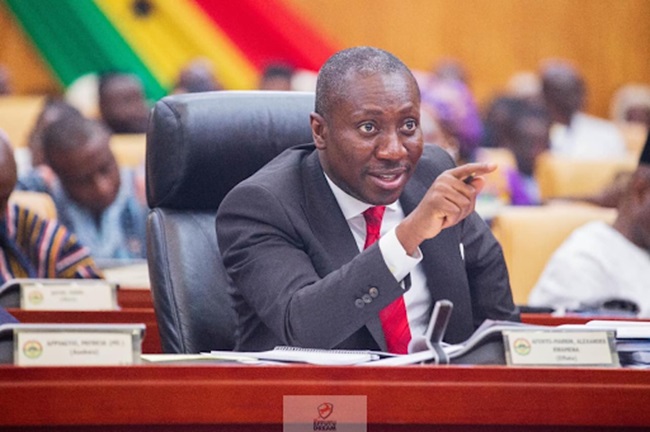
While the current mid-year fiscal policy review presented by finance minister Ato Forson on July 23, 2026, did not request for supplementary funding, under the PFM Act he is mandated to present a mid-year fiscal policy review anyway.
The explicit legal requirement to present a Mid-Year Fiscal Policy Review every year by July 31 was introduced through Section 28 of the Public Financial Management (PFM) Act, 2016 (Act 921).
The PFM Act was introduced in 2016 – passed by Parliament on August 3,of that year and signed into law by President John Mahama a fortnight later. The Act has several provisions targeted at ensuring fiscal discipline and the effective and efficient use of public resources.
An economist with PIED Africa, Daniel Amateye Anim, told GhanaFact in an interview: “One of the things that it (the mid-year review) does is it allows transparency, accountability and fiscal discipline on the part of government.”
The three men who have presented mini budgets in last 10 years
Since the presentation was formalized, three ministers have delivered mid-year fiscal policy reviews. Ken Ofori-Atta has delivered seven, his successor Mohammed Amin Adam delivered the review in 2026 with Cassiel Ato Forson delivering the last two reviews.
| Year | Minister | Request made or not |
| 2017 | Ken Ofori-Atta | No |
| 2018 | Ken Ofori-Atta | No |
| 2019 | Ken Ofori-Atta | Yes (GH¢6.7 bn) Page 30 |
| 2020 | Ken Ofori-Atta | Yes (GH¢11.8 bn) Page 36 |
| 2021 | Ken Ofori-Atta | No |
| 2022 | Ken Ofori-Atta | No |
| 2023 | Ken Ofori-Atta | No |
| 2024 | Mohammed Amin Adam | No |
| 2025 | Cassiel Ato Forson | No |
| 2026 | Cassiel Ato Forson | No |
Daniel Amateye Anim, Chief Economist at PIED Africa added that the PFM Act serves as a springboard within which public funds are supposed to be expended or spent.
“It defines the boundaries, it sets the rules. So more or less, it is guidelines or rules that direct how the finance minister is supposed to appropriate or spend public funds on behalf of the citizens. It is a very relevant legislation,” he added.
Researched by Gifty Danso