

Researched by Alfa Shaban
Images and videos are two key content formats that have long been used in political discourse, especially in online conversations in Ghana. Either an image is positively projecting one’s candidate or negatively portraying an opponent; such images get amplified and oftentimes go viral across social media platforms.
During the February 7, 2026 National Democratic Congress (NDC) parliamentary primaries in the Ayawaso East Constituency in the Greater Accra Region, videos played a key role in highlighting instances of alleged vote buying by candidates on the day of the election.
The aftermath of the process has led to the recall of the winning candidate (Baba Jamal) who was until the recall, Ghana’s High Commissioner to Nigeria. The NDC has also constituted a three-man committee to investigate the vote buying allegations and the Office of the Special Prosecutor (OSP) has also announced investigations.
Two images have, however, become topical post the election. The images were broadly to depict the incidence of vote-buying as allegedly played out.
We investigated the two images especially because they were separately shared by politically exposed persons and people in the respective comment sections were arguing over whether the images were AI-generated.
We used the two-tier test of visually analyzing the images and running them through AI detection platforms to ascertain their authenticity.
RelatedNews



Image 1 – What did we find with our visual analysis?
The first image showed a woman standing in a market setting with a series of items displayed around her. Among the items were, a motorbike, 32-inch TV, bags of rice, bales of cloth, gallons of oil, wads of cash, boxes of Kivo Gari and Cowbell etc. This image was shared on X by Dennis Miracles Aboagye, an aide to former Vice President, Mahamudu Bawumia.
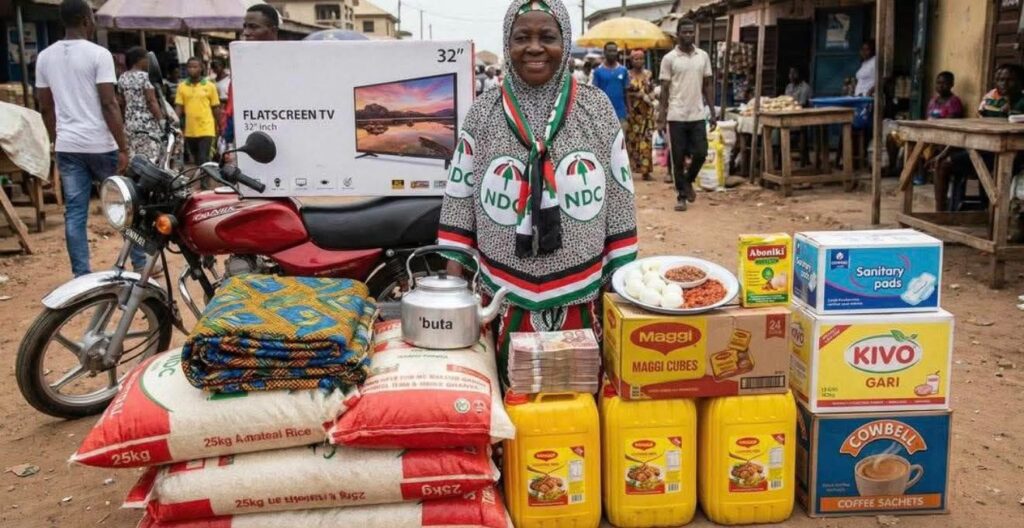
We, however, found the following AI-connected features.
- Inscriptions on some of the items were unintelligible, for example the name of the rice brand
- The currency size being equal to horizontal length of the gallon is impossible
- The Kivo gari packaging is also different from what is publicly on sale by retailers
These factors gave a strong first impression that the image was likely created using AI or had been manipulated. The second step was to pass it through the Google SynthID platform, which detects AI manipulation for content such as images, videos or audios.

With a very high SynthID confidence rating, the result read: “SynthID detected in all or part of the uploaded content.”
Image 2 – What did we find with our visual analysis?
The second image showed a man in an NDC branded shirt with almost the same set of items that had been displayed in front of the woman. GhanaFact’s attention was drawn to the image after it was shared on Facebook by Alhassan Suhuyini, an NDC MP and Deputy Minister for Roads.
Our visual analysis revealed the following anomalies:
- Multiple inscriptions in the image were unintelligible, the rice brand, Maggi is wrongly written, sanitary is written sanisary.
- The size of the bank notes like in the earlier image is extraordinarily big
- A careful look at the hands of the man shows AI ‘smudging’ – that is unnatural features.
- The Kivo gari box in the image does not correspond to what the manufacturer produces
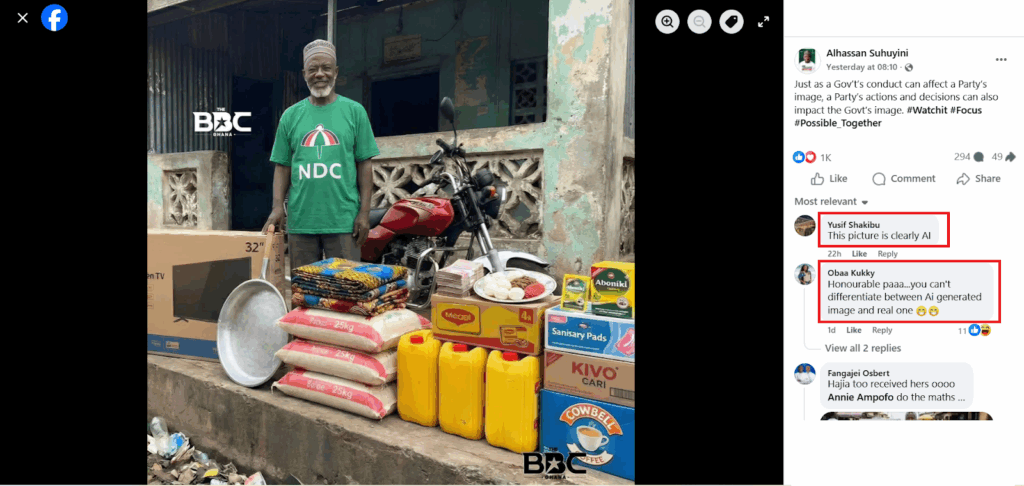
With a very high SynthID confidence rating, the result read: “SynthID detected in all or part of the uploaded content.”

Finally, we passed the two images through the Google Gemini platform, its summary read as follows: “These images appear to be AI-generated satirical commentaries regarding Ghanaian politics, specifically referencing the National Democratic Congress (NDC), one of the country’s major political parties.
“While they look realistic at first glance, several details reveal they are likely digital creations intended to mock or exaggerate the practice of “vote-buying” or campaign gifting.”