

Researched by Samuel Nii Adjetey
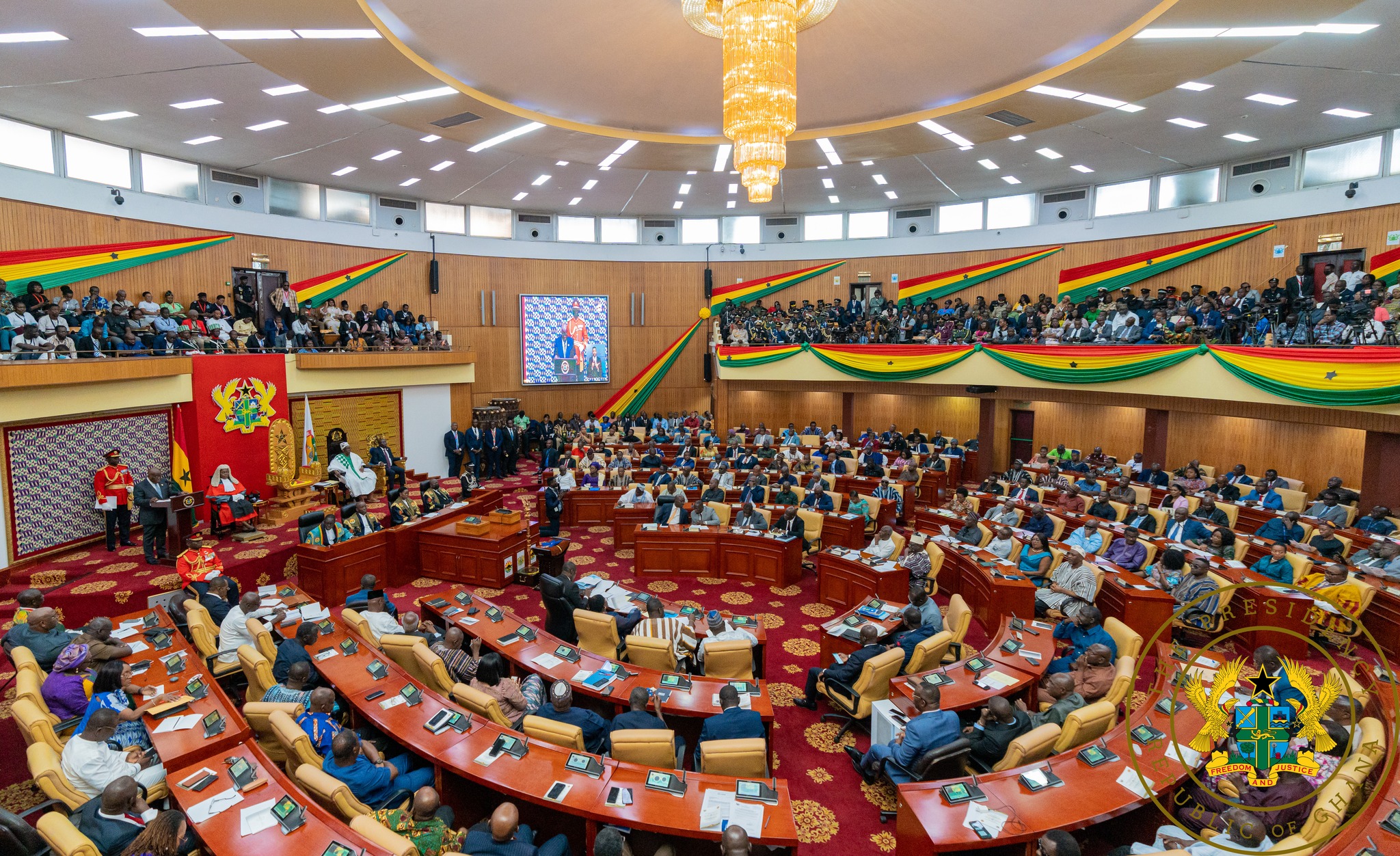
The Minister for Finance, Cassiel Ato Forson, during his presentation of the 2026 budget on November 13, 2025, claimed that the Electricity Company of Ghana’s (ECG) revenue has risen by almost 90 per cent, from GH¢900 million to GH¢1.7 billion.
The Minister attributed the increase in revenue to better enforcement of the Cash Waterfall Mechanism (CWM). “The Electricity Company of Ghana’s revenue has risen almost 90 percent, from GH¢900 million to GH¢1.7 billion, thanks to better enforcement of the Cash Waterfall Mechanism”, he said.
This analysis piece will verify whether ECG’s revenue has risen by almost 90%, from GH¢900 million to GH¢1.7 billion.
Sources of data for our analysis
GhanaFact relied on two key data sources, including official monthly revenue figures from the Public Utilities Regulatory Commission (PURC’s) Cash Waterfall Mechanism (CWM) validation reports and 2024 internal cash revenue data obtained directly from ECG.
The internal revenue figures were obtained through a Right To Information (RTI) request submitted to ECG by FactSpace West Africa, and the CWM figures were taken from PURC’s monthly validation publications (available online), which capture the revenue that ECG formally reports to the regulator.
These two datasets allowed for a comparison between what ECG internally records and what it officially submits for regulatory allocation and distribution.
RelatedNews



ECG is the main state-owned power distributor, responsible for serving the southern and middle belts of the country. The northern belt of the country in terms of power supply and distribution is catered for by the Northern Electricity Distribution Company (NEDCo).

What is the Cash Waterfall Mechanism (CWM)?
The Cash Waterfall Mechanism is a regulatory framework implemented by the PURC to ensure transparent and equitable distribution of ECG’s collected revenues among sector institutions such as the Ghana Grid Company (GRIDCo), Volta River Authority (VRA), Northern Electricity Distribution Company (NEDCo), and others.
Under this mechanism, ECG submits its monthly revenue collections to the PURC, which verifies the figures and then allocates the funds according to approved ratios to the different stakeholders in the power production chain.

Has ECG collected GH¢1.7 billion in 2025 under the CWM, as claimed?
The last revenue figure ECG recorded under the previous government in December 2024 was GH¢970,012,000.00, per the PURC’s CWM report for the month. “The total ECG revenues reported for December 2024 were GH¢ 970,012,000.00,” the report stated.
With respect to the last ten months (January to October 2025), PURC’s CWM data shows that revenue collections have ranged from a lowest of GH¢1,005,200,000.00 in January to a highest of GH¢1,616,477,032.29 for June 2025.
Therefore, per publicly available official figures, the difference between the best performing month in 2025 and the revenue figure reported in December 2024 is 646 million Ghana cedis – which results in a percentage change of 66.6% and not the 90% as the Finance Minister claimed.
Below are the 2025 month-on-month revenues reported by the ECG to PURC.
| January 2025 | GH¢ 1,005,200,000.00 |
| February 2025 | GH¢ 1,135,702,316.89 |
| March 2025 | GH¢ 1,390,673,790.70. |
| April 2025 | GH¢ 1,400,217,026.80 |
| May 2025 | GH¢ 1,318,670,618.83 |
| June 2025 | GH¢ 1,616,477,032.29 |
| July 2025 | GH¢ 1,531,990,725.85 |
| August 2025 | GH¢ 1,367,222,574.00 |
| September 2025 | GH¢ 1,528,750,254.28 |
| October 2025 | GH¢ 1,428,110,224.05 |
While the minister’s reference to 1.7 billion revenue generated is not supported by available evidence, GhanaFact found that a similar figure was quoted by the Managing Director of the national power distributor, Julius Kpekpena, who was reported to have said ECG collected 1.7 billion in revenue for the month of July 2025, even though their reporting to the CWM stood at 1.5 billion.
What ECG’s internal revenue data for 2024 says?
ECG’s internal cash revenue reports for 2024, as obtained through an RTI request, showed strong month-to-month performance, with the highest collection recorded in September at 1.46 billion cedis, while the lowest was in June at 1.14 billion cedis.
The same ECG in 2024, however, recorded significantly lower figures to the PURC, the highest being for December at 970 million cedis, with the lowest figure in May at 800 million cedis.
From the above, GhanaFact observed an underreporting of revenue by the ECG to the PURC as compared to data from internal cash revenue reports captured. This underreporting was recorded across all twelve months. The differences ranged from moderate to significant amounts, indicating that the figures submitted to the regulator did not fully reflect the cash inflows captured internally.
What was the average revenue ECG reported to PURC in 2024
With the minister’s claim that revenue had increased from 900 million to 1.7 million, GhanaFact analysed the two different 2024 ECG revenue datasets: the data as supplied in the RTI and what was reported by the ECG to the PURC.
The total revenue submitted to PURC for the year amounted to 10.44 billion cedis, giving an average monthly revenue of around 870 million cedis. This shows that although ECG recorded higher collections in some months, the annual average does not reach the 900 million cedis figure the minister quoted.
The internal reports consistently exceeded the revenue submitted to PURC, showing notable gaps between the two reporting streams.
ECG 2024 Revenue reports
| Month (2024) | ECG Internal cash revenue reports | ECG Revenue reports to PURC | Difference in revenue reports |
| January | GH¢ 1,205,648,041.56 | GH¢ 820,450,000.00 | GH¢ 385,198,041.56 |
| February | GH¢ 1,356,704,144.49 | GH¢ 832,600,00.00 | GH¢ 524,104,144.49 |
| March | GH¢ 1,219,237,027.25 | GH¢ 1,002,850,000.00 | GH¢ 216,387,027.25 |
| April | GH¢ 1,278,602,662.13 | GH¢ 832,600,000.00 | GH¢ 446,002,662.13 |
| May | GH¢ 1,325,275,943.03 | GH¢ 800,845,000.00 | GH¢ 524,430,943.03 |
| June | GH¢ 1,138,783,338.32 | GH¢ 884,200,000.00 | GH¢ 254,583,338.32 |
| July | GH¢ 1,323,283,328.25 | GH¢ 857,000,000.00 | GH¢ 466,283,328.25 |
| August | GH¢ 1,323,283,328.25 | GH¢ 795,000,000.00 | GH¢ 528,283,328.25 |
| September | GH¢ 1,456,134,036.36 | GH¢ 811,000,000.00 | GH¢ 645,134,036.36 |
| October | GH¢ 1,374,754,171.80 | GH¢ 911,050,000.00 | GH¢ 463,704,171.80 |
| November | GH¢ 1,401,283,834.05 | GH¢ 920,115,200.00 | GH¢ 481,168,634.05 |
| December | GH¢ 1,366,233,990.65 | GH¢ 970,012,000.00 | GH¢ 396,221,990.65 |
| Totals | GH¢ 15.77 billion | GH¢ 10.44 billion | GH¢ 5.33 billion |
GhanaFact’s findings were corroborated by the final Price WaterHouse Coopers (PwC) audit report on ECG’s 2024 revenue collections released this year.

Competing Claims About the Revenue Leap: Digitization vs. CWM compliance
The discussion around ECG’s improved revenue performance has been shaped by two contrasting narratives. Former Vice President Mahamudu Bawumia has consistently attributed the revenue leap to digitisation.
Bawumia consistently argued that the expansion of digital payment channels, digital tracking systems, and improved interoperability has reduced leakages, improved transparency, and enabled ECG to capture more of the revenue it historically lost. According to this view, technology, not administrative pressure, is the core driver behind ECG’s improved monthly collections.
More recently, Minister for Finance Cassiel Ato Forson and Minister for Energy and Green Transitions, John Jinapor, disputed this explanation, insisting that the revenue surge is due primarily to the strict enforcement of the Cash Waterfall Mechanism and the introduction of a new billing system, which now compels ECG to accurately report collections to the PURC.
The Energy Minister stressed that the CWM’s validation and allocation process forces ECG to align its internal numbers with regulator-verified figures, reducing the space for underreporting. From his perspective, the improvement is the result of regulatory discipline rather than digitisation.
Factors Driving ECG’s Revenue Growth
In their proposal for the review of Electricity Distribution and Supply Aggregate Revenue Requirement and Tariff for 2025–2029, published in April 2025, ECG attributed the increases in sales to a combination of tariff adjustments and strategic initiatives.
The company highlighted that the end-user tariff increases from the 2022–2024 Major Tariff Review in September 2022, along with subsequent quarterly adjustments through the Automatic Adjustment Formula (AAF), were key drivers.
ECG further noted that operational and technological interventions contributed to the revenue growth, including the deployment of smart prepaid meters, digitisation projects, and targeted revenue improvement drives.
“The main reason accounting for the increases in sales is the increase in the end-user tariff initially in the 2022-2024 Major Tariff Review in September 2022 and subsequently through the quarterly adjustment with the implementation of the AAF.
“The company also embarked on some strategic initiatives that complemented the growth in sales. These are: a. The deployment of 1.16 million smart prepaid meters under the LRP; b. Digitization projects undertaken by ECG, including the cashless system, spot billing, and CAIMS; Various revenue improvement drives, including Operation No Free Consumption, Operation Fix the Bill, Operation Collect All, and Operation Keep the Light On.”
Conclusion
The revenue collection data does not support the assertion by the finance minister that ECG’s revenue was around 900 million cedis for 2024. The claim around 1.7 billion revenue collected in 2025 per month is also not supported by available public data.
The subject of ECG’s revenue going up, however, is therefore a combination of factors; from the strict adherence to the PURC’s CWM, through to digital interventions but more importantly, the end-user tariff and its periodic adjustments.