

Ghana’s economy was heavily reliant on agriculture, with cocoa and timber serving as major export commodities, until the discovery of oil and the subsequent drilling of the resource in commercial quantities in 2007, according to the Petroleum Commission.
Ghana’s oil revenue is governed by the Petroleum Revenue Management Act (PRMA), Act 815 of 2011, as amended by Act 893 in 2015.
GhanaFact recently debunked a widely circulated news item and accompanying flyer that said Parliament had approved a request by the John Dramani Mahama-led government to dedicate all oil revenues and mineral royalties to the flagship Big Push policy.
We found that the claim was FALSE, because per parliamentary records and clarification by the Roads Minister, the allocation wholly dedicated to the Big Push was limited to the portion of budgetary support through the Annual Budget Funding Amount (ABFA).
This analysis piece will look at the oil and minerals revenue allocation formula and explore what the previous government did with it as well as what the Big Push project is about.
According to the law, the total oil revenues and mineral royalties accrued to the government are distributed into three main components:
RelatedNews

- The Ghana Heritage Fund (GHF) – 9%
- The Ghana Stabilisation Fund (GSF) – 21%,
- The Annual Budget Funding Amount (ABFA) – 70%

The Ghana Heritage Fund (GHF) and the Ghana Stabilisation Fund (GSF) collectively form the Ghana Petroleum Funds (GPF), which are designed to cushion the economy against petroleum revenue shortfalls, stabilize public spending , and support development when oil resources are depleted.
The Annual Budget Funding Amount (ABFA) on the other hand, is the portion of the oil revenue allocated to the Consolidated Fund and used to support the government’s annual budget and development.
What is ABFA being used for currently?
During a courtesy call by the Public Interest Accountability Committee (PIAC) on July 12, 2025, President Mahama stated that the primary sources of funding for the Big Push initiative would be petroleum revenue and minerals royalties.
“We decided that we will commit the money to what we call the Big Push…we said we will implement the big push which will be a $2 billion a year investment in infrastructure for five years. And so the intention is to invest 10 billion over 5 years in infrastructure and that includes roads and bridges and important infrastructure… the ABFA is going there,” he said.
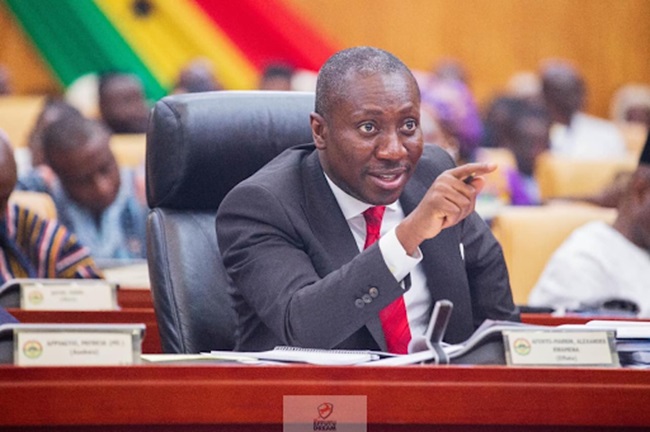
This was further affirmed in the 2025 Mid-Year Fiscal Policy Review presented by the Finance Minister, Cassiel Ato Forson on July 24, 2025, where he noted that “…parliament approved that all oil revenues and mineral royalties accrued to the Budget be dedicated to the Big Push.”
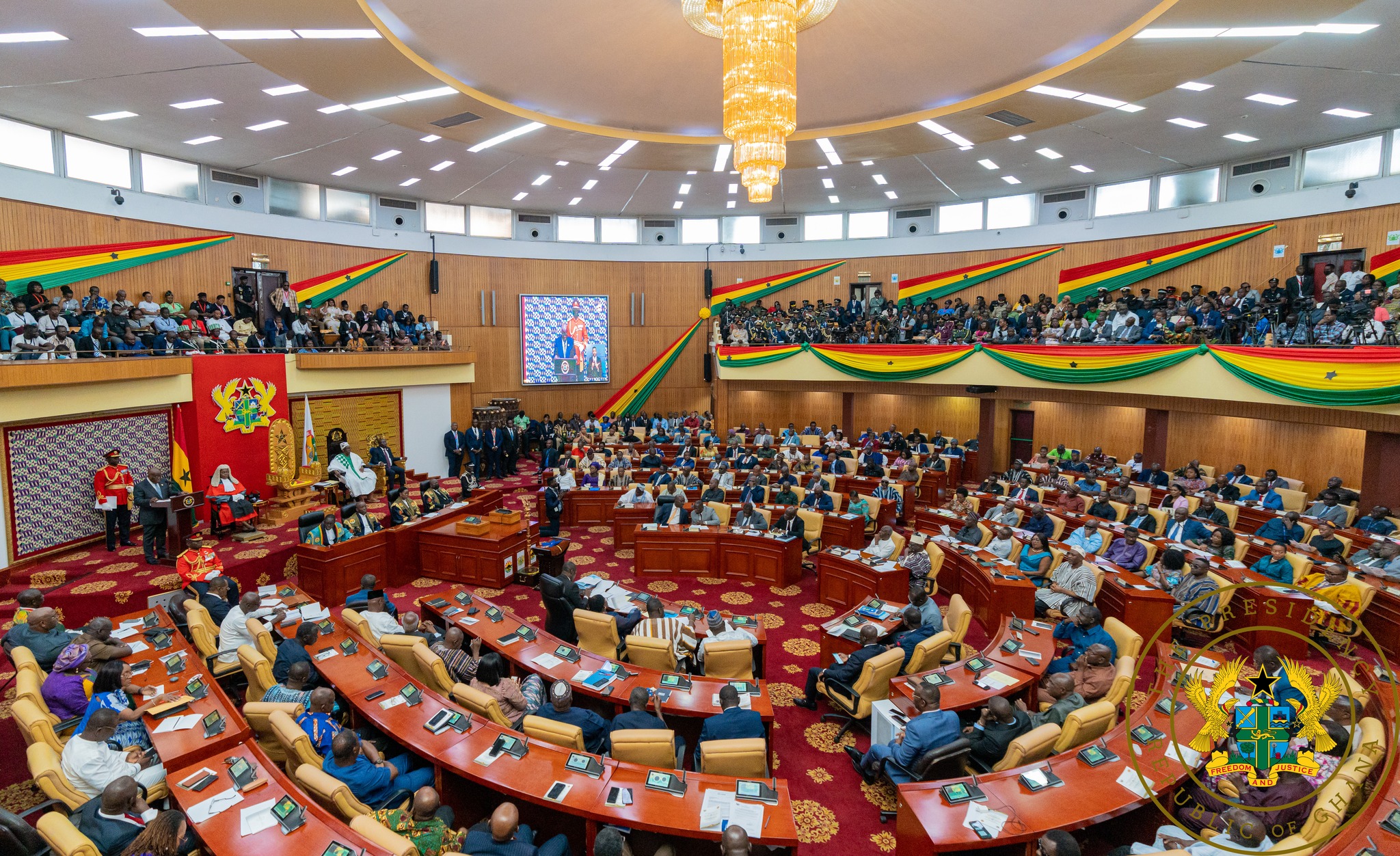
Subsequently, Parliament on July 30, 2025, approved the request for the budget-accrued oil revenue which is the ABFA to be dedicated to the Big Push programme.
GhanaFact has previously published a fact-check report confirming the funding source of the Big Push (read here)
What is the Big Push?
Ahead of the 2024 general elections, the National Democratic Congress(NDC) introduced the Big Push, a national infrastructure development programme aimed at accelerating Ghana’s infrastructure development, creating jobs, and transforming the economy.
The initiative promised to continue the NDC’s legacy of massive infrastructure development to boost growth and create job opportunities.
Key components of the Big Push
- Job-creating infrastructure: A $10 billion infrastructure plan to complete abandoned and uncompleted government projects across sectors.
- Revamp of Ghana Infrastructure Investment Fund (GIIF)
- Water Infrastructure: Expand and rehabilitate water supply systems in some areas to ensure clean and safe water access.
- Flood and Disaster Management by implementing solutions to the bagre dam spillage
- Agricultural Support by constructing multi-purpose dams
- Rail Transport Development
- Massive Road Projects
How has ABFA been used previously under the NPP administration?
Under the erstwhile New Patriotic Party administration, the ABFA was projected in the 2017 budget statement to support a wide range of sectors including:
- Irrigation Infrastructure
- Greenhouse Project
- GCX Warehouse Receipt System
- Counterpart Fund Requirement (Agriculture Sector Investment Programme)
- Fisheries and Aquaculture Inputs and Infrastructure
- Free Senior High School Policy
- Health Infrastructure
- Road Infrastructure
- Rail Infrastructure
- PIAC Operations

PIAC’s Insight
For further understanding of the oil revenue distribution with respect to ABFA, GhanaFact reached out to the Public Interest Accountability Committee (PIAC), via email for insights regarding the maximization of ABFA, its commitment to the Big Push and accountability measures.
Regarding maximizing the use of ABFA, PIAC noted that it has supported the country’s economic growth. However, it noted challenges such as fragmented spending, delays in disbursement and limited impact assessment which weakens the overall efficiency of the allocations.
“These investments have supported economic growth and improved service delivery in some sectors. However, concerns remain about whether the ABFA has been fully optimised. Issues such as fragmentation of spending across too many projects, delays in disbursement, and limited impact assessments raise questions about the overall efficiency and effectiveness of the allocations,” PIAC stated.
With respect to government’s decision to commit the ABFA to the Big Push infrastructure programme over a five- year period, PIAC described the initiative as strategic but risky.
“..based on Ghana’s experience with oil revenues and infrastructure financing, fully committing the ABFA carries both opportunities and risks. After a year into implementation, the Committee will have sufficient data to make a more concrete assessment.”
On accountability, PIAC outlined its mandate under section 52 of the PRMA to monitor compliance, provide independent assessments, and create platforms for public debate.
PIAC publishes “two reports annually, a Semi-Annual Report and an Annual Report, which entail a detailed breakdown of the collection, distribution, and use of Petroleum revenues. In addition, PIAC reports on compliance with these provisions.”
It also undertakes nationwide project inspections, district and regional engagements, bi-annual newsletters, and active social media outreach to ensure transparency.
“This way, ABFA spending is not just tracked internally but is subject to external checks, public scrutiny, and on-site verification,” PIAC noted.
Conclusion
The ABFA remains Ghana’s largest share of oil revenue and has funded diverse sectors.
Over the years, its allocation has shifted to reflect the priorities of different administrations, from funding education, health, agriculture and transport projects under the NPP, to being fully committed to the Big Push infrastructure initiative under the current NDC government.
PIAC gave us some key perspectives on the use of oil revenues. We embed their responses to the questions we posed.
NB: The original script has been updated on September 3, 2025 to include the section on PIAC’s insights and pdf embed of their responses to us.