
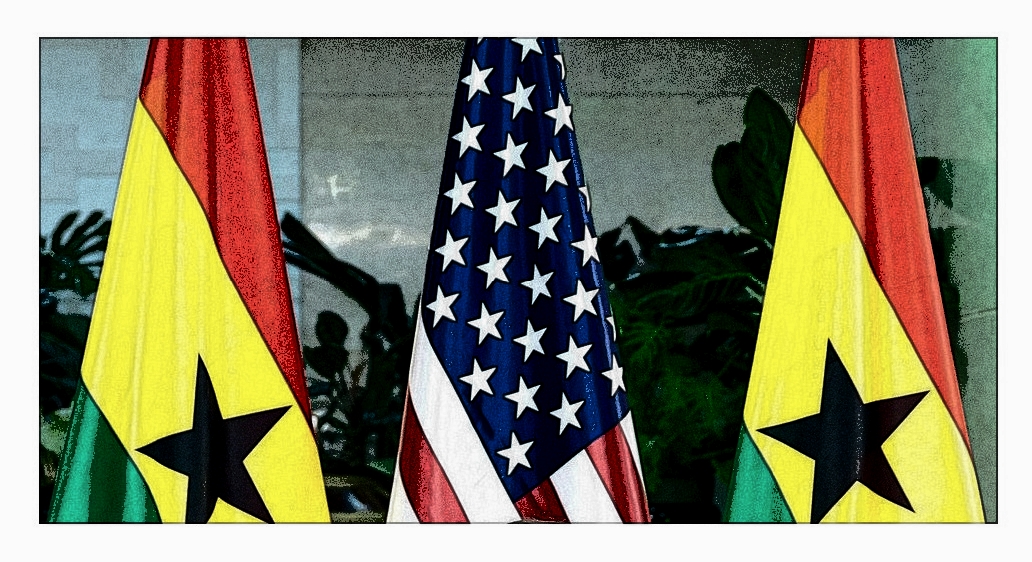

Despite an outright cabinet rejection of a controversial bilateral health deal between the government of Ghana and the United States, Ghana is willing to revisit the deal and possibly renegotiate if major concerns raised are addressed.
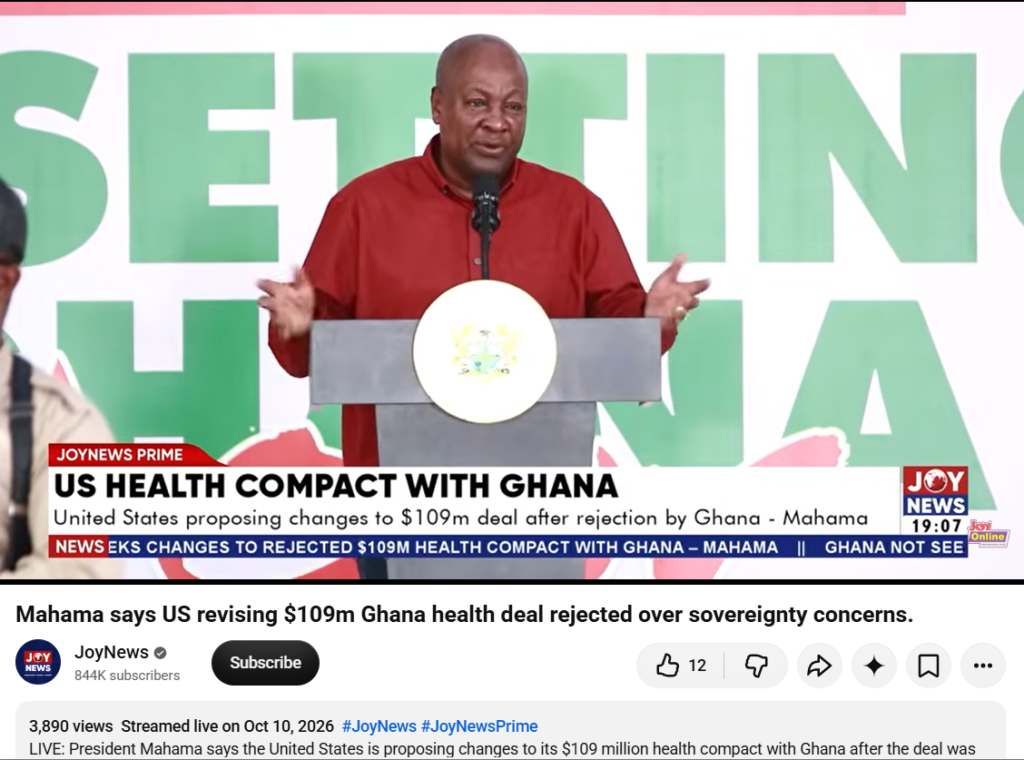
President John Dramani Mahama, who had previously described the deal as “humiliating”, confirmed Ghana’s openness to renegotiate the deal while speaking at an engagement in Goaso in the Ahafo Region in October 2026. The President confirmed that the US had officially requested to renegotiate.
“I have spoken about the health funding MOU the US presented to us while I was in New York. They have returned that they are ready to renegotiate the terms, to remove or amend whatever we are not happy with. So, we are ready to reopen talks with them about the issues,” Mahama said.
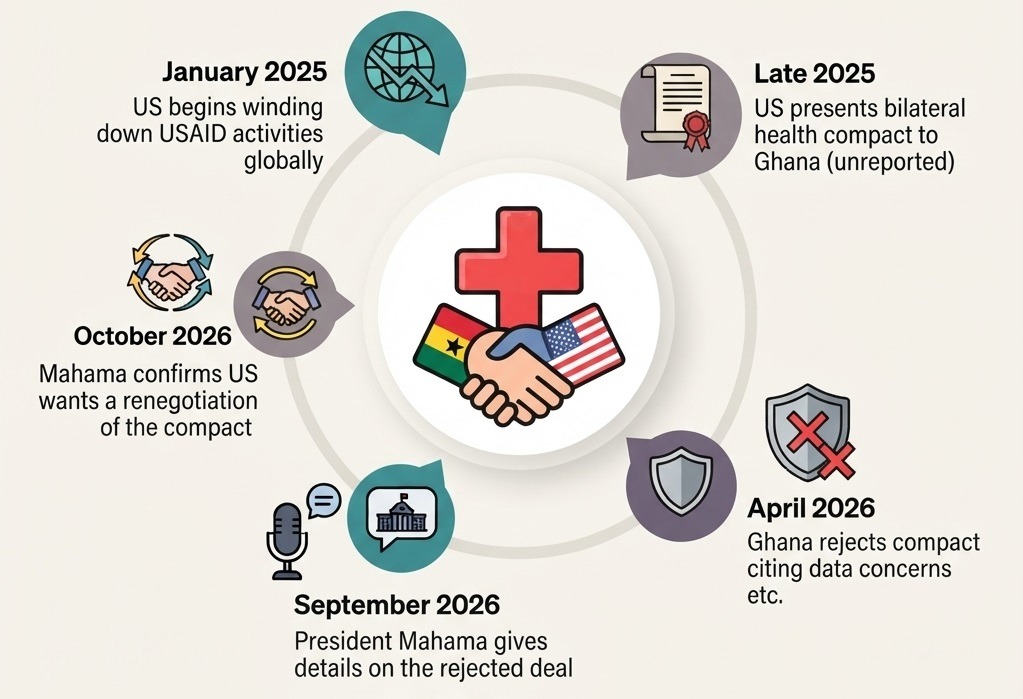
Timeline of Ghana-US health funding pact
Exit USAID, enter bilateral US health deals
America’s global support for health interventions was traditionally anchored in the United States Agency for International Development (USAID) until 2025, when the Donald J. Trump administration disbanded the agency.
Aside from health, USAID funds catered for critical areas like education, gender development, entrepreneurship, democratic consolidation and the information space. Yet despite concerns about a significant funding gap USAID’s closure will cause, on January 20, 2025, President Trump signed an Executive Order titled: “REEVALUATING AND REALIGNING UNITED STATES FOREIGN AID.”
The order stated, among others, “The United States foreign aid industry and bureaucracy are not aligned with American interests and in many cases antithetical to American values.” The US, however, moved to engage countries, especially across Africa, at the bilateral level with health deals meant to cater for lost USAID interventions.
RelatedNews


Even though some African governments have already signed these bilateral health pacts with the United States, Ghana is one of a few, including Kenya and Zimbabwe, that have rejected the deal citing, in particular, sovereignty concerns.
How Ghana planned to deal with USAID funding gap
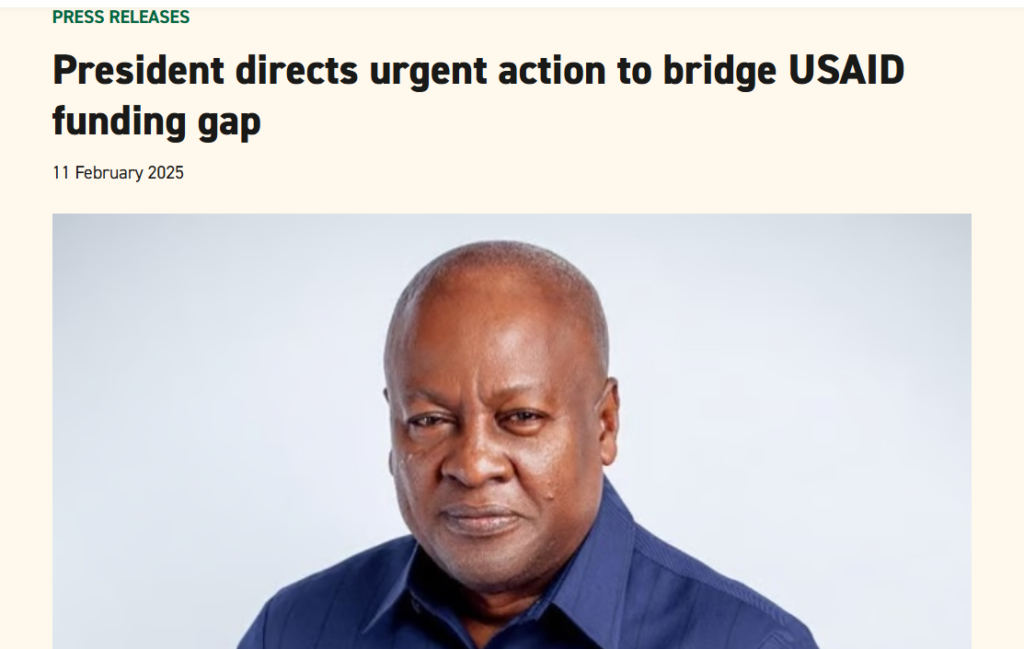
President John Dramani Mahama, in a statement on February 11, 2025, instructed Finance Minister Cassiel Ato Forson to address the funding gaps caused by the scrapping of USAID’s international funding programme.
“The suspension has left a shortfall estimated at $156 million, with critical health and social intervention programmes at risk of disruption,” the presidency said.
“Of particular concern is the projected $78.2 million shortfall that threatens essential programmes in malaria prevention, maternal and child health, family planning, reproductive health, nutrition, and the fight against HIV/AIDS,” it added.
Speaking at an engagement in Germany on February 14, the President reiterated the need to address the USAID funding gap, stating: “It is an opportunity for Africa to increase food production and so if that aid stops coming, we would do the investments that are necessary to make our farmers more productive so that we can establish food security in Africa instead of waiting for those USAID handouts to come.”
US govt proposes a bilateral health deal
In 2023, the US government signed a funding deal with the NHIA worth US$5 million before that, in January 2024, another two-part deal worth US$25 million was also agreed with the Ghana Health Service.
By early 2025, USAID was technically gone, and while Ghana was working to plug the hole left behind, the US government proposed a five-year, $109 million bilateral health funding agreement.
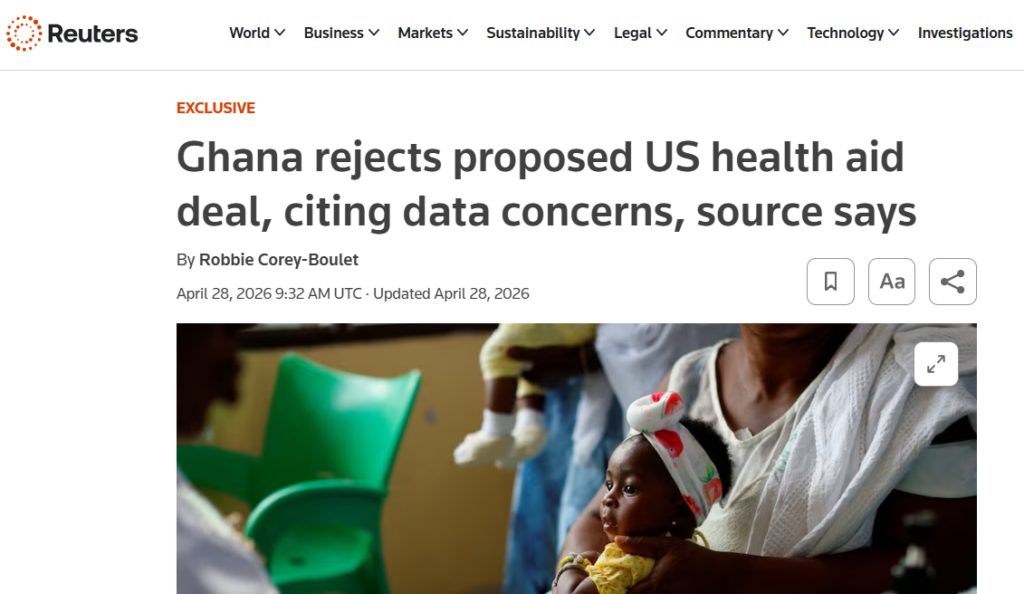
Ghana’s rejection is what brought the issue into the public eye, first via an April 28 Reuters Exclusive report that said: “Ghana has rejected a bilateral health deal with the United States of America (USA).”
“The government of President John Dramani Mahama balked at terms requiring the sharing of sensitive health data, the source said.” The report revealed.
On April 29, the state-owned Daily Graphic confirmed the Reuters report, citing highly placed sources in government. “The source said the country could not agree to share information as sensitive as health data about the citizenry with a foreign nation. Ghana, the source stressed, had since communicated its decision to the United States government.”
President Mahama gives details on the ‘humiliating deal’ in New York
President John Dramani Mahama in September 2026 gave details about the deal and why Ghana’s cabinet rejected it outright. Speaking at the Council on Foreign Relations event in New York on September 25, 2026, President Mahama gave the following highlights on the US health compact.
- Ghana, as a sovereign and democratic nation, subjected the document to due process.
- The Ministry of Health studied the compact and presented a Cabinet Information Paper to Cabinet
- Several provisions in the document were flagged.
- The US wanted Ghana to give them our pathogen profile.
- Ghana was required to commit a set amount of money as counterpart funding
- Any medications or medical products brought into the country under the programme would not be subject to inspection by the Food and Drugs Authority (FDA).
- Cabinet rejected the compact in record time.
- The Minister of Health directed that the US Ambassador be informed that Ghana would manage on its own.
The president said about the compact: “It states that we shall give the United States our pathogen profile. It also says we should give our medical records. I mean, who takes another country’s medical records?” “It was humiliating,” President Mahama added.
US Embassy in Ghana responds
On September 28, 2026, the United States Embassy in Ghana addressed a press conference on Ghana’s rejection of the proposed bilateral health compact, insisting the arrangement was consistent with international best practices and would not involve the disclosure of patients’ personally identifiable information.
Rolf Olson, Chargé d’Affaires ad interim at the Embassy, explained that the proposed Memorandum of Understanding (MoU) was intended to strengthen Ghana’s capacity to manage its own health programmes rather than undermine the country’s sovereignty.
Some key points from his address were:
- The Trump administration is still supporting existing health interventions – $82 million and $53 million in health sector investments in 2025 and fiscal year 2026, respectively.
- The US is evaluating a final multimillion-dollar installment for fiscal year 2027.
- The US is moving towards phasing out its support for some existing programmes due to Ghana’s position on the MOU.
On the issue of US request for access to health data generated in Ghana, Olson compared the proposed data-sharing arrangement to existing practices under the US-funded President’s Emergency Plan for AIDS Relief (PEPFAR) programme and other international health partnerships.
“Consistent with long-standing global best practises for measuring the impact of health interventions, the United States Global Health MOUs requested aggregate health data without any personally identifiable information, similar to data sharing that has been done with the PEPFAR programme and many other international health partners over the years,” he stated.
He explained that the proposed US Global Health MOUs sought aggregate health data, meaning information compiled at a broader level for purposes such as assessing health programmes and measuring their impact.
According to him, similar forms of data sharing have taken place between the United States and international health partners over the years to enable programmes to be assessed and their effectiveness measured. “The MOUs also include provisions for the sharing of pathogen specimens, which is similar to coordination efforts in the fight against Ebola,” he said.
“We’re always open to discussion with our good partners in the government of Ghana. And so the door is always open in that regard to discuss topics of mutual interest,” Olson added.
Conclusion
Given the significant public attention the deal has attracted following the disclosure of its rejection, the next steps will be closely watched. All eyes are on what happens next.