


With the ever-growing access to the internet and the influx of smartphones and other gadgets, the digital space has increasingly become a place of shared opportunities and benefits, as well as cyberthreats, cybercrimes and related risks.
The dark side of digital platforms, or the online space, is captured in INTERPOL’s African Cyberthreat Assessment Report 2026, which noted that, “In 2025, online scams continued to be the most reported type of cybercrime, with attackers leveraging mobile money platforms, social media and AI to reach their targets.”
“Notably, 72 per cent of surveyed countries reported the presence of scam centres, with the highest concentration in Southern and West Africa,” it stressed.
2026 TIP Report – Ghana rises to Tier 1
Ghana rose to Tier 1 status in the 2026 edition of the Trafficking in Persons (TIP) report, recently released by the United States Department of State. According to the International Justice Mission (IJM), “Tier 1 ranking signifies that Ghana fully meets the minimum standards for the elimination of trafficking in persons.”
In an October 9 press release, IJM also lauded all stakeholders whose hard work secured Ghana Tier 1 status: “This prestigious recognition affirms Ghana’s sustained commitment and significant progress in preventing human trafficking, protecting survivors, and prosecuting offenders.”
In this analysis piece, GhanaFact presents an analysis of the role that the online space and/or digital platforms play in perpetrating trafficking.

The Analysis
The TIP report for the last three years has highlighted how online scam centres are playing a big role in trafficking generally. “Traffickers use technology to fraudulently recruit and exploit victims for cybercrime and online fraud operations. Traffickers exploit Ghanaians in forced labour in online scam operations,” the report stated under Ghana’s trafficking profile section.
“Traffickers recruit Nigerian women and girls to Ghana with false promises of employment, then force them into commercial sex to repay inflated debts for transportation and housing. Young people, migrants, and economically vulnerable populations are targeted for cybercrime exploitation and fraudulent migration offers,” it added.
The International Organization for Migration (IOM) states in a publication that: “Human trafficking linked to online scam operations has become one of the fastest-growing forms of organized crime in the world.” The IOM added that “criminal networks recruit people through fake job advertisements, often promising well-paid work in customer service, marketing, sales, administration or the tech sector.”
Comparison of key metrics in 2024 – 2026 TIP reports
| Metric / Year | 2026 | 2025 | 2024 |
| Online mentions | 8 | 4 | 3 |
| Tier status | 1 | 2 | 2 |
| 2022-2026 NAP allocation | GH¢2,203,300 ($235,668) | GH¢900,000 ($61,433) | GH¢460,000 ($38,660) |
| NAP = National Action Plan for the prevention of trafficking | |||
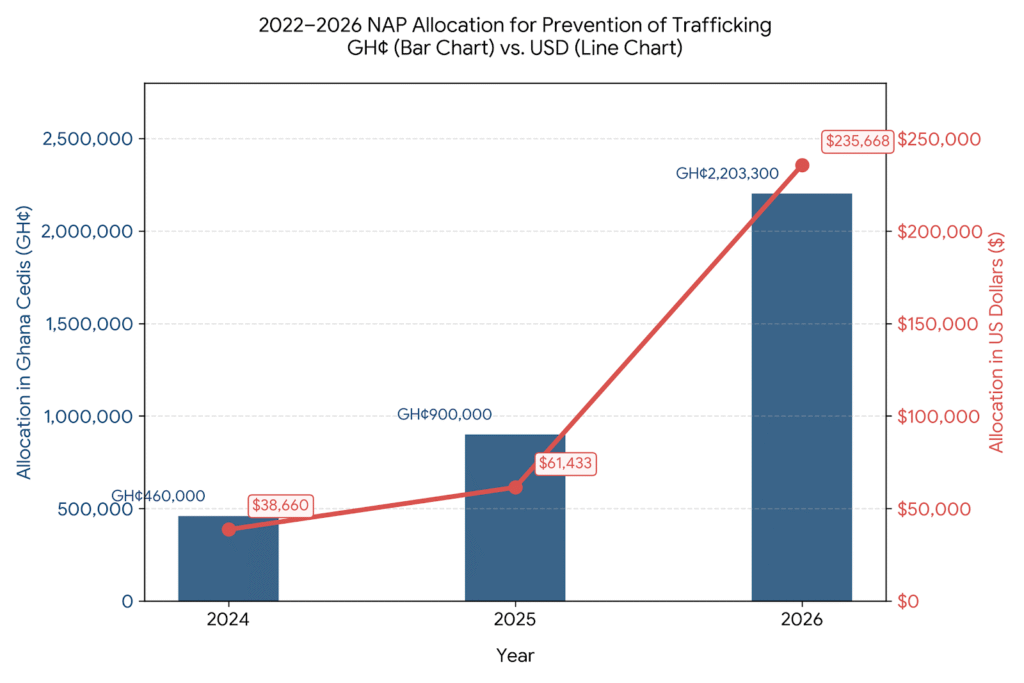
The two major areas of online scam operations mentioned in the report are areas of prosecution and prevention.
Prosecution
The cross-border nature of digital interaction and its viability to expose people to being trafficked meant that the government “cooperated with INTERPOL and foreign governments on law enforcement operations, including online scam operations, that led to 756 foreign trafficking victims identified and repatriated to their home countries.”
Additionally, the report noted that the government “signed an MOU with the e-commerce site QNET to proactively identify, arrest, and dismantle online scam operations linked to fraudulent recruitment and forced labor. Authorities arrested and prosecuted individuals for cyber trafficking and online scams.”
Prevention
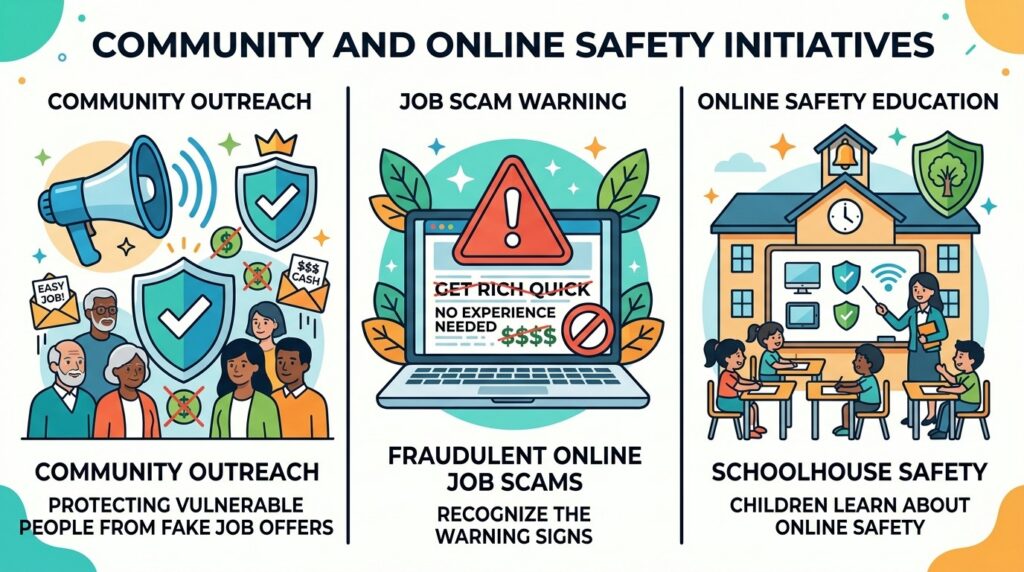
In the area of prevention, the following steps were employed in the government’s awareness creation efforts.
- Government funded and conducted public awareness activities in partnership with partners targeting vulnerable populations
- Campaigns particularly raised awareness of fraudulent recruitment for online scam operations.
- Government also conducted public awareness campaigns on online safety in schools and communities to protect children from online exploitation.
IJM analysis on online scam operations
IJM, in its statement, noted that the TIP report highlighted “the increasing use of technology by traffickers to recruit and exploit victims through fraudulent job offers, cybercrime schemes, online scams, and deceptive migration opportunities.
“These realities underscore the importance of sustained investments in child protection systems, survivor-centered services, community awareness, and coordinated law enforcement responses.”
IJM’s Director, West Africa Programme Anita Budu said, “Ghana’s elevation to Tier 1 status is a significant national achievement that reflects the power of coordinated action and collective commitment. We commend the Government of Ghana and all stakeholders whose dedication has contributed to this milestone.
“At the same time, we recognize that thousands of children and vulnerable adults remain at risk of trafficking and exploitation. This achievement should inspire us to work even harder to ensure every child is safe, every survivor is protected, and every trafficker is held accountable,” she stressed.
Researched by Alfa Shaban