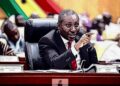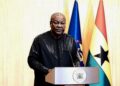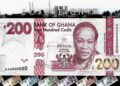


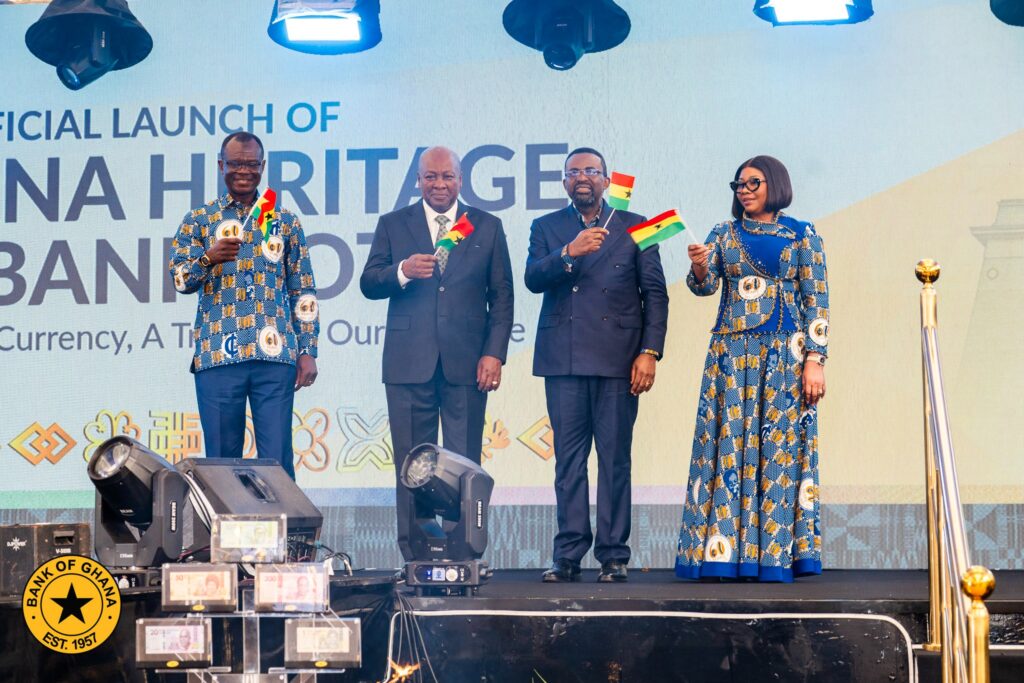
On November 12, 2026, President John Dramani Mahama officially launched the Bank of Ghana’s redesigned currency notes, known as the Ghana Cedi Heritage Series, at the Bank Square in Accra.
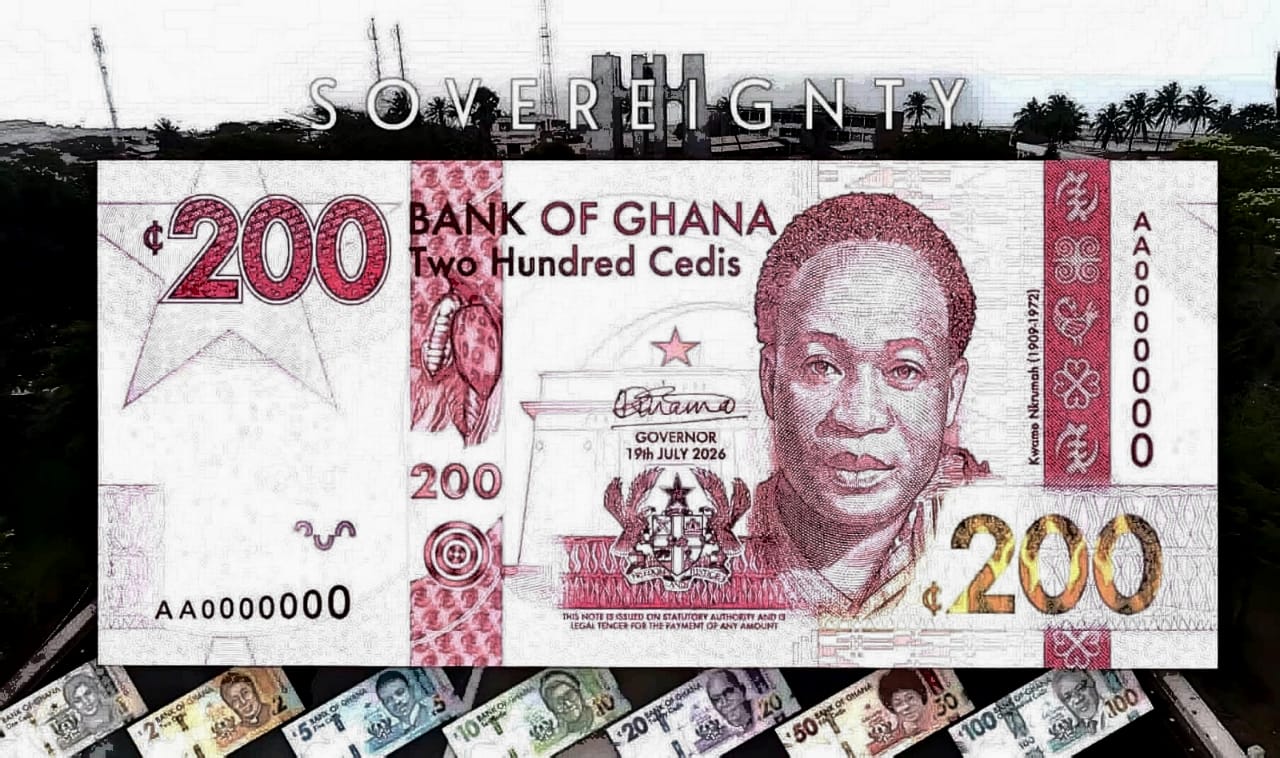
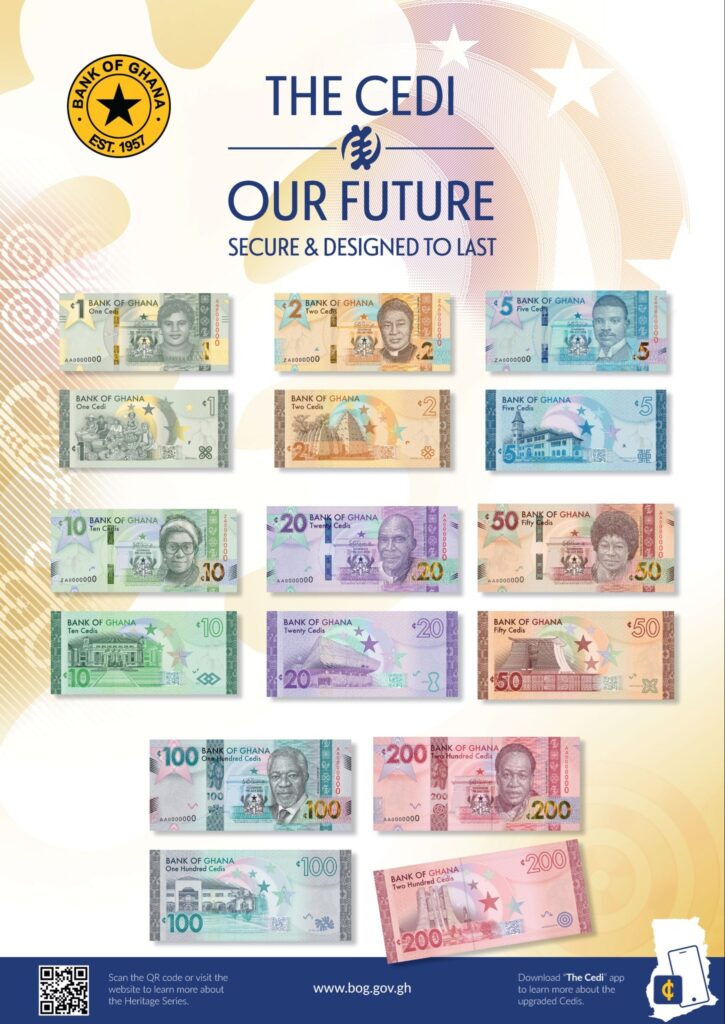
The new series covers all eight existing denominations, GH¢1 to GH¢200 banknotes, and features enhanced security features, more durable materials and redesigned layouts. It also incorporates Ghana’s historical landmarks, national personalities and Adinkra symbols, celebrating the country’s history and cultural identity.
The new notes are expected to enter circulation on December 1, 2026, alongside the existing banknotes. Beyond the improved physical features, the new banknotes have sparked public debate, particularly over the personalities and cultural references selected for denomination.
Personalities and symbols behind the notes
The Heritage Series features eight Ghanaian personalities, each representing a different aspect of the country’s history and national development. From commerce and education to justice, culture, peace and sovereignty, each denomination tells a distinct story.
The table below highlights the personalities and landmarks featured on the eight banknotes, alongside their corresponding themes and Adinkra symbols.
| Denomination | Personality | Landmark on the reverse | Theme | Adinkra symbol |
| GH¢ 1 | Agnes Oforiwaa Tagoe-Quarcoopome | Makola Market | Commerce | Bɛsɛ Saka |
| GH¢ 2 | Cardinal Peter Porekuu Dery | Larabanga Mosque | Religious Freedom | Nyame Dua |
| GH¢ 5 | Dr. J.E.K Aggrey | Achimota School | Education | Nea Onnim no Sua a Ohu |
| GH¢ 10 | Justice Annie Jiagge | Supreme Court | Justice & Equality | Epa |
| GH¢ 20 | Dr. Ephraim Amu | National Theatre | Arts & Entertainment | Dono |
| GH¢ 50 | Theodosia Salome Okoh | Jubilee House | Nationalism | Fawohodie |
| GH¢ 100 | Kofi Annan | Kofi Annan International Peacekeeping Training Centre | Peace | Bi Nka Bi |
| GH¢ 200 | D. Kwame Nkrumah | Kwame Nkrumah Memorial Park | Sovereignty | Adinkrahene |
AI-generated images and the online conversation
The unveiling of the new banknotes triggered a wave of AI-manipulated images, humorous posts and discussions about artificial intelligence on social media.
RelatedNews


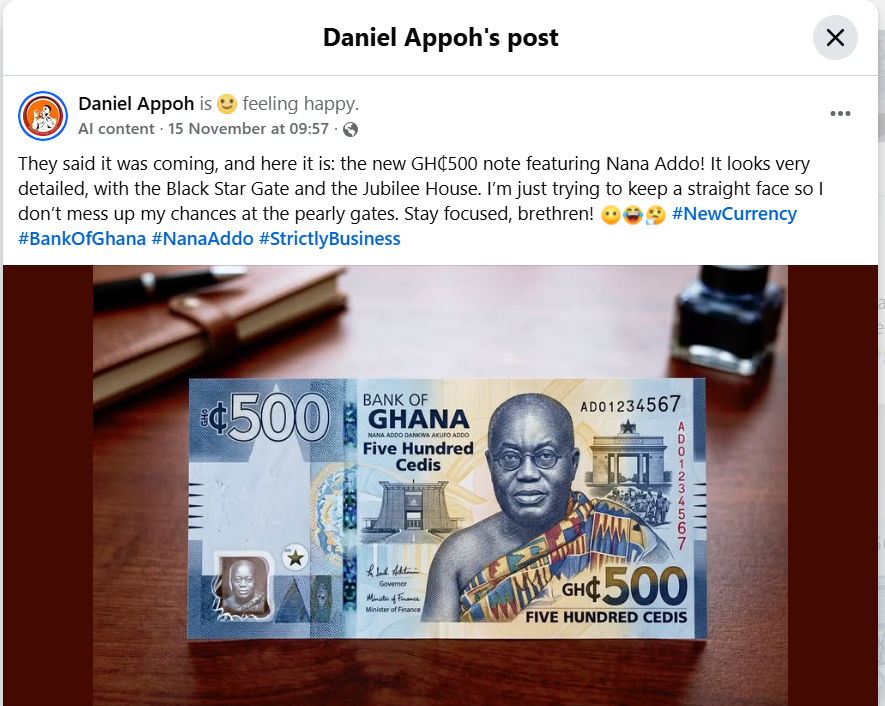
A Facebook user shared an image of a fictional 500 banknote featuring former President Nana Addo Dankwa Akufo-Addo. The note displayed his portrait, alongside images of the Black Star Gate and Jubilee House.
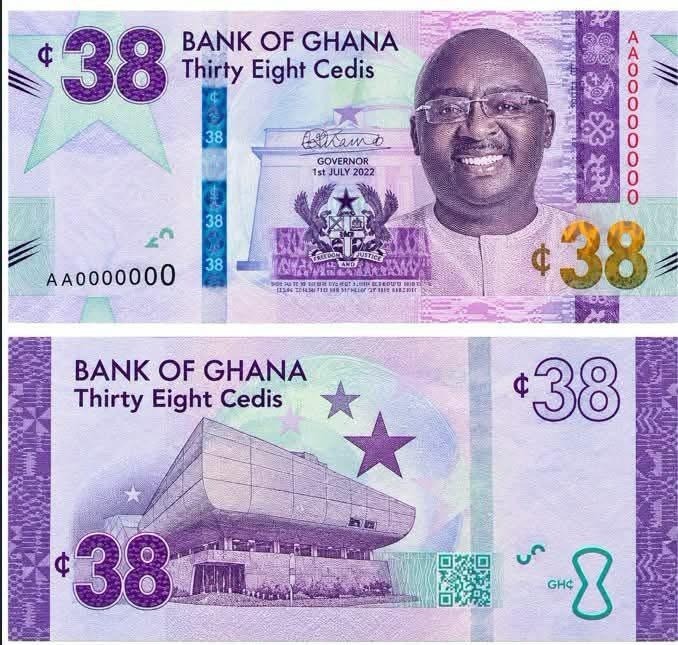
Another circulating image depicted a fictional GH¢38 banknote bearing the portrait of former Vice-President Dr Mahamudu Bawumia with an image of the National Theatre on the reverse side.
These images became part of the humorous and satirical conversations surrounding the launch, with social media users commenting on the redesign and political developments. Beyond the mis and disinformation, some social media users also questioned whether AI was used in producing images featured on the official banknotes.
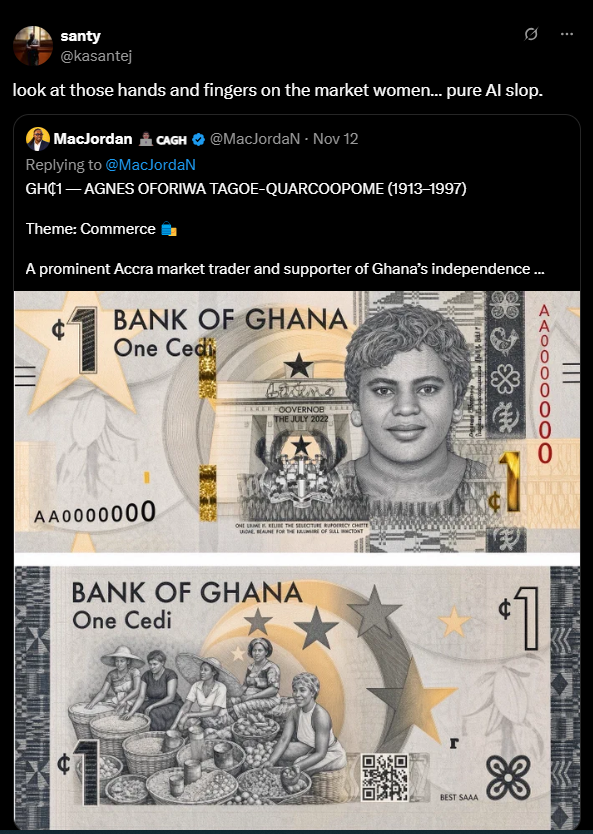
Some social media users questioned the appearance of people depicted on the notes, pointing to what they considered unusual details in certain images. Others raised concerns about the possibility of AI-generated images being used to represent particularly historical figures. (here, here)
The Gh¢50 note controversy
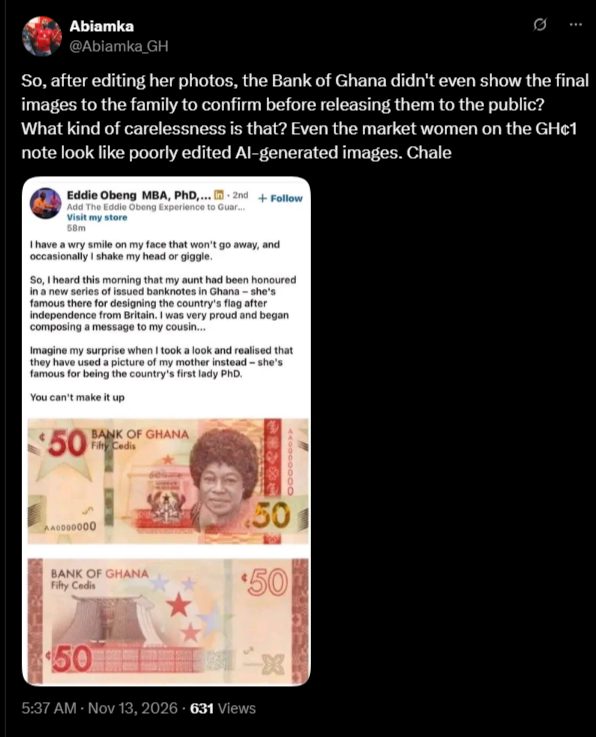
A prominent controversy surrounding the new banknotes concerned the identity of the woman depicted on the GH¢50 note, Theodosia Salome Okoh, designer of Ghana’s national flag.
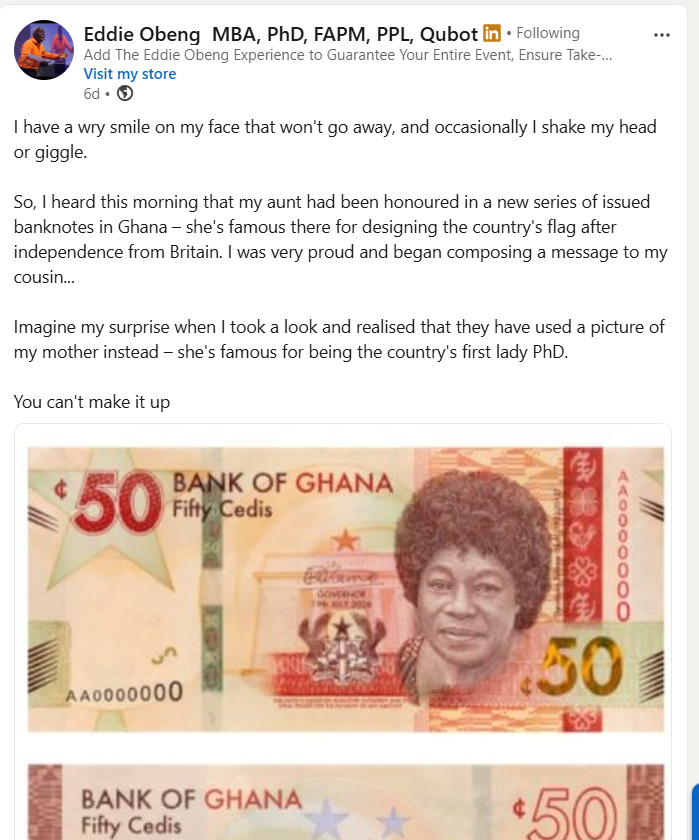
The controversy gained attention after a LinkedIn post by Professor Eddie Obeng, a nephew of Madam Okoh and son of scientist Dr Leticia Obeng, questioned the identity of the woman depicted on the banknote.
In the post, Professor Obeng suggested the portrait looked more like his mother, Dr Leticia Obeng, than his aunt, Theodosia Okoh. His comment generated widespread discussion on social media, with some Ghanaians also questioning the resemblance and the process used to select and approve the portraits.
Bank of Ghana’s response
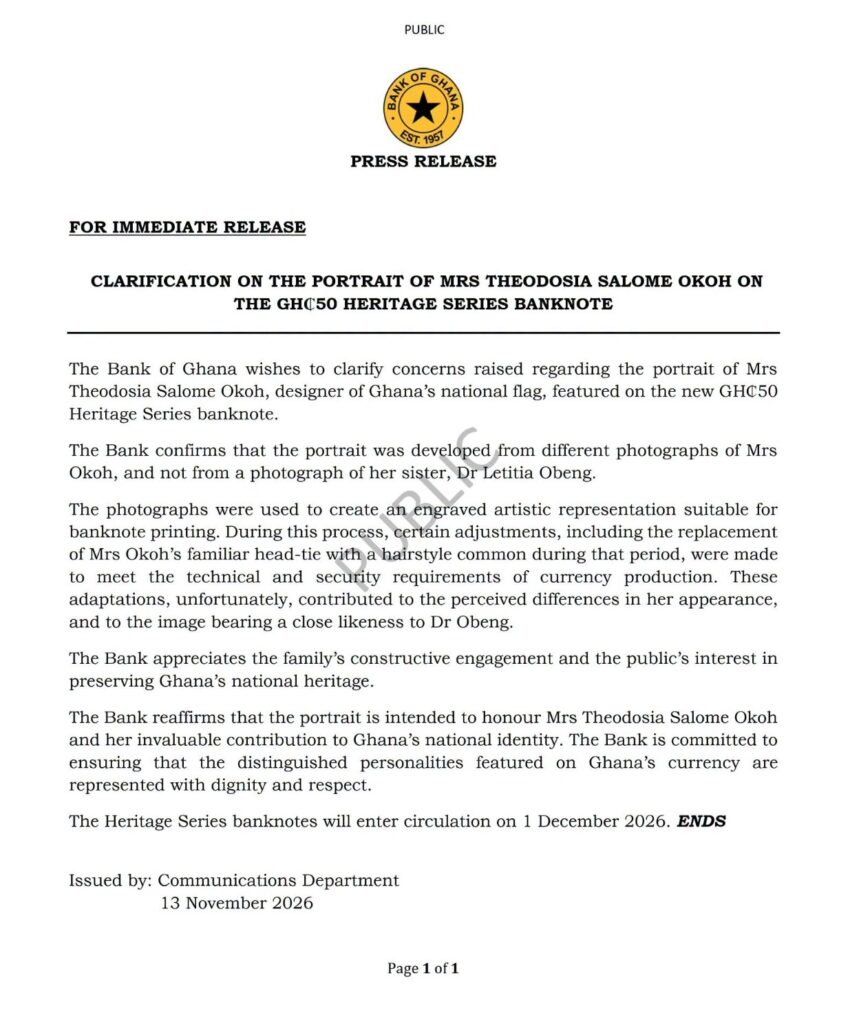
On November 13, the Bank of Ghana subsequently issued a clarification, explaining that the portrait was developed from different photographs of Theodosia Okoh and not from a photograph of her sister, Dr Letitia Obeng.
Minority’s call for explanation
This alleged misrepresentation also attracted political commentary with Minority Leader Alexander Afenyo Markin criticizing the government. Addressing the press on the redesigned currencies, he said: “In haste to erase the Big Six from our currency and our history.
“Out of that hate and haste, we saw them outdooring a new 50 cedi note, but they got her picture wrong and placed on the 50 Ghana notes a different face. So the question is: a whole government machinery that cannot be diligent enough to get the right picture to put on our currency, how can we trust them with our economy?”
The Member of Parliament for Ofoase Ayirebi, Oppong Nkrumah, also called for an explanation of the design and process for the new banknotes before Parliament. He also sought clarification on the alleged misrepresentation of identities.
“What are the technical reasons for which our currency is being changed? Reasons for which currency is being changed. How much has this exercise cost us? How do they respond to the misrepresentations of identities on the face of some of the notes that they have presented?
“What will it cost us to reprint those notes on which identities have been misrepresented? …They will have to show up before Parliament and answer all of these questions. Parliament will also be looking for a copy of the due diligence report on the designs and who signed that report,” he said.
Claims about a Zimbabwean content creator on GH¢1 note
Another discussion centred on one of the market women depicted among traders on the reverse side of the new GH¢1 note. Posts across social media platforms claimed that the woman featured on the banknote was a Zimbabwean social media content creator and influencer.
According to some posts, she visited Ghana in 2021 and went to Makola Market, where she reportedly filmed content while posing alongside Ghanaian market women.
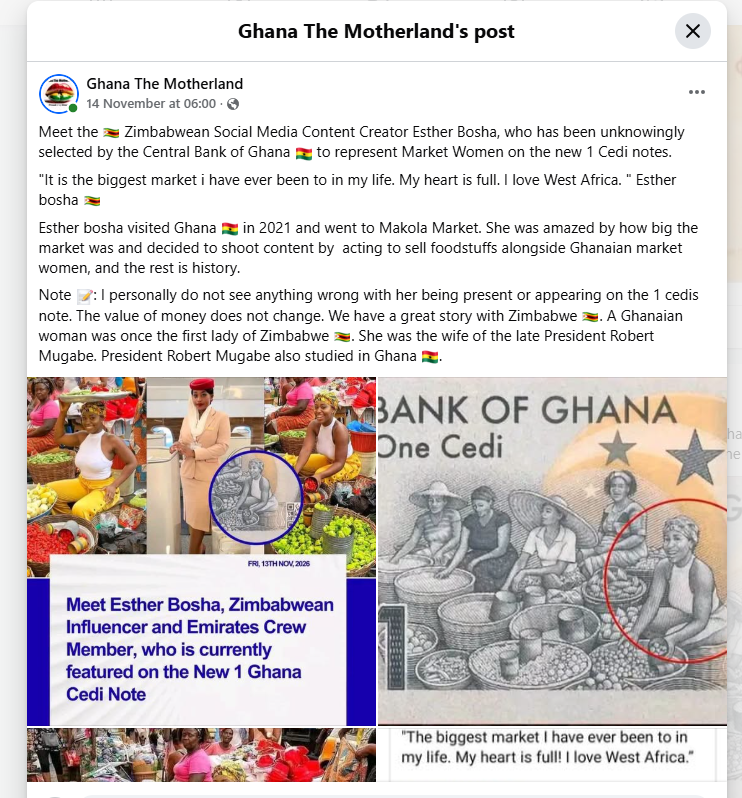
The claim generated another conversation about the identities of people represented on the new currency and the process through which their images were selected.
As the new notes prepare to enter circulation on December 1, 2026, the discussions highlight the public interest in how national symbols and historical figures are represented on the national currency.