

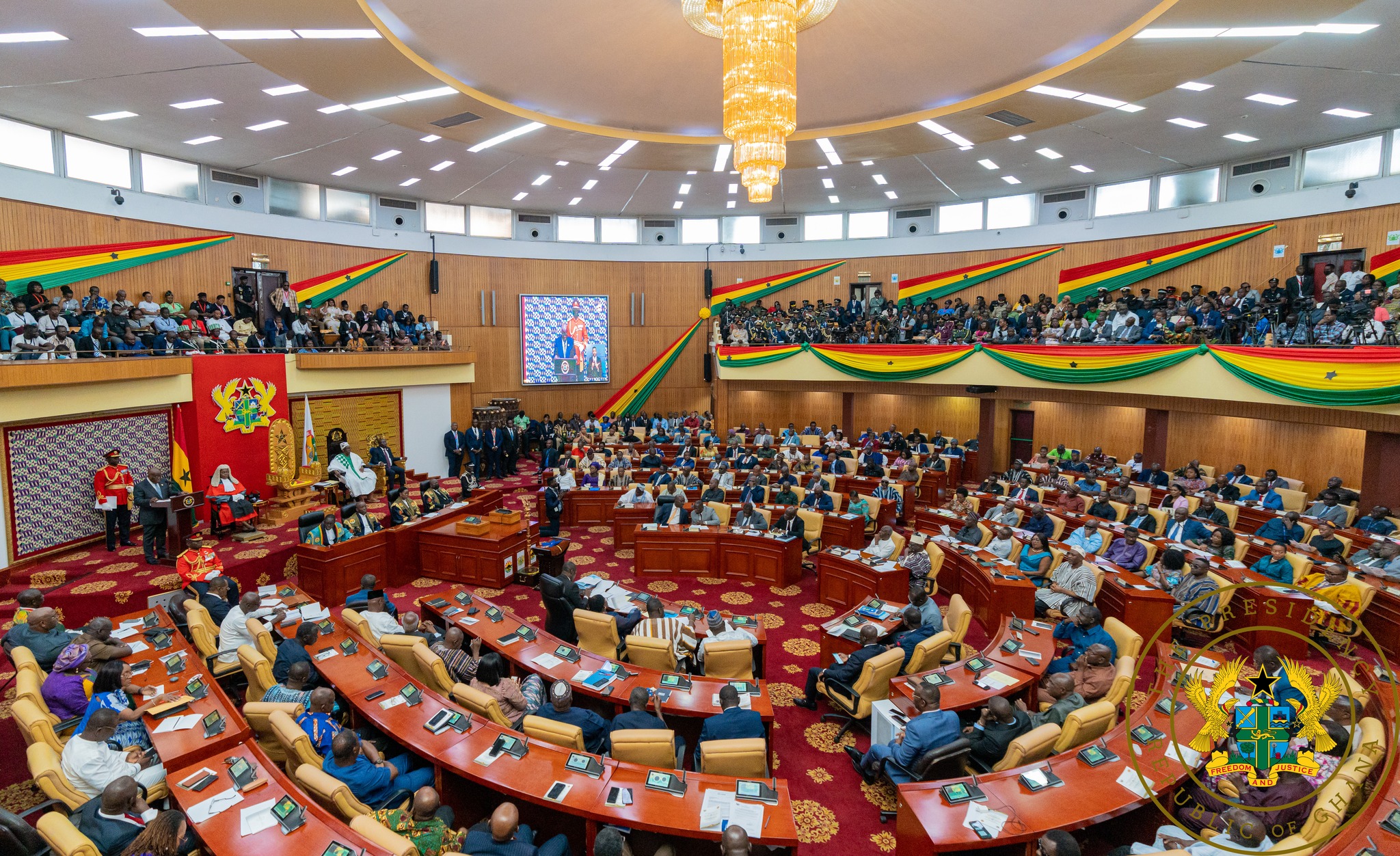
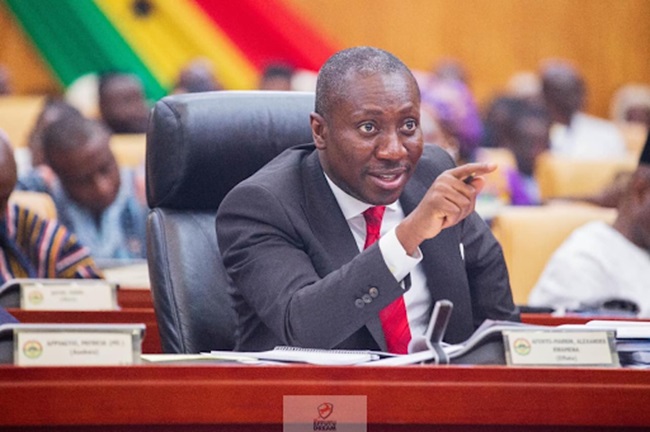
The Finance Minister, Cassiel Ato Forson, presented the 2026 Budget Statement and Economic Policy before Parliament on November 13, 2025, outlining the government’s economic policies and financial projections for the 2026 fiscal year.
The budget, themed “Resetting for Growth, Jobs and Economic Transformation,” highlights key shifts in policy direction, ongoing commitments to social intervention programmes, and renewed focus on economic initiatives by the John Dramani Mahama government.
GhanaFact, as part of our post-budget analysis, presents a comparative overview of the current budget and the 2025 document, with specific focus on budgetary allocations for major government initiatives and social programmes.
The report examines the changes in funding levels, areas of increased or reduced allocations, and analyses the percentage differences between the last two budgets presented by the finance minister.
While 2026 allocations showed that some programmes experienced significant increases, others saw reductions, while a few remained unchanged.
In total, we analyzed 15 allocations of programmes and policies that have dominated public interest since the first budget was presented in March. We found the following:
RelatedNews
- Total number of programmes / policies analysed = 15
- Policies or programmes that saw increased allocations = 10
- Policies or programmes that saw reduced allocations = 3
- Policies or programmes that same same allocation = 2
- Highest % increase was to Women’s Development Bank = 681.7%
- Lowest % increase was to Teacher Trainees Allowance = 1.97%
Increased allocations
Allocation to the Women’s Development Bank saw the largest increase by 681.7% (from 51.3 million cedis to 401 million cedis), followed by the Big Push programme which rose by 116.61%, then Adwumawura Programme by 60% and Free Senior High School by 20%.
The District Assembly Common Fund increased by 18.51%, the LEAP programme increased by 15.36% and the School Feeding Programme by 10.74%. Capitation Grant and ‘No-Fee Stress’ policy increased by 7.90% and 7.44% respectively, while Teacher Trainee allowances rose slightly by 1.97%
Reduced allocations
Allocation to the National Apprenticeship Programme experienced a sharp cut of 43.3%, Nursing Trainee Allowances reduced slightly by 1.25% while Free Sanitary Pads saw a marginal reduction of 0.14%
Unchanged allocations
A few programmes maintained their allocation between 2025 and 2026. The National Coders Programme and Monthly allowances to Assembly Members retained their allocations of 100 million Ghana cedis each.
Summary Table of Budgetary Allocations (+ means increase, – means reduction)
| Initiatives/Programmes | 2025 Allocation (GH¢) | 2026 Allocation (GH¢) | Difference (%) | |
| 1 | Free SHS | 3.5 billion | 4.2 billion | 700 million (+20%) |
| 2 | Women’s Development Bank | 51.3 million | 401 million | 349.7 million(+681.7%) |
| 3 | ‘Adwumawura’ Programme | 100 million | 160 million | 60 million(+60%) |
| 4 | ‘No-FeeStress’ policy | 499.8 million | 537 million | 37.2 million(+7.44%) |
| 5 | Teacher Trainee allowances | 203 million | 207 million | 4 million(+1.97%) |
| 6 | District Assembly Common Fund (DACF) | 7.51 billion | 8.9 billion | 1.39 billion(+18.51%) |
| 7 | School Feeding Programme | 1.788 billion | 1.98 billion | 192 million(+10.74%) |
| 8 | LEAP programme | 953.5 million | 1.1 billion | 146.5 million(+15.36%) |
| 9 | Capitation Grant | 145.5 million | 157 million | 11.5 million(+7.90%) |
| 10 | Big Push | 13.85 billion | 30 billion | 16.15 billion(+116.61%) |
| Initiatives/Programmes | 2025 Allocation (GH¢) | 2026 Allocation (GH¢) | Difference (%) | |
| 1 | National Apprenticeship Programme | 300 million | 170 million | -130 million(-43.33%) |
| 2 | Free Sanitary Pads | 292.4 million | 292 million | -400 thousand(-0.14) |
| 3 | Nursing Trainee Allowances | 480 million | 474 million | -6 million(-1.25%) |
| Initiatives/Programmes | 2025 Allocation (GH¢) | 2026 Allocation (GH¢) | Difference (%) | |
| 1 | National Coders Programme | 100 million | 100 million | 0 |
| 2 | Monthly allowances to Assembly Members | 100 million | 100 million | 0 |
Overall, the 2026 budget reflects a balance between strengthening social intervention programmes and supporting key economic and empowerment initiatives, aligning with the government’s stated priorities.
By Nusrat Essah