

Conversations around Ghana’s telecom-enabled payment systems infrastructure, also known as mobile money (MoMo) interoperability, often revolve around who takes credit for the initiative and or the statistics of jobs created.
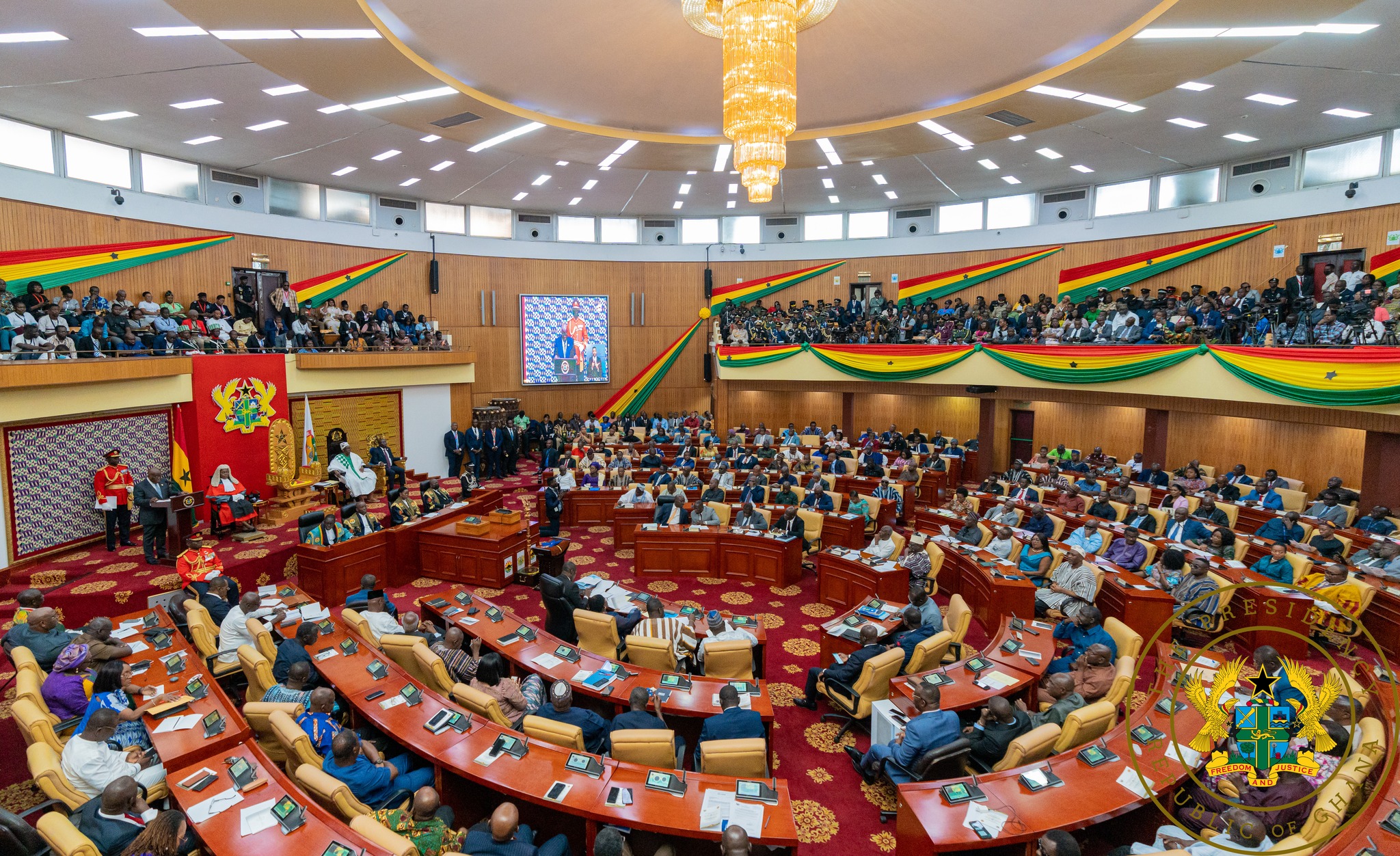
At a campaign stop in the Ketu South Constituency on November 15, 2025, the former Vice President and 2024 New Patriotic Party flagbearer, Dr Mahamudu Bawumia, claimed the Nana Addo Dankwa Akufo-Addo administration created 800,000 jobs for mobile money agents, citing the central role of mobile money interoperability.
“When I came, our mobile money had problems; if you had MTN, you couldn’t move money to someone with Vodafone or Airtel. You couldn’t move money from a bank account to a Momo account. So I said if there was no country in Africa that you could do that, but I said it is possible for us to do it in Ghana, and we have done it.
“Because the mobile money business has expanded, we have created jobs for MoMo agents. When we came, the MoMo agents were 107,000. Now they are 900,000. We have created 800,000 jobs for MoMo agents,” he said (here, and here, here).

In this piece, GhanaFact presents facts about the payment systems infrastructure.
What is mobile money interoperability?
Mobile money interoperability (MMI) is a service that allows direct and seamless transfer of funds from one mobile money wallet to another mobile money wallet across networks. The service allows the transfer of funds from a wallet into a bank account and e-zwich cards, the same as from a wallet and e-zwich cards to a bank account.
RelatedNews



The system was developed by the Ghana Interbank Payment and Settlement Systems Limited (GhIPPS), an agency affiliated with the Bank of Ghana (BoG), and technology partners.

Bawumia’s 800,000 MoMo agents claim – What the numbers say
The former Vice President is on record to have said: “Because the mobile money business has expanded, we have created jobs for MoMo agents. When we came, the MoMo agents were 107,000. Now they are 900,000. We have created 800,000 jobs for MoMo agents.”
We fact-checked.
As a first step, we looked at BoG’s operational definitions for two key terms: active mobile money accounts and active agents.

According to the Bank of Ghana’s Payments Systems report for 2017, the total number of registered mobile money accounts in 2016 was 19,735,098, but only 8,313,283 of these accounts were active users.
For those who operate the business of mobile money services, also called “agents”, registered agents had reached 136,769, while the number for active agents reached 107,415 (see page 20 of the report).
In 2018, the year interoperability was implemented, the total number of registered mobile money accounts reached 32,554,346, while active users were 13,056,978.
Registered mobile money agents reached 396,599, while active agents reached 180,664 at the end of 2018 (see page 13 of the 2018 Payment Systems Oversight Annual Report).
By the time the Akufo-Addo administration left office in 2024, registered mobile money accounts had reached 73 million, while active accounts had reached 23.5 million. Registered mobile money agents also reached 883,000, while active agents reached 404,000 (see page 5 of the report).
| Momo Accounts | 2016 | 2018 | 2024 | 2025 |
| Registered accounts Active accounts | 19,735,098 8,313,283 | 32,554,346 13,056,978 | 73 million 23.5 million | 79.1 million 25.3 million |
| Registered agents Active agents | 136,769 107,415 | 396,599 180,664 | 883,000 404,000 | 949,000 453,000 |
Dr. Bawumia’s claim that the Nana Addo Dankwa Akufo-Addo administration created 800,000 jobs for MoMo agents is misleading per GhanaFact’s analysis of the publicly available data.
At the end of 2016, when the NDC administration was leaving office, the number of active agents (that is, the fraction of individuals actively engaged in the mobile money business) was 107,415, which makes that aspect of Dr. Bawumia’s claim mostly true.
However, at the end of 2024, when the NPP administration left office, the share of active agents only appreciated by 296,585, bringing the total number of active MoMo agents to 404,000.
His claim that the NPP created 800,000 MoMo jobs is misleading. He appears to subtract the over 107,000 active agents in 2016 from the current 2025 total registered agents of over 949,000, as captured in the Bank of Ghana’s report.

Which government started the payment infrastructure?
Oftentimes, the political class (here, here, and here) has sought to take credit for which administration started the initiative.
GhanaFact, in its investigation, found news dating back to 2016, before the then-NDC administration left office, where the Bank of Ghana had engaged Sibton Switch Systems Limited to build and operate Ghana’s retail payments systems infrastructure (here, here, and here).
“Funds transfer and electronic payment in Ghana are expected to be enhanced soon when the Retail Payment Systems Infrastructure project takes off. Interoperability from a financial perspective involves the ability of a computer system to run application programs from different vendors and to interact with other computers across local or wide-area networks regardless of their physical architecture and operating systems,” one article said.
Using the Wayback Machine, an open-source tool, GhanaFact found that the cost submitted by Sibton Switch to the Bank of Ghana (BoG) for the implementation of the retail payment system was GH¢4,667,414,340.82. Media outlets, here, and here, also reported the same cost figures.
The contract was, however, cancelled when the Akufo-Addo administration took office in 2017. The Bank of Ghana’s new leadership, after a review of the agreement, said it found irregularities with the deal (here and here).
“After the 2016 elections and on the appointment of a new Management of the Bank of Ghana, it became necessary to review the terms of the contract entered into by the previous administration. In reviewing the contract, the new Management of the Bank reached the conclusion that Sibton had neither acquired the licence nor fulfilled the condition precedent for the effectiveness of the rights and obligations of the parties.
“The Agreement, which dealt with the grant of exclusive rights to Sibton Switch to build, operate and own the Ghana Retail Payment Systems Infrastructure was therefore terminated on the basis that it never came into effect,” the BoG said in a statement.
The Central Bank also indicated the “contract awarded to Sibton Switch was one-sided in favour of Sibton Switch and was severely detrimental to the interests of the Bank ”, as it found secret and corrupt payments of up to GH¢410,000.00 made by Sibton Switch Systems Limited and its parent company, Sibton Communications Limited to Mr Gilbert Addy, an official at the Bank of Ghana.
Later in April 2018, Sibton Switch Limited filed a Request for Arbitration at the London Court of International Arbitration (LCIA) against the Bank of Ghana for breaching the Master Agreement for the Ghana Retail Payment Systems Infrastructure entered into by the two parties.
The company had sought relief in the sum of $478 million from the Bank of Ghana.
In August 2021, the London Court of Arbitration ruled in favour of the Bank of Ghana, dismissing all the claims brought by Sibton Switch Systems Limited.
Mobile Money Interoperability launched
Following the termination of the Sibton Switch deal and despite the arbitration process having been filed a month earlier, on May 10, 2018, Dr Mahamudu Bawumia, together with officials from the Ghana Chamber of Telecommunications, the Bank of Ghana, GhIPSS, and commercial banks, launched the first phase of the mobile money interoperability system.
Six months later, the second phase of the project was launched on November 28, 2018.

Ghana’s road to mobile money interoperability: Timeline of events
| BoG signs agreement with Sibton Switch Limited to build the payments infrastructure | August 19, 2016 |
| Termination of the contract with Sibton Switch | February 2017 |
| Sibton Switch goes to arbitration over contract termination by BoG | April 2018 |
| Launch of Phase 1 of Mobile Money interoperability platform under GhIPSS system | May 2018 |
| BoG sacks staff for corruption over Sibton Switch deal | September 2019 |
| Phase 2 of Mobile Money interoperability | November 2018 |
| Sibton Switch loses case | August 2021 |
Conclusion
Ghana’s leading money transfer platform is barely a decade into the interoperability era. While the two major parties continue to haggle over who contributed to the current system in place, it is evident that the platform has deepened financial inclusion and continues to be a game-changer in the financial ecosystem.
By Gifty Danso