

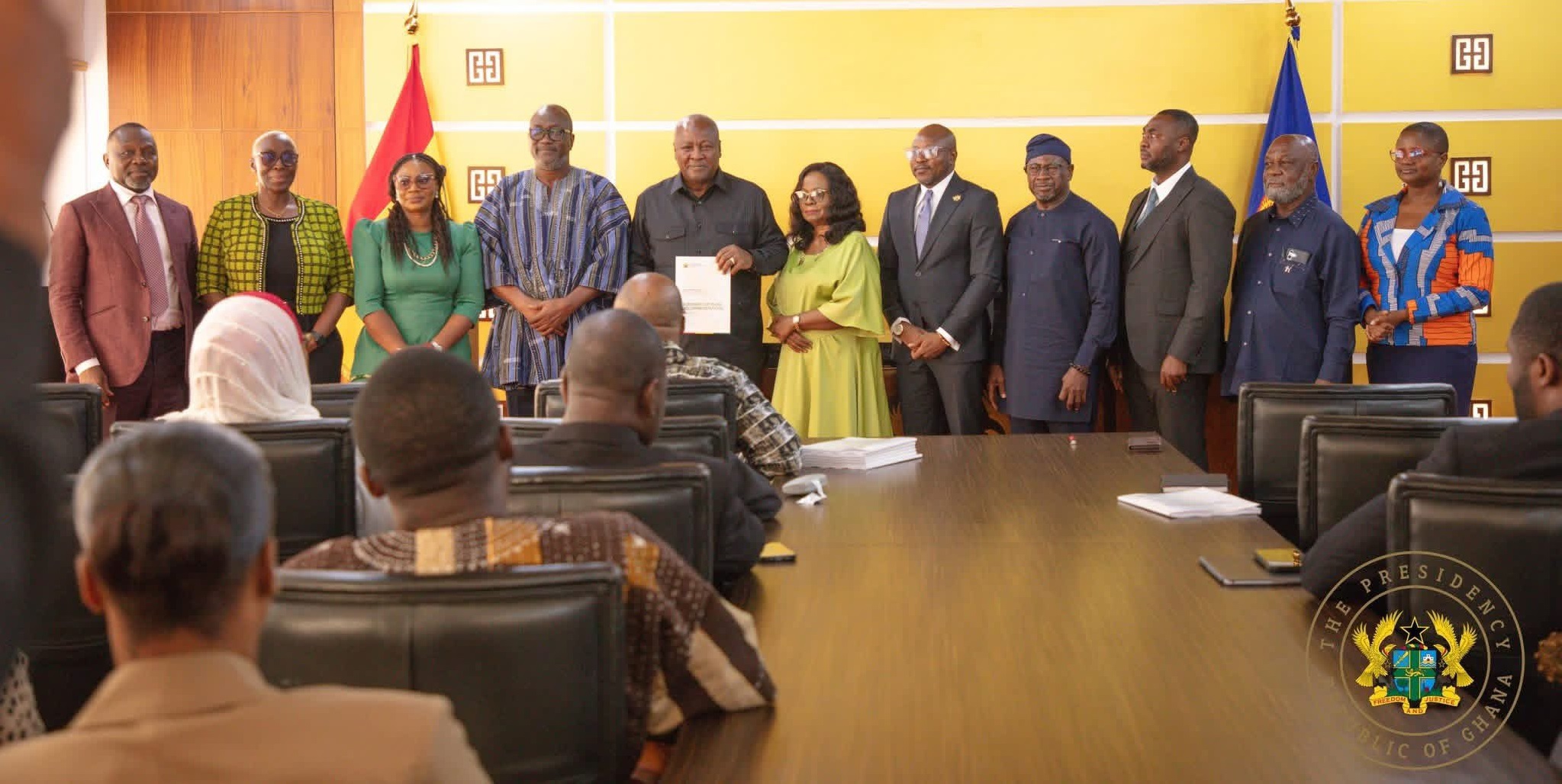
During the Government Accountability Series on July 30, 2026, the Attorney-General and Minister for Justice, Dr. Dominic Ayine, announced the government’s position on the Constitution Review Committee (CRC) recommendations.
Shortly after the announcement, GhanaFact found claims on social media suggesting some of the proposals as new law.
This report explores misinformation around the constitutional review process report, and explains how any proposed reform becomes law.
Final instead of summary: Misreporting about December 2025 report
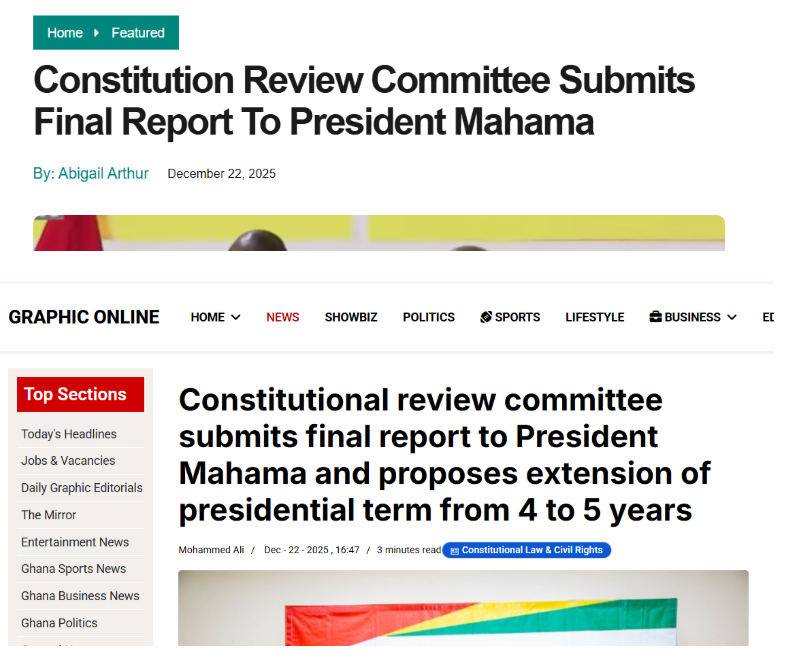
This is not the first time the Constitution Review process was misreported in the media. In December 2025, several media websites reported that the Constitution Review Committee (CRC) had submitted and released its full final report.
Reports by CitiNewsroom, Graphic Online, and GhanaWeb had headlines that suggested that the committee’s full final report had been made public.
Bawumia reacts to Tribunal Bill and calls release of CRC full report
On July 19, 2026, former Vice President Dr. Mahamudu Bawumia waded into the controversy surrounding the Tribunal Bill and questioned the government’s delay in publicing the Constitution Review Committee’s final report.
RelatedNews



“The President established the constitution review committee and it reported last December. This committee recommended removing regional tribunal from the constitution because the High Court has long carried their case load. Yet, the report of the committee has not been published.
“Before the nation has even read it, Parliament has rushed through and legislated in the opposite direction. Mr. President, publish the report first,” he said. (2:03 – 2:41)
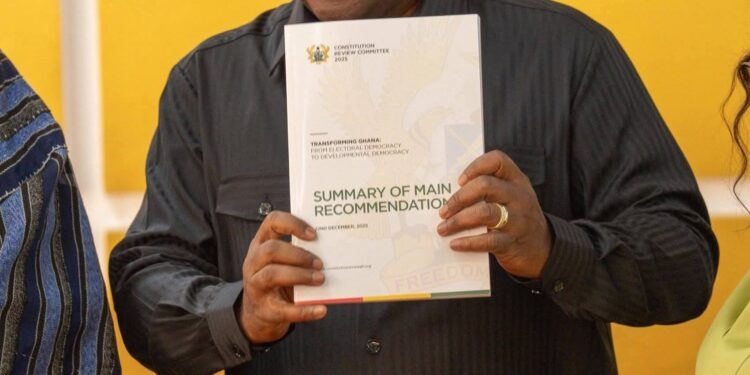
GhanaFact contacted the spokesperson for Dr. Bawumia, Dennis Miracles Aboagye, who clarified that even though the document published by the presidency in December 2025 was titled ‘Final recommendation of the CRC’, the document was only a summary of the committee’s recommendations, not the committee’s complete report.
“On 22nd December 2025, the Presidency received the CRC’s final report and the President directed the publication and release of the report to the public, with a download link on the Presidency website. But the document posted is titled “Final Recommendations of the CRC,” and the Presidency’s own headline was “Presidency releases final recommendations of the CRC”.  I fetched and read the document itself: it is the recommendations volume with a transmittal letter, methodology and chapter-by-chapter recommendations. Media outlets loosely called it “the full report,” which is where the confusion comes from….So, No, What they published is the summary. The full report hasn’t been published and that’s what Dr. Bawumia is calling for.”
Our finding
GhanaFact investigated both claims the December 2025 publication and found that its cover page clearly described the report as a ‘SUMMARY OF MAIN RECOMMENDATIONS’ The committee’s complete final report was officially published only on July 30, 2026, along with the Government’s Position Paper.
Misinformation trails highlights of official government’s position paper
Hours after the Attorney-General’s presentation of the government’s position paper, multiple social media posts and news headlines suggested that the proposed constitutional reforms had taken legal effect.
GhOne TV shared a flyer across its social media platforms (X, Facebook, Instagram, Tiktok and WhatsApp) highlighting one of the accepted recommendations.
The flyer read: “Dual citizens are eligible to contest any position in Ghana – Dominic Ayine (Attorney-General).” Within 3 hours, the post had attracted significant engagement. On X, the post had gained 36.6K views, 167 reposts, and 97 comments which shows that users presumed the recommendation had taken an immediate effect.

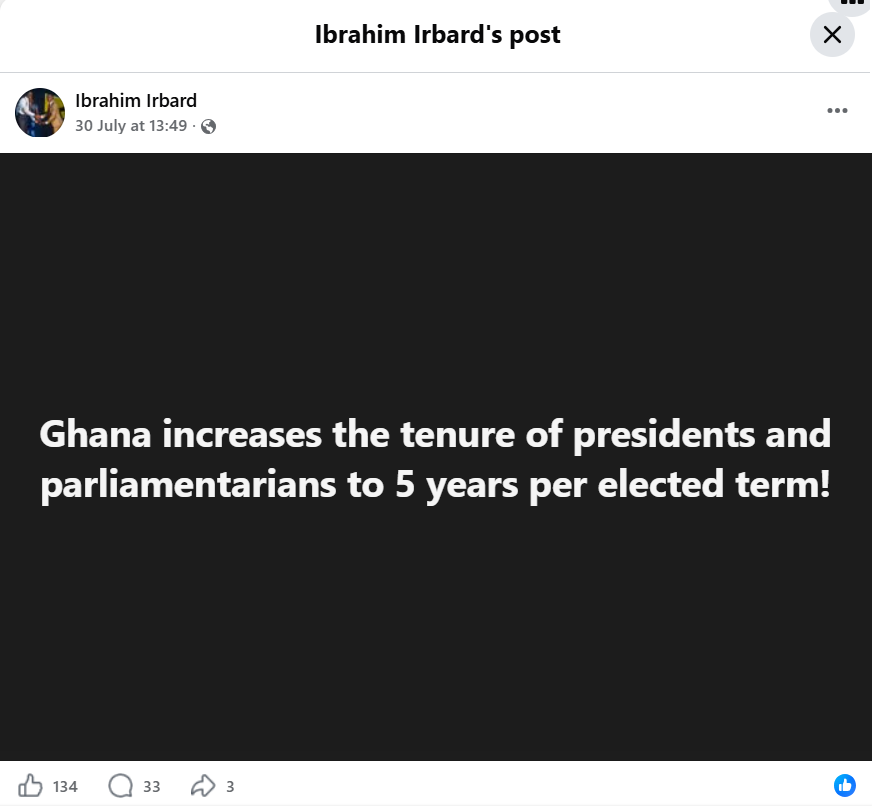
On Facebook, a user also highlighted a CRC recommendation: “Ghana increases the tenure of presidents and parliamentarians to 5 years per elected term.” Comments under the post show people believed the recommendation has taken effect.
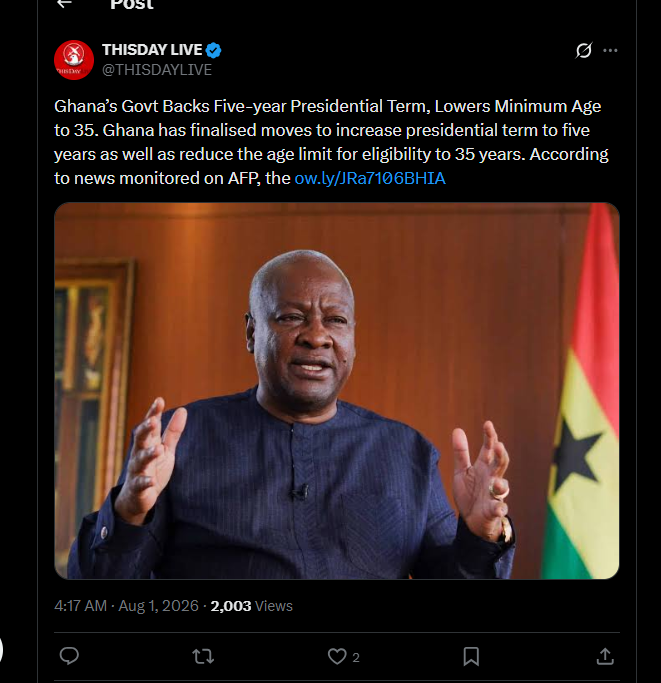
Another post on X by Nigeria’s This Day news portal said, “Ghana has finalised moves to increase presidential term to five years as well as reduce the age limit for eligibility to 35 years.”
But has Ghana’s Constitution actually changed?
The Government’s Position Paper only indicates which recommendations the government accepts, rejects or wants to modify. Acceptance alone does not amend the Constitution.
What happens after Government accepts a recommendation?
Any proposed constitutional amendment must go through the constitutional procedure as highlighted in Chapter 25 of the 1992 Constitution, particularly Articles 289 to 291. The steps include;
| Process | Stage |
| The government reviews the CRC recommendations and states which proposals it accepts, rejects or modifies. | Done |
| A Constitutional Amendment Bill is then prepared and presented to Parliament, where it must meet the constitutional requirements for approval. | Yet to be laid |
| The process then depends on whether the constitutional provision being amended is ‘entrenched’ or ‘non-entrenched’. | Determined in White Paper |
| For ‘non-entrenched provisions’, Article 291 requires the Bill to be published in the Gazette and approved by at least two-thirds of all MPs at the relevant stages in Parliament, after consideration by the Council of State. | Work in progress |
| For ‘entrenched provisions’, additional steps are required, including a national referendum (at least 40% of registered voters must vote, and at least 75% of them must vote in favour), in Article 290. | Work in progress |
This means the proposed changes only become part of the Constitution after the required constitutional processes – Parliamentary approval or referendum vote – is completed. Therefore, the Government’s acceptance is only a step in the process of amending a Constitution. The Attorney General and Minister for Justice revently inaugurated an 11-Member Constitution Review Implementation Committee.
Researched by Nusrat Essah