

On December 22, 2025, the Constitutional Review Committee (CRC), set up by President John Dramani Mahama, presented its final report to the presidency, following months of work on key considerations to reform the 1992 Constitution and enhance democratic governance.
The committee, led by Prof. Henry Kwesi Prempeh, was inaugurated days after Mahama took office, in line with a campaign and manifesto promise by the National Democratic Congress (NDC) (see here and page 136 of the NDC manifesto).
In recent years, there have been renewed calls for changes to the 1992 Constitution with proponents advocating that a review has become necessary to reflect the current times (here, here and here).
After the report of the committee was made public, several media outlets have taken bits and pieces of some of the recommendations and popular proposals. These specific proposals have also dominated media discussions.
In this report, GhanaFact highlights some of the widely discussed proposals by the CRC, and the way forward following the conclusion of the CRC’s work.
The report highlighted a raft of proposals for all three arms of government (the Executive, Legislature, and Judiciary). It also made proposals with respect to critical state institutions such as the National Development Planning Commission and the Electoral Commission, among others.
RelatedNews


Major proposals related to the Executive
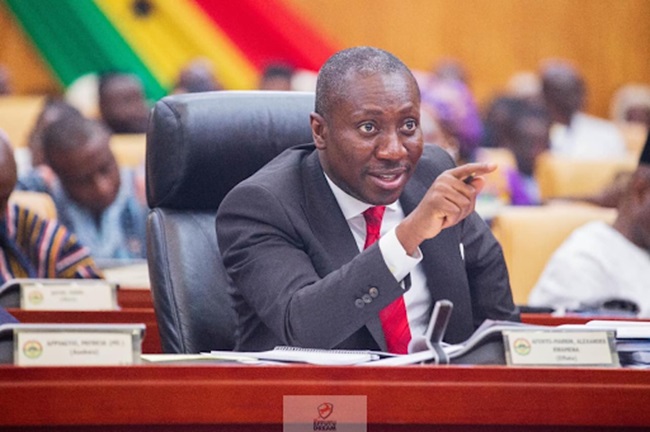
The committee recommended amendments to the Constitution to extend the length of a President’s term from four years to five years. Added to this is the recommendation to lower the minimum age a person must attain to qualify for election as President.
But other key recommendations include those related to appointments of ministers, presidential succession and presidential elections. The committee makes the recommendation that Article 78(1) be amended to provide that a member of Parliament cannot be appointed as a Minister of State, a Deputy Minister or a Regional Minister.
“The Committee further recommends, as a companion amendment, that a member of Parliament who resigns from Parliament shall not be eligible for appointment as a Minister of State, a Deputy Minister or a Regional Minister. The ineligibility for appointment shall, however, be limited to the term of Parliament in which he or she was elected only,” the report said.
The current practice in Article 78 allows the president to appoint a majority of ministers of state from Parliament. This, for instance, explains why the current administration has most of its 60 ministers being sitting MPs.
The committee further recommended an amendment to Article 78(2) to provide that the total number of Ministers of State, including Deputy Ministers and Regional Ministers, shall not exceed three times the number of Ministers in the Cabinet. Cabinet ministers are currently pegged at 19.
This means the total number of Ministers of State, including Deputy Ministers and Regional Ministers, shall not exceed 57. Additionally, the Committee recommends that the President shall not appoint Deputy Regional Ministers.
“The Committee further recommends that a President who desires to appoint a person as a Minister of State in excess of the stated ceiling shall furnish Parliament in writing with the specific reasons justifying the additional appointment and obtain the prior approval of Parliament for the appointment. Parliament’s approval shall be by a simple majority of all members of Parliament,” the report noted.

Major proposals related to the Legislature
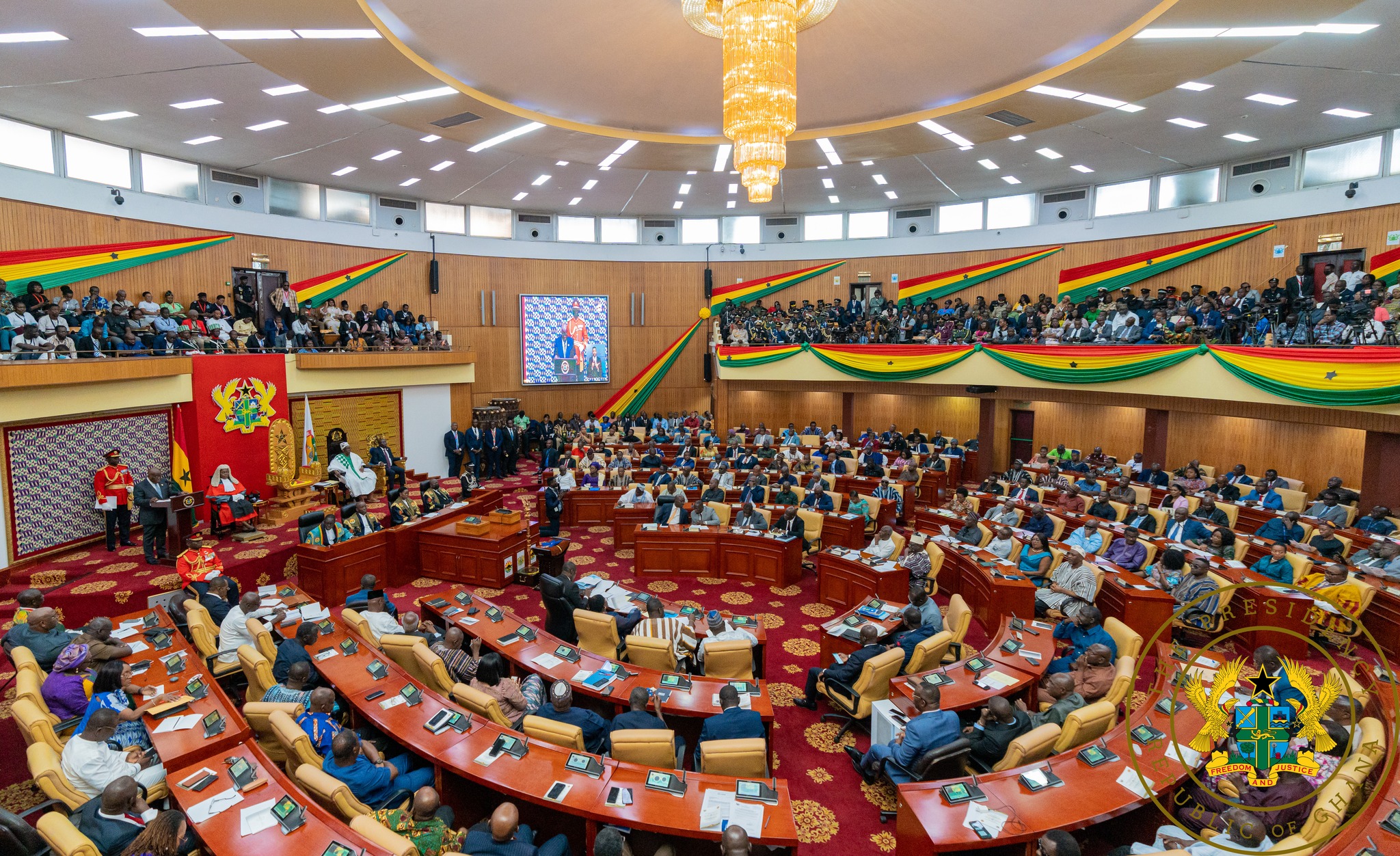
For Parliament, the CRC report recommended that the seats be capped at its present number of 276 and also provide for proportional representation to enhance opportunities for women, youth and other politically marginalised groups, including smaller political parties.
The committee also addressed the controversy about dual citizenship, proposing an amendment to Article 94(2)(a) to provide that a citizen of Ghana by birth who otherwise meets all other qualifications shall not be prevented from contesting for election to Parliament.
This issue of dual citizenship, for instance, played out in the 8th Parliament, where Assin North MP, James Gyakye Quayson was prosecuted for perjury and failing to denounce his Canadian citizenship before contesting the 2020 parliamentary election (here and here).

Major proposals related to the Judiciary
In respect of the judiciary, the committee recommended maintaining the existing jurisdictional structure of the Supreme Court, however proposals were made to address the occasional concern of workload by streamlining the appellate jurisdiction of the court.
“In particular, the Committee recommends that appeals of cases from the lower courts should terminate at the Court of Appeal, without an automatic right of appeal to the Supreme Court, unless by leave. This reform would reduce the Court’s caseload, enhance the timeliness of its decisions, and allow it to focus on matters of substantial constitutional and national importance,” the report said.

What other recommendations did the committee make? Here are 15 other popular proposals;
| Proposed change | Status quo | Recommendation |
| A new provision to guarantee a right to public participation in the legislative process | ||
| Regulator of political parties | The EC wields some level of regulatory powers | Establishment of an Independent Registrar and Regulator of Political Parties and Campaigns |
| Extend term of MPs | Parliamentary term is set at four years | Extend the term of Parliament from four years to five years |
| Presidential election petitions | Under Article 64 of the 1992 constitution, an election petition shall be brought before the Supreme Court within 21 days after the declaration of results | Presidential election petition shall be brought within 14 days after the declaration of the results. Supreme court shall adjudicate case within 30 days |
| Date of elections | Presidential elections held on the 7th of December every four years | Presidential election should be held in first week of November in an election year |
| Revocation of appointment of ministers | Article 82 does not make it a requirement for the president to revoke such appointments | President shall revoke the appointment of a Minister against whom Parliament has passed a vote of censure. The said minister shall not qualify for re-appointment |
| Subject presidential earnings to tax | The presidential salaries and allowances are except from tax under Article 68 | Salary, allowances and facilities payable to the President shall be subject to tax in accordance with applicable law |
| Minimum for contesting as president | The current age minimum qualifying age is pegged to 40 years under Article 62 of the 1992 constitution | Minimum age a person must attain to qualify for election as President should be lowered from 40 to 30 years |
| Extend presidential term from 4 – 5 years | Ghana’s practices a 4-year presidential term | Extension of presidential term from 4 to 5 years |
| ‘Ex-Gratia’ committee | Non exist under the current constitution | Independent Public Emoluments Commission shall develop and determine, an appropriate retiring benefit for Members of Parliament. |
| Regulating cost of political activities | There is no such law in the books | Parliament shall enact legislation to regulate the cost of electioneering and political campaigns |
| Changes to tenure of EC top officials | The EC Chair and Deputies have the same terms and conditions of service as a Justice of the Court of Appeal, therefore the retiring age is at 70 years. | EC Chair and Deputies should hold office for a single, non-renewable term of 10 years or until the person attains the age of 65 years, |
| Reform NCCE | The body is currently regulated by National Commission For Civic Education Act, 1993 (Act 452) | NCCE should be renamed National Commission for Civic Engagement with added functions |
| Reform SIGA | SIGA’s establishment was by an Act of Parliament and not a constitutional body | Establishment of SIGA as a constitutional body |
| Reform structure of the Supreme Court | The 1992 constitution prescribes that the Supreme Court shall consist of the Chief Justice and not less than nine other Justices. But in practice, the Court usually consists of the Chief Justice and 15 other justices. Currently, the Supreme court consists of the Chief Justice and 19 other justices. | Prescription of an upper limit for the Supreme Court (the Chief Justice and not more than 14 Justices) |
What’s next after the CRC report?
The 2025 CRC would not be Ghana’s first attempt at constitutional review. Two such attempts have been made in 2010 and 2023. (here, and here).
With the current process, President John Mahama has stated that his government will implement the proposals from the CRC work and announced that they would establish an Implementation Committee early this year (2026), also in line with the NDC’s manifesto promise.
Some members of the government, including the Education Minister and MP for Tamale South, Haruna Iddrisu, have clarified that the government would not issue a white paper following the 2025 constitutional review process. The government white paper would typically outline the government’s stance or response to significant recommendations in the report.
“2026 would be the governance year agenda for President Mahama beyond economic stability…The Constitutional Review Committee that was set up under the Prempeh committee is not the same as the constitutional review established under Article 278 of the 1992 Constitution by President J.E.A Mills.
“Currently, there’s a team of crack lawyers who are reviewing the report that was submitted to President John Mahama. After that scrutiny, it would be subject to Parliament and political party engagement…
“Those of you who expected that a white paper would be issued, you got it very wrong. This constitutional review led by Prempeh and co was not established within the true meaning of Article 278 of the 1992 constitution, so no white paper would be issued in that sphere,” Haruna Iddrisu said. The Attorney-General confirmed this position in a later interview.
Committee composition, volume of work and stakeholders reached
The eight-member Prof. Henry Kwesi Prempeh committee, included members as follows:
- Dr Rainer Akumperigya, Esq.
- Justice (Mrs.) Sophia O. A. Adinyira
- Professor Kwame Karikari
- Charlotte Kesson-Smith Osei
- Dr. Esi Ansah
- Alhaji Ibrahim-Tanko Amidu
- Dr Godwin Djokoto, Esq.

According to the committee, it began inviting public submissions early in February 2025 for consultation. In the report, these engagements resulted in 785 written submissions from the public, in addition to other consultations with key stakeholders.
The report also noted the following;
- Ten (10) thematic stakeholder engagements led to expertise and insights from over 500 experts and practitioners on the various thematic clusters.
- Seventeen (17) stakeholder engagements with identifiable groups, ranging from Members of Parliament to the media, academia, reached over 21,500 people, including 21,000 young people, through X-Spaces.
- The Committee engaged 11 eminent persons who have worked with the Constitution over the past 32 years, including former presidents and the Speaker of Parliament.
- 10 zonal public engagements organised by the committee in 10 regions had a total of 2,436 Ghanaians participating.
“All of the Committee’s public engagements were live-streamed on the Committee’s social media platforms. Between March and August, our live-streams on X (formerly Twitter) generated 114,433 impressions. During the same period, there were 8,388 views of our videos on YouTube and 3,266 views on Facebook. Between March and September, all of the Committee’s content on Facebook—including videos, photos, posts, and comments—attracted 192,152 views, demonstrating the significant level of public interest in our work,” the report said.
Timeline of events on the 2025 CRC
| Mahama’s campaign promise to review the constitution/ manifesto promise | Jan 2024 |
| Mahama sets up an eight-member constitutional review committee | January 19, 2025 here |
| Mahama swears-in committee | January 30, 2025 |
| Committee invites public submissions | February 27, 2025 |
| Stakeholder engagements (reached over 21,500 people, with X-Spaces engagement with the youth alone reaching 21,000 young people) | March to August 2025 |
| Committee submits final report to the president | December 22, 2025 |
Researched by Gifty Danso