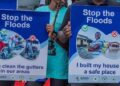

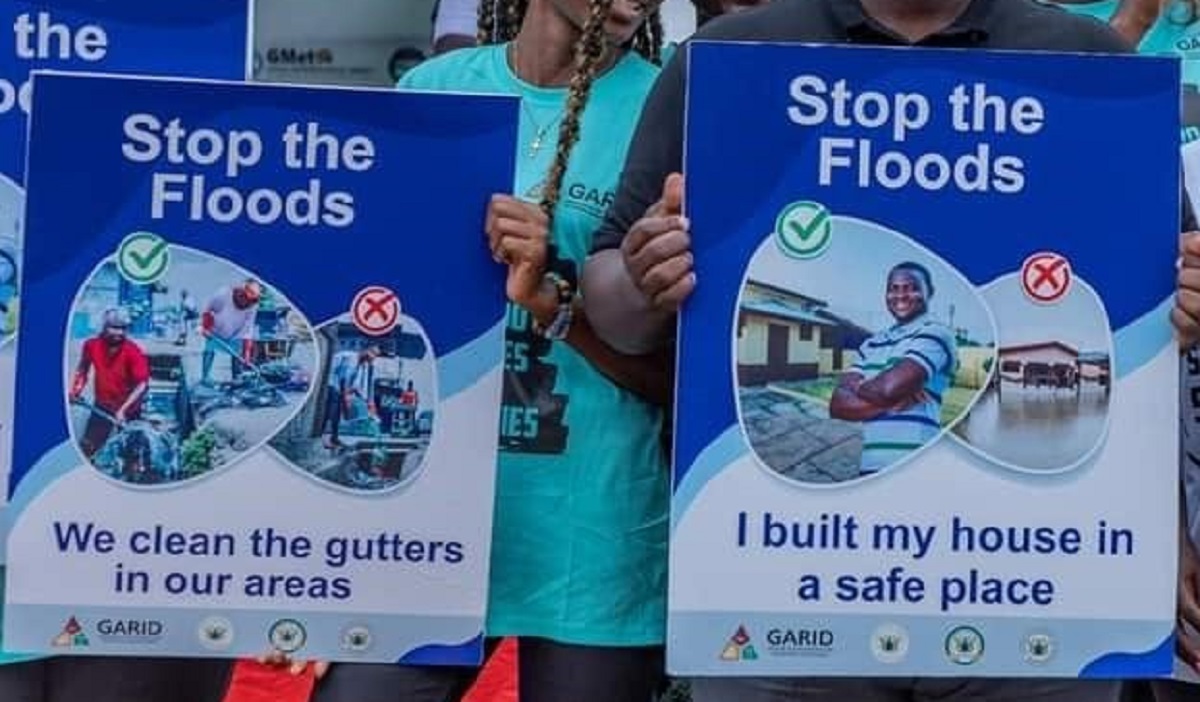
Flooding remains one of Ghana’s most pressing climate and urban development challenges, with the Greater Accra Region experiencing increasingly frequent and destructive floods driven by intense rainfall, poor drainage, rapid urbanisation and the effects of climate change.
Data from the Ghana Meteorological Agency, cited by the Interior Minister, Mubarak Mohammed Muntaka, during parliamentary proceedings on June 30, 2026, highlighted how the recent wet season stands against the previous records.
According to him: “If you look at the statistics that we received from the Ghana Meteorological Agency, it clearly states that in the month of June, we normally accept a lot of rains. But what happened yesterday gave us 169.2 millimeters(mm) of water. And this is the fourth largest volume of water in a day since 1995.
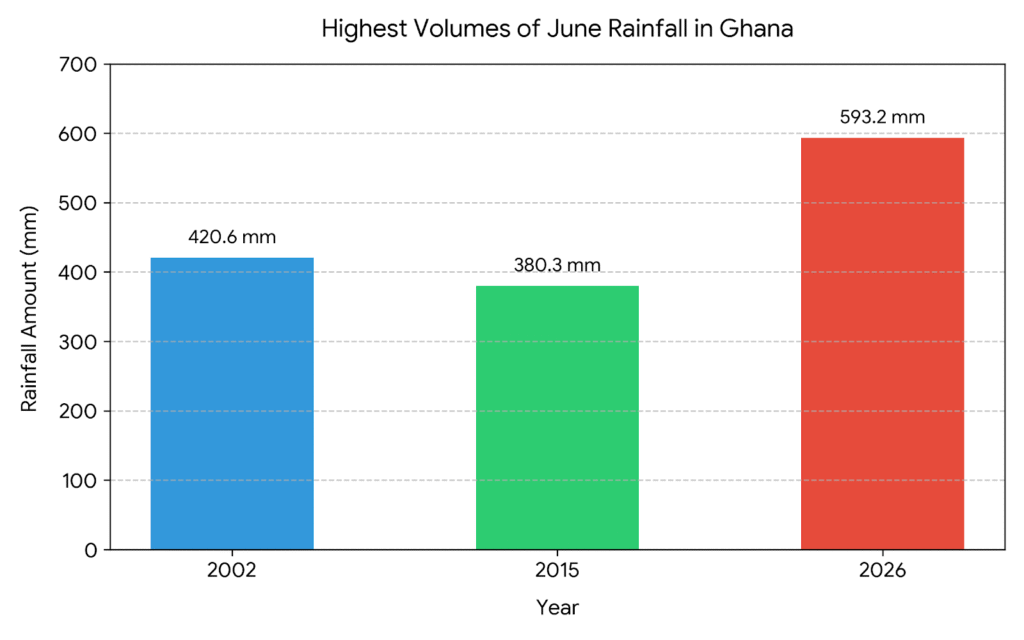
“And for the month of June, we had a total in the month of June of 593.2 mm of water. And Mr. Speaker, is the highest our country has ever received in its history in one month, 593.2. The closest was in 2002, and that was 420.6 mm, and the other one was 2015, 380. 3 mm.”
The rains of June 29 triggered severe flooding across several parts of the Greater Accra Region, once again exposing the city’s long-standing vulnerability to poor drainage, rapid urbanisation and climate-related disasters.
The flagship urban resilience initiative
The recent floods brought back into the spotlight a donor-funded project started in 2019 when the Government of Ghana, with support from the World Bank, established the Greater Accra Resilient and Integrated Development (GARID) Project in 2019, aimed at improving flood risk management, strengthening drainage infrastructure and increasing climate resilience in vulnerable communities.
RelatedNews


![Ghana’s ‘historic’ 3.8% inflation and analysis of annual trends under the 4th Republic [Charts]](https://ghanafact.com/wp-content/uploads/2026/02/qtq80-Ihe4KA-120x86.jpeg "Ghana’s ‘historic’ 3.8% inflation and analysis of annual trends under the 4th Republic [Charts]")
The specific Project Development Objective was “to improve flood risk management and solid waste management in the Odaw River Basin of the Greater Accra Region, improve access to basic infrastructure and services in the targeted communities within the Odaw River Basin, and to provide immediate and effective response to an eligible crisis or emergency.”
GARID focuses on Metropolitan, Municipal and District Assemblies within the Greater Accra Metropolitan Area (GAMA), particularly communities within the Odaw River Basin, where recurrent flooding has displaced residents, destroyed property and disrupted economic activities.
The Project is structured around five key components:
- Drainage and Flood Risk Management Infrastructure;
- Solid Waste Management;
- Improved Urban Upgrading and Institutional Coordination;
- Project Management, and
- Contingent Emergency Response Component (CERC).
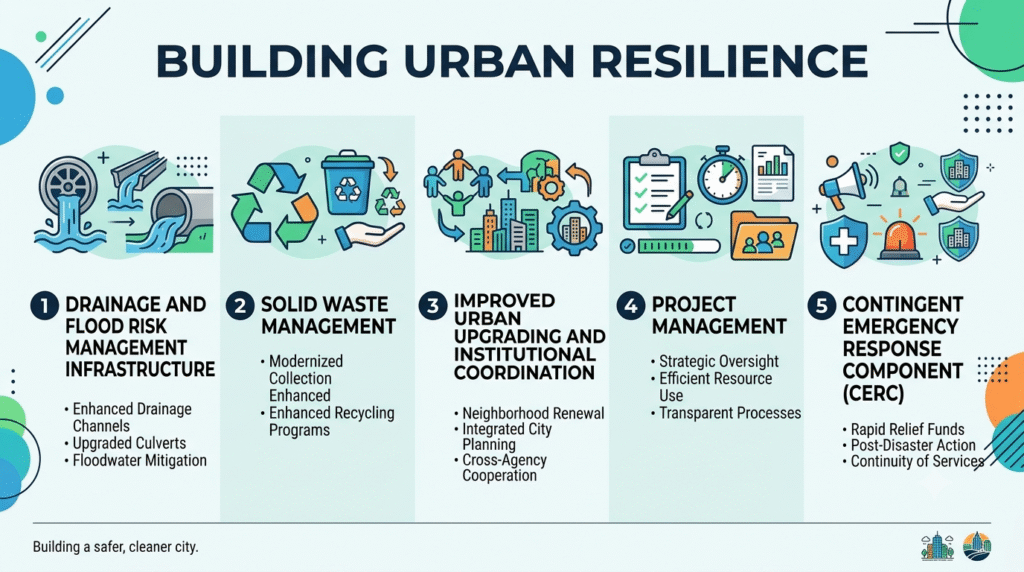
The implementation of these components are led by the Ministry of Local Government, Chieftaincy, and Religious Affairs, and the Ministry of Works, Housing and Water Resources with the Ministry of Health implementing the emergency response component that was activated during COVID-19 period.
Funding
The GARID Project was initially approved by the World Bank in 2019 with US$200 million. In 2020, the project was restructured to support Ghana’s COVID-19 response through the CERC, under which US$65 million was allocated to the health sector.
To restore funding for the project’s original flood resilience activities, the World Bank later approved an additional US$150 million in 2023, bringing the project’s total financing to US$350 million.
According to the World Bank, US$137.66 million had been disbursed by April 2026, representing about 40% of the total financing.
Claims around the project’s implementation
After the recent floods, questions have resurfaced over the implementation of the project.
During a panel discussion on JoyNew’s Newsfile programme on July 4, 2026, Dennis Miracles Aboagye, an aide to former Vice President Dr. Mahamudu Bawumia, claimed that the government failed to release funds for the implementation of the GARID Project throughout 2025, and GH¢13.8 million was swept from the project’s designated account for other purposes.
“The whole of the year 2025, not a single pesewa was released from GARID Project to continue…the government did not release the GARID funding, it is in the World Bank report.
In fact let me even tell you something else, this government actually swept over 13.8 million cedis from GARID money from the GARID account to do other things. It’s in the World Bank report.” he said. (watch from 1:48:03)
Former Tamale Central MP Inusah Fuseini challenged the claims, describing them as false. “It’s not true…it’s a blatant lie…Where is the World Bank report? Please you can’t come here and peddle falsehood and expect me to look at you. Produce the report here,” he said.
But was the GARID account closed throughout the 2025 year? What does the World Bank report say?
The World Bank confirms project cash flow was blocked. According to the World Bank’s Restructuring Paper for the GARID Project, published in May 2026, implementation of the GARID Project was severely disrupted as there were no implementation expenditures throughout 2025, after the Ministry of Finance blocked cash flow to the project.
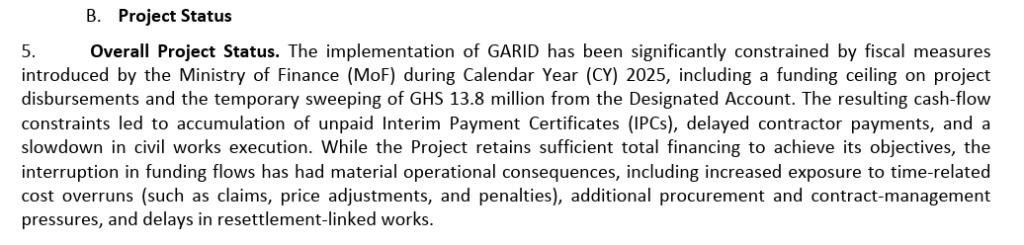
It further states that the interruption contributed to the project’s “Moderately Unsatisfactory” implementation rating and delayed several flood resilience interventions.
GH¢13.8 million temporarily swept from project account
The World Bank report also confirms that GH¢13.8 million was temporarily swept from the project’s designated account for other purposes. According to the World Bank, the funds were subsequently restored in April 2026.
Project timeline extended
Originally expected to close in 2025 (a five-year period from 2020), the GARID Project has since been restructured with its closing date extended to 2027 allowing outstanding activities to be completed.
Government’s recent flood response
Presenting the 2026 Mid-Year Budget Review on July 23, 2026, Finance Minister Dr. Cassiel Ato Forson announced a series of measures to strengthen flood response and mitigation.
He revealed that the government had reallocated 350 million Ghana cedis to the Disaster Management Committee under the Ministry of the Interior to finance emergency response interventions and an additional 226 million to the Ministry of Works, Housing and Water Resources for flood control and mitigation measures.
The Minister also announced that “His Excellency the President has directed the Ministry of Works, Housing and Water Resources to prepare a comprehensive and permanent solution to flooding in Accra and other flood-prone areas across the country. The necessary funding for this programme will be provided in the 2027 Budget.”
Why GARID matters
GARID is one of Ghana’s flagship urban climate resilience initiatives for Greater Accra, seeking to reduce flood risks through improved drainage infrastructure, rehabilitate degraded wetlands and waterways, strengthen solid waste management, and improve living conditions in flood-prone communities.
As climate change continues to increase the frequency and intensity of extreme rainfall events, experts like the World Bank Country Director for Ghana, Pierre Laporte and the Coordinator of GARID, Dr. Ohene Sarfoh, say timely implementation of projects such as GARID will be critical to protecting lives, infrastructure and livelihoods.
Researched by Nusrat Essah