
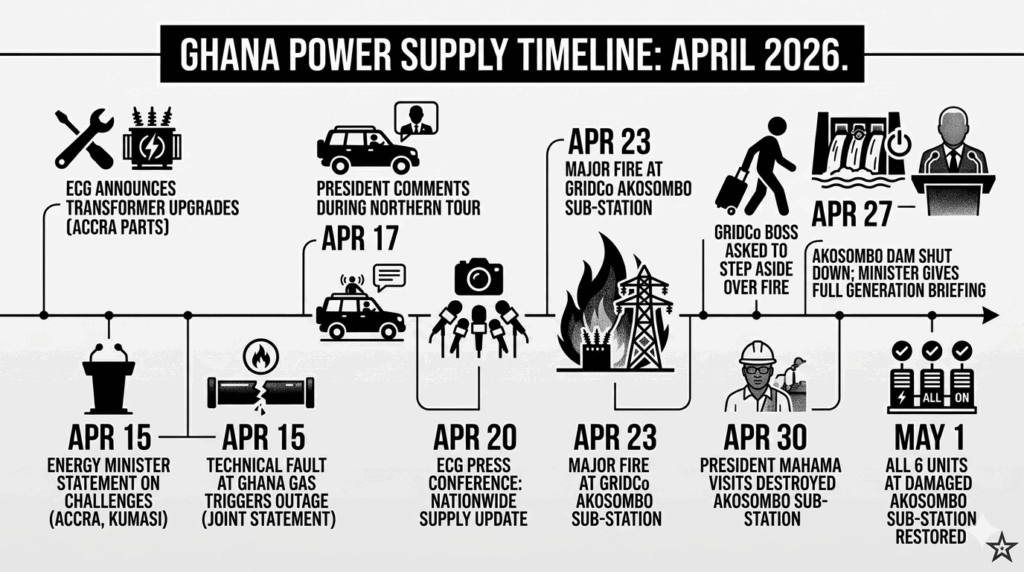
April 2026 was a busy month for Ghana’s Energy Ministry and all major players across the country’s power generation and supply chain. Power outages in parts of the country triggered concerns about the return to ‘dumsor’ – a local term used to refer to persistent power cuts.
From calls for the government to publish a time table to the defence that system upgrades (especially transformer replacements) known to the public was largely to blame for the challenges. In between these, was gas supply challenges, a fire that burnt down a major electricity substation at Akosombo forcing the shutting down of the Akosombo Dam and a full national briefing by the sector minister.
In this piece, GhanaFact chronicles major power supply-related issues across April 2026 while highlighting the Electricity Company of Ghana (ECG) efforts to combat misinformation via their social media handles and how the power supply landscape looks at the beginning of May.
President Mahama speaks on power challenges
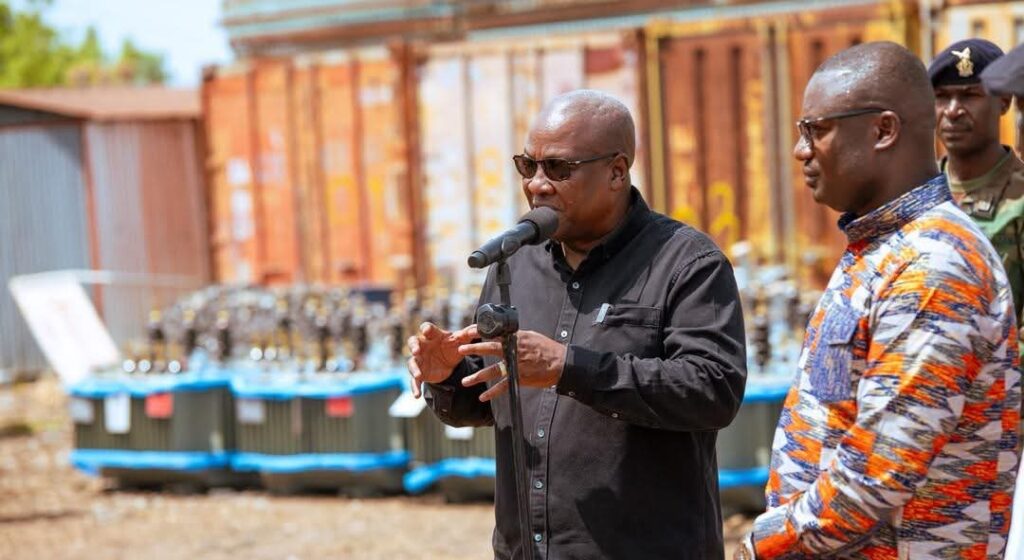
President John Dramani during his ‘Resetting Ghana’ tour in the Northern Region on April 19, 2026, explained that the outages are partly due to ongoing efforts to improve the stability and quality of electricity supply.
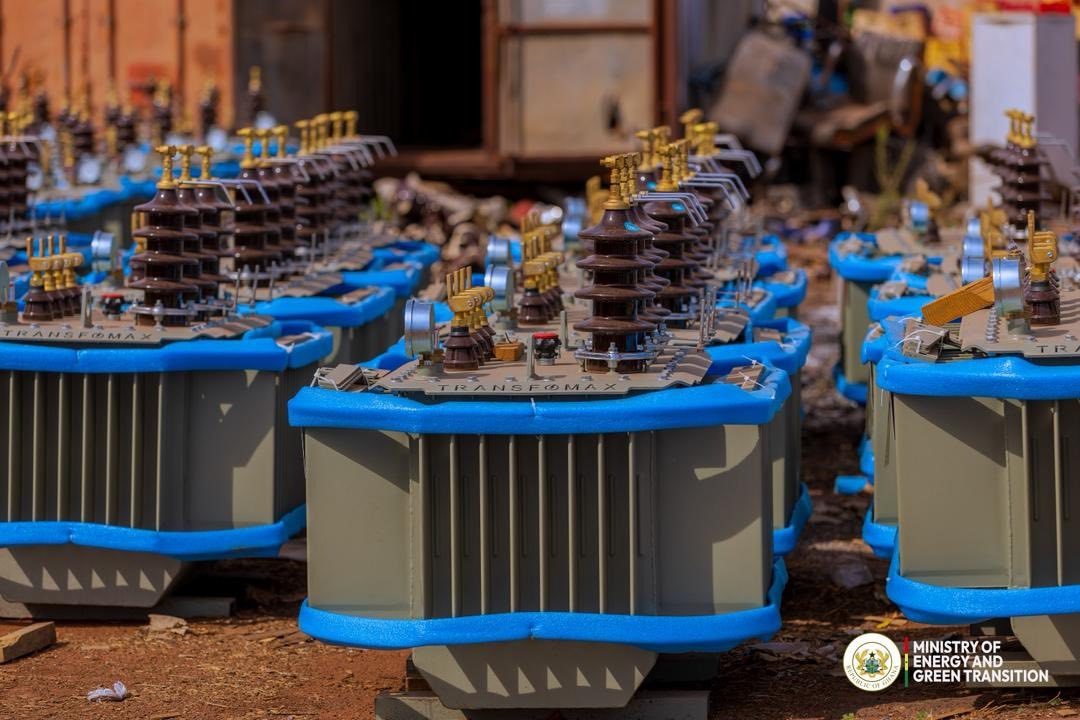
According to him, 2,500 high-capacity transformers have been procured for installation nationwide. These are intended to replace outdated and overloaded equipment that have long contributed to inefficiencies, and localized outages.
However, the process of installing and integrating these transformers into the grid has required temporary shutdowns, which directly contributed to the initial power interruptions experienced across parts of the country.
RelatedNews




“And I have acquired a lot of transformers for installation nationwide, currently 2,500 transformers, and so we are going to see stable power after this first phase…after that, constantly, we will keep taking out the old transformers so that Ghana can have stable power.
“I will appeal to our people, the outages you are facing are not dumsor, it is to enable you get better quality and stable power. But like he said, anytime they are going to replace transformers, they will inform the people in the area so that they are aware that their lights are going to be put off for a while until the transformers are installed,” he said.
ECG press conference
In a press address on April 20, 2026, the Managing Director of the Electricity Company of Ghana (ECG), Ing. Julius Kwame Kpekpena highlighted that persistent low-voltage challenges especially in the Volta and Ashanti regions are largely due to limitations in the national transmission system, where existing capacity cannot meet rising demand. He stressed that without major upgrades to transmission infrastructure, short-term interventions would have only limited impact.
As part of a broader solution, ECG outlined its “Operation Keep the Light On” programme to restore reliability, including deploying 2,500 distribution transformers, replacing damaged equipment, and carrying out critical network upgrades to stabilise supply in the short to medium term.
“We are replacing 1,600 rotten poles in the low-voltage network under a programme we call Operation Keep the Light On. We are installing 2,500 11-meter treated poles also under the program we call Operation Keep the Light On…The system voltage is too low to meet the current demand across such a large area. Unless the transmission system is upgraded, any measure to improve voltages along the corridor will only be cosmetic.”
He also outlined clear timelines for the interventions, noting that the measures are structured in phases ranging from immediate actions to projects expected to be completed within two years.
“The timelines, some of them 3 months. Within 3 months we are completing them. Some of them within 3 to 6 months, some of them 9 months, some of them 1 year… So bucket one is up to 6 months, bucket 2 is 6 to 12 months, bucket 3 is 12 to 18 months. And bucket 4 is 18 to 24 months. Bucket 5 is up to 6 months.”
Akosombo Substation Fire
While these upgrade efforts were already causing disruption, a recent incident has significantly worsened the situation.
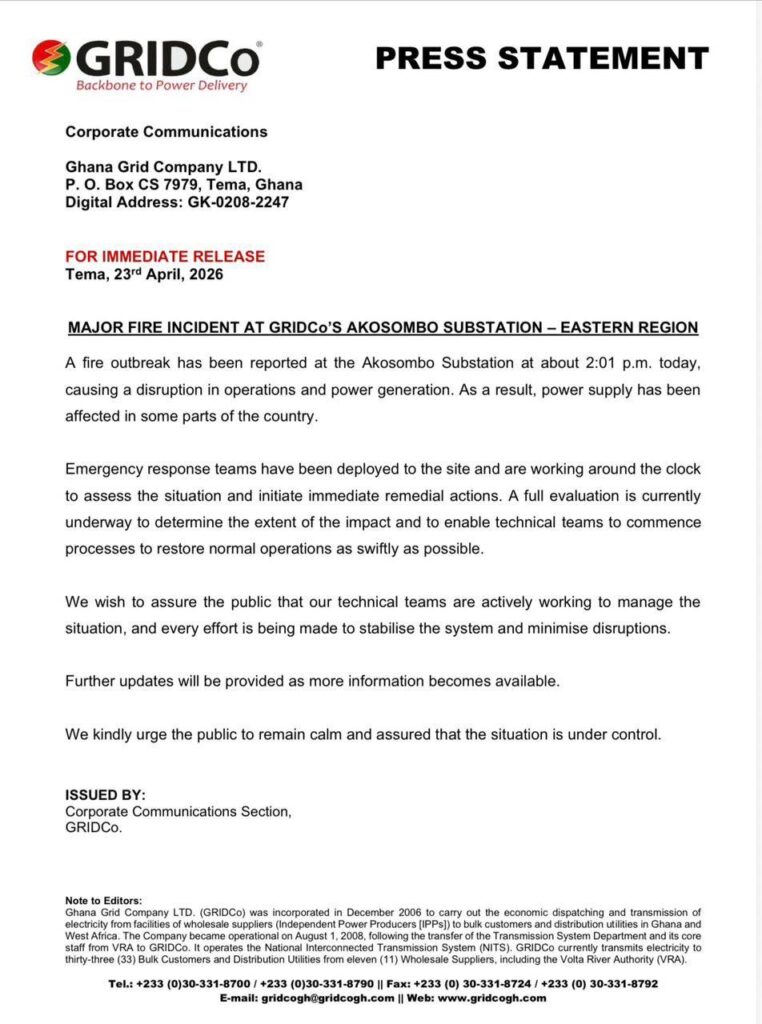
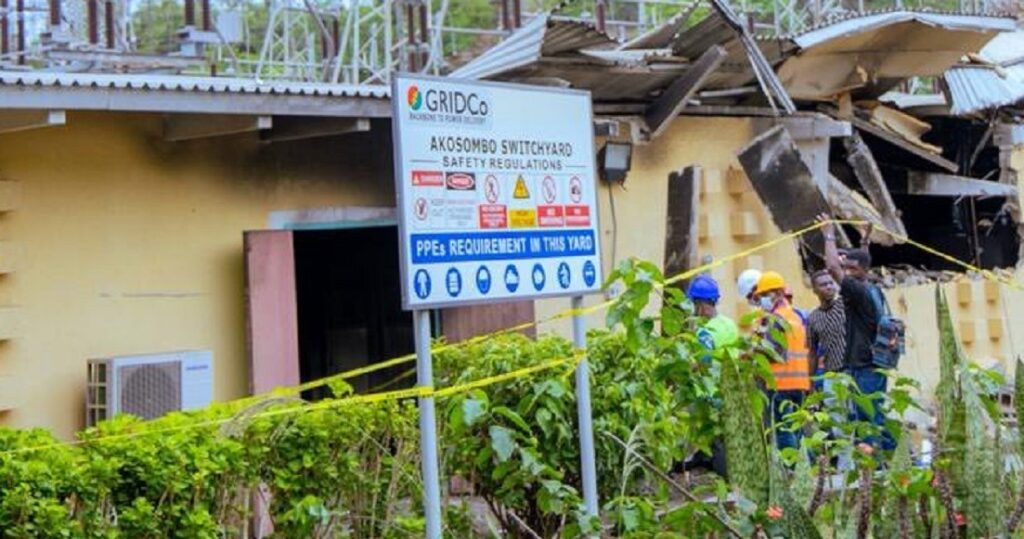
On April 23, 2026, the Ghana Grid Company Limited (GRIDCO) reported a major fire outbreak at its substation within the Akosombo Hydroelectric Dam Complex, a critical installation in Ghana’s power transmission network.
The incident has disrupted power generations, leading to a substantial loss of electricity supply nationwide.
Impact on power generation
The Akosombo Hydroelectric Power Plant has a total installed capacity of 1,020 megawatts (MW), generated by six units.
Following the fire, authorities shut down the facility, resulting in a loss of about 1,000 MW, which represents nearly 25% of Ghana’s total peak demand of 4,400 MW.
Speaking on Joy FM’s Super Morning Show on April 24, 2026, Head of Communications at the the Minister for Energy and Green Transition Ministry, Richmond Rockson said:
“Our peak demand is about 4,400 megawatts. Akosombo gives us approximately 1,000 megawatts, and as we speak, we have lost close to that.”
GRIDCo boss asked to step aside
The Chief Executive Officer (CEO) of GRIDCo, Ing. Mark Awuah Baah was directed by the Energy Minister “to step aside pending investigations into the incident.”
Announced by the Government’s spokesperson, Felix Kwakye Ofosu in a Facebook post on April 26, 2026, there has also been “a major shake up in the leadership of the ECG in the Ashanti Region.”
The Minister for Energy and Green Transition, John Jinapor during the Government Accountability Series on April 27, 2026, explained that the shake up in the Ashanti region ECG leadership “is to ensure operational efficiency.”
ECG responds to fake news
Amid the ongoing power challenges, ECG has also been dealing with pockets of misinformation circulating on social media about the operational challenges they are facing.
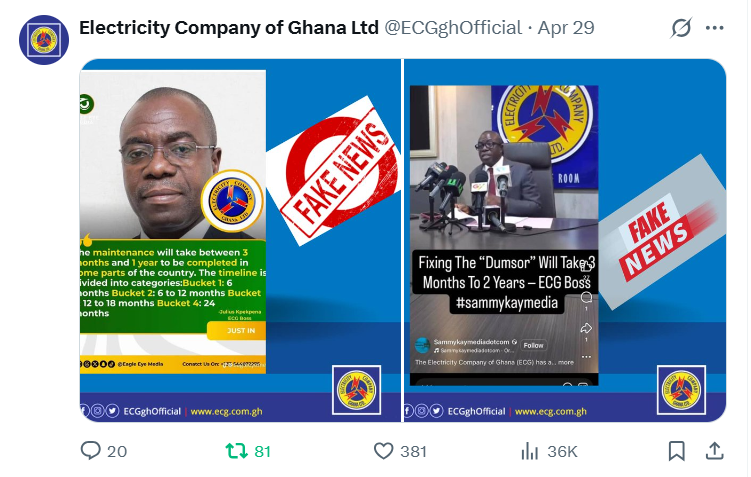
Within April 2026 alone, some posts falsely claim that ECG has announced timelines ranging from 3 months to two years to resolve the outages, while others promote fraudulent prepaid meter sales, and quote unofficial charges for meter registration and services.
In response, ECG has been actively debunking such claims on its social media platforms, clearly labeling them as “fake news” or making “scam alert” notices to caution the public.
President visits Akosombo
President Mahama on April 30, visited the Akosombo Dam to inspect GRIDCo’s damaged substation.
He described the destruction of the control room as an unfortunate incident but also an opportunity to modernise the facility.
“This is an act of God. I mean, who would have expected that the control room would develop this kind of fire? But of course, I guess it’s been there since 1964. So, they say, in adversity is opportunity because now that this adversity has happened, it makes, it gives us an opportunity to replace with it a more modern control room that will serve this Akosombo plant and let it work for more generations yet unborn.”
Restoration status
All six generation units at the Akosombo Hydroelectric Power have now been restored. Two units were restored initially, as disclosed by the Energy Minister during the Government Accountability Series. He stated that:
“Through emergency technical interventions, the first-generation unit was successfully restored yesterday. This afternoon, I received confirmation that the second unit has also been brought on and is generating power.”
Subsequently, on April 28, the Minister announced in a Facebook post that two additional units had been restored: “At 9:09pm, the fourth unit at Akosombo Dam was successfully brought into operation, an encouraging step that strengthens power generation and reflects the dedication and expertise of the team behind the effort.”
By May 1, the remaining units had also been restored, with the Minister confirming: “Mission accomplished. All generation units are now back in service.”
Meanwhile, the nationwide transformer replacement is still in progress. According to ECG’s Managing Director, Julius Kpekpena, about 200 out of the 2,500 transformers have so far been installed. In a May 3, 2026 interview on TV3’s Hot Issues programme, he said:
“So together, we have this programme to replace transformers and so far we have done 200 but it’s a programme that is ongoing.”
ACEP Calls for Immediate Action
The Africa Center for Energy Policy (ACEP) has also weighed in on the ongoing challenges, raising concerns about poor communication and deeper structural issues in the power sector.
In a press statement issued on April 27, 2026, ACEP acknowledged that some outage notices have been issued but described them as irregular, inconsistent, and unreliable, noting that outages often extend beyond announced areas and affect unlisted communities.
“ACEP acknowledges that some communication is being issued indicating areas expected to experience power cuts. However, this communication has been irregular, inconsistent, and unreliable, with outages frequently extending beyond announced areas and affecting communities not captured in these notices. This has deepened public frustration.”
Beyond communication challenges, ACEP emphasised that the current situation reflects longstanding structural weaknesses, and emergency interventions alone will not help resolve these challenges. “Sustainable resolution will require not only emergency interventions but improved planning, transparent procurement, and stronger institutional accountability across the entire power value chain,” the statement added.
As part of its recommendations, ACEP urged authorities to:
- Immediately publish a reliable load-shedding timetable to help households and businesses plan sound outages
- Provide a clear and transparent timelines for restoring power supply to pre-crisis levels, especially, following the Akosombo substation fire
- Conduct an independent investigation into both the fire incident and the broader power crisis, and
- To ensure full public disclosure of its findings to restore confidence and accountability in the sector
Researched by Nusrat Essah